Category Archives: California charter schools

SAVING SIR KEN

Lately I have been thinking about Spielberg’s movie “Saving Private Ryan”.  Not because we just celebrated Veteran’s Day or because I am particularly inspired by war movies, but because I have been researching models for effective teacher leadership.  And not-so effective models, too.  And because, for a moment there, we lost sight of our mission, just like Captain Miller’s troops.

It happened yesterday when my staff watched Sir Ken Robinson’s video clip on the relative zaniness of the American public education system. We all seem to share a common loathing for standardized tests and what they do to our teaching.  The absence of science and physical education and critical thinking and poetry and joy is conspicuous in our efforts to meet this year’s version of the AYP.  There is deep stress in that.

Moreover, we are healing from a self inflicted (though well-intentioned) wound since we expanded from seven multi-age classrooms to 21 in one year.  Our teachers are struggling.  Searching for support.  Venting. Identifying their frustrations and cursing our commitment to innovation.  And cursing me for promoting the idea in the first place.  Fair enough.

But in the emotions of the moment during our weekly staff meeting when all of our teachers’ patience was at the boiling point, we all forgot that our school is driven by a mission.  Eleven years ago we vowed to get 90% of our students to grade level. At the time, only 19% were there.  That was considered par for our demographics- a low income school 7 miles from the border to Tijuana. But we knew that our students and families and teachers were better than that.  We knew our students had it in them.  We knew our kids would be saddled by low expectations for the rest of their lives unless we changed the culture of achievement at our school and throughout our community.  And so we did.  And now 70% are proficient…and climbing.

Our mission is decent and worthy.  We are not inspired by NCLB or the superintendent or the fear of being labeled an underperforming school.  We are driven, purely, by the boundless potential of our students.

So we promote authentic teacher leadership and democratic models of decision making because we believe that that is the pathway to achieving our goals.  It is the way in which we will get that final 20% proficient.  There is no other roadmap.  No one person has the “right answer’ so we count on all of our teachers to share their expertise for the good of the whole.  It just seems like lately we have gotten distracted by the challenges of implementing  large scale change and we have lost our acuity for identifying the alternative tactics and strategies necessary to move forward.  It is killing morale.  It is testing our resolve.

In the end I am sure Sir Ken Robinson is right and we are all complicit in the destruction of America’s system of public education because we defer to the standardized test.  But that is the game we are in.  That’s the deal. Even when the troops are restless. Sometimes leadership is pointing the compass back to “true north” and holding on to the rudder for all you are worth.

There is a scene in “Saving Private Ryan where Captain Miller’s battalion disintegrates into a dangerous rabble of griping hot heads armed to the teeth and threatening to shoot each other. They had had enough of ‘the mission’.  But he stood his ground in the midst of the chaos. He was calm and decisive.  And for the sake of dramatic effect and unity of purpose, he reminded them all of their lives back home.  Earlier, they had placed bets on what their captain did for a living.  Remember his answer?

He was a high school history teacher.  Mission-driven. A model of teacher leadership.

1 Comment

Filed under California charter schools, El Milagro, innovation and change, standardized testing

BLAZED

Delaware and Tennessee were evidently the big winners in the Race to the Top dough.  Delaware, which was ranked No. 1 on the competition’s 500-point grading scale, will win about $100 million, while Tennessee, which came in second, will get something like $500 million.  That’s cool for them.  But I read their plans.  I studied the language.  They talk about:

Expectations, accountability, student achievement, test results, teacher evaluation, teacher quality, academic standards, standardized testing, labor and management and consensus and shared decision making…

Then I wondered…

Wasn’t  Race to the Top money awarded  to encourage school reform?  Real Innovation?  A billion dollars worth of fresh thinking?  Transformation? Transcendent change?

Isn’t it true that if you keep doing the same things over and over again… even if you call it something new… you’ll get the same results?

Tennessee’s Education commissioner, Timothy Webb said:  “We believe that if you take all of the technology out of the classroom, … but you leave the highly effective teacher interacting with students, the students will grow.  All those other things are great to have, but we know without a shadow of a doubt that we have to invest in great teachers.”

I get his point and they are not proposing to remove technology from their classrooms ( at least, I don’t think)… but the premise here is that teachers alone are enough to create extraordinary schools.  We know you can’t have extraordinary schools without them.  But what about a “highly effective teacher interacting with students” and using the tools that our students will actually need when they finally escape the gravitational pull of a K-12 public education system and go into the world to invent a new future?

Or at least try to keep up with the one we have.

Arne Duncan, our Secretary of Education said when awarding Tennessee and Delaware the RTTT  prize money:  “We now have two states that will blaze the path for the future of education reform.”  And I hope they do.

But if you are going to”blaze” a new path you have to first get off of the old path.

For less than the $500 million dollars that President Obama invests in racing to the top in Tennessee… there are schools that will be blazing!

El Milagro.

Leave a comment

Filed under California charter schools, charter schools, El Milagro, innovation and change, President Obama, public education, school reform, standardized testing, technology in schools

E-BAY’S LEGACY, AN ACT OF WAR

Meg Whitman once ran E-bay and now she is running for Governor of California. Her platform: she plans on creating jobs, cutting spending and fixing the education system.

Her fix for the education system?  More testing, more “accountability”, and converting failing schools into charter schools. E-bay must have gotten her best creative years.

I wonder, by the way,  what happens to failing charter schools on the Meg Whitman plan.  I wonder what she thinks charter schools actually are.  I wonder why every candidate running for public office wants to “fix” public schools… and if they can really see what is broken.

She says:

For years, California politicians have talked about building better schools. Few improvements have come despite billions of additional spending. Enough talk, we need action. We will lead the charge to put more control in the hands of local educators and parents.  We will put more dollars directly into the classroom instead of costly bureaucrats. If a school fails to improve after three years, under my plan it will automatically convert to a charter school. It’s time California schools make the grade. The future of our state depends on it.

Remember when Reagan was President and his education commission unleashed “A Nation At Risk?” They were convinced the education system was broken too. They said:

“Our Nation is at risk . . . . The educational foundations of our society are presently being eroded by a rising tide of mediocrity that threatens our very future as a Nation and a people . . . . If an unfriendly foreign power had attempted to impose on America the mediocre educational performance that exists today, we might well have viewed it as an act of war . . . . We have, in effect, been committing an act of unthinking, unilateral educational disarmament . . . .”

An act of war?

But what if this notion of failing public schools is a myth?  a complete fabrication?   A distraction from the real root cause of America’s great divide?

If a house burns to the ground, do we blame the architect for the building materials used to construct the house?  Or do we recognize that the real root cause of the destruction… is fire!

If Meg Whitman wants to “fix” California’s schools, she needs to first “fix” the government and then “fix” the economy.  There is a reason why schools in low income areas are consistently outperformed by schools in high income areas: children in low income areas tend to be less ready for school, have less access to health care, be more susceptible to childhood obesity and type II diabetes, enjoy less parent support, have less learning resources and less access to technology.  For starters.  And they have no voice.

And while politicians like to call those ” excuses”… I wonder what would happen if the severe gap in economic prosperity was diminished.  What if all kids enjoyed the exact same benefits and life conditions whether they lived in Compton or Malibu?  What would our education system  look like then?

Politicians can’t fix schools– not with all of the standardized testing schemes in the world. Especially if they aren’t broken.  And there are plenty that aren’t broken.  Yet.

But those same politicians do have an opportunity to significantly improve the quality of life for children.

To tell you the truth, I don’t think Meg Whitman plans on doing that as Governor of California.  I don’t think her fellow politicians in Washington DC plan on improving the quality of life for children either.  Even though my students would benefit mightily from having access to health care, our senators and congressmen can’t seem to get that done.  They are dysfunctional.  They appear to be paralyzed by their own political systems and structures and culture.  They are influenced and driven by a collective greed that blinds them to their opportunity to rescue America’s children… if not their schools.

Bill Moyers wrote:

No wonder people have lost faith in politicians, parties and in our leadership. The power of money drives cynicism deep into the heart of every level of government. Everything, and everyone, comes with a price tag attached: from a seat at the table in the White House to a seat in Congress, to the fate of health care reform, our environment, and efforts to restrain Wall Street’s greed and prevent another financial catastrophe.

The house is burning and the people positioned to extinguish the flames, are instead blaming the builders.  I propose we re-think the the myth:

“If an unfriendly foreign power had attempted to impose on America the mediocre governmental performance that exists today, we might well have viewed it as an act of war.”

2 Comments

Filed under California budget, California charter schools, childhood obesity, children at risk, health care, public education, school reform

LIVING STRONG

It seems like we are swimming in data.

The sun is shining and the lifeguard tower is buzzing with activity.  (I wonder sometimes if they are really keeping their eyes on the water.) I wonder who is up there at all. No matter, we have our fins… and we are swimming in a sea of data.

We swim with the tide and sometimes we push against it.  But one thing for certain when you are swimming in data:  there is no shortage of information.  And no shortage of assessments that produce the data.  It’s like an underwater upwell pouring volumes of new trends into the channel.  Creating more waves.  Faster currents.  A nuanced flow.  And of course, the occasional rip tide that threatens to pull you out beyond the comfortable landforms that tether us all to the beach; like this past week, when a rogue wave washed across and knocked us off our feet… just as we were looking comfortably in another direction.

New data.

California released the results of the 2009 Physical Fitness Tests that were administered  last Spring to all of our 5th  and 7th graders. In a nutshell… our kids tanked!  We were in the bottom 10 in a district of 44 schools.  Bottom 10 because only 14% of our 5th graders met the physical fitness benchmarks for all 6 (out of 6) exercises.  7th grade was not much stronger: 17% met all 6 benchmarks.

They were not asked to swim across the English Channel or benchpress their teacher’s Prius.  They were not required to compete in the Rock and Roll Marathon. They simply had to meet the benchmarks on a prescribed set of exercises:

Sit-ups

Push-ups

Sit and reach

Torso Extension

Interval Run (Aerobic)

Body Mass Index

14% were able to do it.  The very best school in the district managed to have 50% of their students meet the benchmarks.  Statewide… it was only 34%.

So during our staff meeting last Friday we looked at the data as if it were accurate and reflective of our students’ state of fitness.  We identified the tidal trends; made no excuses.  We asked what is up.

“What is up?  How is it that we are a charter school, with all the resources we need to serve our kids–  a track,  a fitness course, a PE program, competitive teams, and a director with a degree in Physical Education… and this is the result?  What is up?!”

And we brainstormed the root causes just like we dig deep into the data on reading and writing and algebra and math and science and social studies.  We looked at the trends.  We looked at our 5th graders’ relative strength (aerobic) and weakness (flexibility!) and how it seemed to shift by 7th grade where their strength was sit-ups and weakness was the torso extension (weakness in the lower back  is a bad harbinger for high school athletics!)

We concluded that these results stemmed from at least three conditions:

• First, we did not do a very good job of preparing our students (or teachers… or parents) for the 2009 Physical Fitness Test.  It twas an afterthought conducted hastily in the Spring while everyone had their eye on the California Standards Test.

• Second, our students are not getting enough EXERCISE.

Many are sedentary couch potatoes who would rather play video games or watch television than go outside and exercise.  Sometimes overprotective parents encourage them to stay indoors.  And in some neighborhoods you can hardly blame them. Our school is bordered by trolly tracks a freeway and surface streets that race and crowd like freeways.  There are shady motels, apartment complexes with high turnover and strange faces, sex offenders, street gangs, graffiti artists, and a lot of unsupervised kids of all ages.  And there are limited places to exercise.

• Third, our students, in general, do not have healthy DIETS. They eat bags of red hot cheetos and takis the size of pillows.  They drink Red Bull and sugary juice mixes and 64 ounce caffeinated sodas– they consume endless fast food and junk food offered in over-sized portions.

And in a community bearing now the full brunt of the nation’s sagging economy–  the unemployment, the lack of health care, the work-three-jobs, the all nighters and grave yard shifts, the eat-to-survive and find-whatever-comfort-food-you-can— our children pay.

According to the National Association of Children’s Hospitals and Related Institutions (NACHRI):

“This is the first generation of children that will be sicker, and die younger, than their parents.”

At El Milagro, this got our attention. So we found some more data:

• 16 percent of children (over 9 million) 6-19 years old are overweight or obese — a number that has tripled since 1980.

• In addition to the 16 percent of children and teens ages 6 to 19 who were overweight in 1999-2002, another 15 percent were considered at risk of becoming overweight.

• Overweight adolescents have a 70 percent chance of becoming overweight or obese adults.

• Obesity-associated annual hospital costs for children and youth more than tripled over two decades, rising from $35 million in 1979-1981 to $127 million in 1997-1999.

• Nearly one-third of U.S. Children aged 4 to 19 eat fast food every day, resulting in approximately six extra pounds per year, per child. Fast food consumption has increased fivefold among children since 1970.

• Approximately 60 percent of obese children aged 5 to 10 years had at least one cardiovascular disease risk factor, such as elevated total cholesterol, triglycerides, insulin or blood pressure, and 25 percent had two or more risk factors.

• For children born in the United States in 2000, the lifetime risk of being diagnosed with Type 2 diabetes at some point in their lives is estimated to be about 30 percent for boys and 40 percent for girls.

• According to the Centers for Disease Control and Prevention, Mexican-American children ages 6-11 were more likely to be overweight (22 percent) than non-Hispanic black children (20 percent) and non-Hispanic white children (14 percent).

• There are more than 8 million uninsured children in the United States.

Sometimes there are treasures that wash ashore from that sea of data.  There is an idea or a thought or a new direction or inspiration or a movement or even the seeds of a revolution.  Like this:

We realized our kids weren’t physically fit and that their lack of fitness was a result of poor NUTRITION and a lack of EXERCISE. And that, like many of the circumstances of their lives, much of it is environmental.  It is a socio-economic phenomenon.   It is for many parents a lack of knowledge, or time, or resources, or energy to encourage a healthier pattern.

And we haven’t helped. So starting in January we are no longer allowing bags of chips and sugary drinks and junk food snacks on our campus.  We are taking the 160-calorie sport drinks out of the vending machines and replacing them with bottled water.  We are prohibiting classroom parties that feature stacks of Von’s cupcakes and dixie cups filled with Mountain Dew.

Healthy snacks only. 100% frozen juice bars instead of popsicle rewards.

We will teach our students how to read nutrition labels.  We will give them the skills to defend themselves against the conspiracy of junk food marketers that intentionally manipulate ingredients– more fat, more sugar, more salt, bigger portions– to lure them in.

And we will inspire our students to exercise.  We will challenge them to be active at least :60 minutes a day.  Academic progress is in large part a function of wellness.  Kids who are fit and healthy and well nourished perform better than sedentary children whose eating habits are haphazard.

That’s what we learned this week from the sea of data.  It was a seminal moment.  A gift to our students that will no doubt take them some time to appreciate. To live healthy.

To Live Strong!

3 Comments

Filed under California charter schools, childhood obesity, children at risk, El Milagro, physical fitness, public education

CALIFORNIA, THINKING, AND THE WILD WILD WEST

gretzkyCorporate CEO’s and forward thinkers like to use the Wayne Gretzky analogy.  Gretzky scored 940 some goals in his 20 career in the NHL.  But he never skated to the puck in order to take his magic shots.  If he skated to a hockey puck angling off the boards at 100 mph, it would be gone by the time he got there.  So Gretzky was as good as any hockey player that ever played the game… at skating to where the puck was going to be.

That’s forward thinking. Broad vision.

timeSo in light of the Wayne Gretzky analogy, this week’s lead story in TIME Magazine is reassuring.  California, it seems, is not falling off into the Pacific Ocean after all.
Oh sure, there are earthquakes and wildfires and crazy environmentalists chaining themselves to the railroad tracks in defense of the ecosystem.  There are gangs and home foreclosures, long unemployment lines and long lines at the frenzy-producing freeway merge.  There may be shuttered businesses and legions of workers whose origins are driving Lou Dobbs nuts.

But in general, there is enormous up-side in the Golden State and its powerhouses of innovation that are skating to where the puck is going to be.

Michael Grunwald writes:

It’s still a dream state. In fact, the pioneering megastate that gave us microchips, freeways, blue jeans, tax revolts, extreme sports, energy efficiency, health clubs, Google searches, Craigslist, iPhones and the Hollywood vision of success is still the cutting edge of the American future — economically, environmentally, demographically, culturally and maybe politically. It’s the greenest and most diverse state, the most globalized in general and most Asia-oriented in particular at a time when the world is heading in all those directions. It’s also an unparalleled engine of innovation, the mecca of high tech, biotech and now clean tech. In 2008, California’s wipeout economy attracted more venture capital than the rest of the nation combined. Somehow its supposedly hostile business climate has nurtured Google, Apple, Hewlett-Packard, Facebook, Twitter, Disney, Cisco, Intel, eBay, YouTube, MySpace, the Gap and countless other companies that drive the way we live.

Innovation implies the flourishing of  ideas that haven’t even been launched yet, defying the status quo.  It rewards early adopters and those who integrate technology in the most unlikely of ways.  Like Kogi, writes Grunwald, the Korean taco truck that announces its location via Twitter. “The beauty of California is the idea that you can reinvent yourself and do something totally creative,” says Kogi’s Roy Choi, a former chef at the Beverly Hilton. “It’s still the Wild West that way.”

But as forward leaning as the TIME Magazine piece on California is, it missed a chance to recognize that our schools have also evolved at light speed from the Fast Times at Ridgemont High.

When Grunwald celebrates the culture of innovation that produces breakthroughs in chip-industry, solar, LED lighting, green materials, the digitized grid, biotech, algae-to-fuel experiments, synthetic genomics, carbon-capturing-cement, sugar to diesel, semiconductors, and energy-efficient windows… he could have been a game changer himself… the first to recognize the relationship between innovative public schools and the fast companies they serve.  Instead, he states that California public schools “pose a real obstacle to the dream of upward mobility” and that they have been “deteriorating for years.”

Really? Deteriorating?  You are clearly thinking of Spicoli’s public schools.  Not mine!

laptops

California passed its charter law  in 1992, one of the first states in the country to do so.  There are now 750 charter schools serving 276,000 kids. 90 new charters opened in 2007 alone.  There are charters of every kind from High Tech High to El Milagro.  They flourish in a state that is unique for its size and diversity. Where 64% of its student population are children of color… third, only behind Washington DC and Hawaii.  A state where nearly half the students qualify for free or reduced lunch and where 1 out of 4 are English language learners.  A state that invests only $9,152 per student  (while New York invests  $15, 981 per student).  And where we don’t make excuses.

And while other states are relaxing their standards or lowering the cut point that determines grade level proficiency, California remains one of the most difficult states in America to test out at grade level.  The expectations here are sky high.

There are still many underperforming schools… but I don’t know where they are.  And if I did, I wouldn’t defend them.

I do know however, that schools like El Milagro continue to compete in an environment that is destined to change.  We will not be able to sustain schools as test prep academies to the exclusion of the real skills and talents that will feed into our innovative industries.  Solving energy and the riddles of biomedicine can not come from multiple choice tests.  The future demands creativity.  Critical Thinking. Resilience.

So you can be sure there are schools like mine, skating to where we envision the puck will be.  That’s California too.  Revolutionary thinking and the wild, wild west.

wcalifornia_1102

Leave a comment

Filed under California budget, California charter schools, charter schools, El Milagro, innovation and change, lou dobbs, public education, resiliency, school reform, technology in schools

JOURNALING CHAOS 7: “It’s in The Salsa”


chaosjpeg

The “I Ching” teaches that “Before there can be great brilliance… there must be chaos.”

This is PART 7 in a series of blog posts that document our research, strategic thinking, observations and debates as we take on one of the last vestiges of the industrial revolution: the practice in schools of organizing kids into grade levels according to their chronological age.

el patio dayThe history of El Patio Restaurant is written in its walls.  It is as old as California.  Father Serra may have stopped here for handmade beef tamales on his journey north to build California’s first missions.  His ghost is still in the corner, plugging the jukebox with strange coins and listening to classic ’60s low rider anthems and tejano ballads.


El Patio is where the Wizard and I go for lunch when we want to incubate ideas. Perhaps it is the layers of aging hot sauce on the floors and splashed partly up the side walls. Perhaps it is in the jalapenos.  Or the jukebox inspiration under Father Serra’s watchful eye. But for some reason, at El Patio, the creativity flows.

So yesterday we had lunch and caught up on our latest thinking in how we might organize a school without grade levels and what effect it would have on overall student achievement and what new metrics would be useful in monitoring the change.

Our ideas on a school without grade levels came in a series of “What ifs…”

ideasWhat if we don’t include  KINDERGARTEN or FIRST GRADE in the ungraded program, but since they feed into it, we don’t allow students to advance without first demonstrating grade level proficiency?

El Milagro will open a Full-Day Kindergarten for the first time this year.  The timing is awesome.  When we launch the ungraded system,  students will enter school with a full year to make up for having not gone to pre-school, or not learned their letters, or having never read with their parents, or not knowing their name. But while neither Kindergarten nor First Grade would be part of the “ungraded” program, we will expect students to be proficient before they leave either grade. 

ideasWhat if we eliminate Second Grade, Third Grade, Fourth Grade, and Fifth Grade?

Students are currently assigned to these grade levels on the basis of two parameters:


1) Their chronological age, and  

2) The grade level they completed last June.

These grade level grouping decisions are  not based on achievement or mastery (which is what the California Education Code requires!).  They are based solely on students’ age and time spent sitting in a seat.  

So……..

ideas...What if  these four grade levels (2-5) morphed into one UNGRADED PROGRAM (that admittedly needs a catchier name!)?

• We could eliminate the traditional, 10-month, September-to-June school calendar;

• Group students by chronological age for science, social studies, PE, the arts and home room;

• Re-group students for language arts and math based on their MAPS assessment scores (we call them RIT scores);

• Identify, early in the school year, which level of the California Standards Test  each student is preparing to take  (the Grade 2, 3, 4 or 5 version)– based on the level that they last demonstrated proficiency on; and

• Offer students the opportunity to move through the four levels at their own pace.

ideasWhat if…students progress to each new level solely on the basis of merit and demonstrated proficiency– just like what happens in Tae Kwon Do… and just like what happens in college.  No free pass.

Such are the brainstorms of El Patio where every idea generates new questions and more “What ifs”.  That’s what is fueling the creativity.  By the time we were rolling on ideas for 6th grade we were on our third glass of ice tea… arms flailing, spitting tortilla chips, interrupting each other mid-idea. We wondered:

ideasWhat if we change the structure for 6th grade?

6TH GRADE would definitely be the moment of truth for this whole scheme.  There will be only two ways that a student can exit our UNGRADED program and enter our 6TH GRADE :


1.  They can  “Test In”, by demonstrating mastery of the 5th grade CST, or

2.  They can “Age In” because  if we don’t move them along they are going to turn 93 before they ever get out of Mueller Charter School.

Student who are moved into the 6th grade program solely on the basis of age (and not proficiency) will be provided an intensive program from the strongest teachers we have.  These classrooms will be self-contained and will require students’ full participation in afterschool tutoring, intersessions, and independent skill development in the computer lab.

Students who “test in” to 6th grade,will participate in a departmentalized program patterned after our 7th and 8th grade Leadership Academy.

And our 7th and 8th grade students, because they are selected for our Leadership Academy on the basis of their willingness to work hard, will continue in a departmentalized, accelerated program that is designed to prepare them for advanced placement courses in high school.

DSC02631

Lunch was over and before we headed back to school, the Wizard and I agreed on one final and point that will make or break the success of this systemic change. We must still balance the demand for accountability on tests with the obligation we have to our students to inspire a love of learning an thinking and creating and discovering their full range of gifts.

The ungraded elementary program will enable us to focus on basic skill development and mastering grade level competencies. But  that is not where the real teaching and learning lies.  The chronological age groupings will offer students opportunities to work across age groups, academic disciplines, and performance outcomes to fully develop as learners.

That is balance… and our best thinking from El Patio, where the salsa marinates in an ancient recipe and an old mariachi on the jukebox wails: “Que si…”.  

What if.

salsa

2 Comments

Filed under California charter schools, charter schools, El Milagro, innovation and change, Un-graded schools

A RACE TO THE TOP

tour djpegAfter the 10th stage of the Tour de France, Lance Armstrong sits in third place.  Amazing.  What an athlete.  The Tour de France has to be one of the most grueling events in competitive athletics and he continues to put himself in a position to win in that legendary bicycle Race to the Top

Now that has a ring to it: “The race to the top.” And evidently President Obama and Education Secretary Arne Duncan think so too.  In fact, they have set aside BILLIONS of federal dollars as part of a stimulus package to encourage states to “race to the top” in school reform.

At this point in the race, however,  we don’t have many details.  For example, no one seems to know what the rules are for the race or where exactly  the “top” is.  There definitely is a “Race to the Top Fund” that is a component of the $787 billion American Recovery and Reinvestment Act that Congress approved in February, but there are no guidelines to tell you when you win or when you lose or even when you can climb off  your freakin bicycle and have a cold gatorade.

arnejpegPundits seem to think there are some clues in Duncan-speeches that suggest that the states on the inside track in this epic Race to the Top  are those who 1) are committed to improving low performing schools; 2) states that are lifting caps on charter schools; 3) states that are big on improving teacher quality; 4) states that are moving their data systems into the 21st century, and 5) states that are on board with the whole “national academic standards” drive.

Given that description, states that are in the back of the pack about a small French village away from the leader group, include: 

• Alaska, Missouri, South Carolina, and Texas—because they don’t want to play the national standards game.  

• Indiana and Maine because they  are considered “unfriendly” to charter schools.  Shame on them.

• California, New York, and Wisconsin who are all guilty of constructing “firewalls” between student and teacher data.

• Illinois because, in general,  their school system (even under the leadership of Arne Duncan) just suck.

The current leaders… that is, those who are vying with Lance Armstrong for the yellow jersey include:  Colorado, Florida, Massachusetts, and Louisiana. (Nearly 70% of the schools that re-opened in New Orleans after Katrina are charter schools!)

up hillSo I wonder…  as the facts and the details of the Race for the Top Fund come to light, what kind of pressures will individual states bring to bear on their schools?  California is facing a $26.5 billion deficit and while the federal money won’t bridge that gap, it would certainly encourage re-investment into the system.  It would suggest we are headed down (or up) some positive path and maybe that we have a half a clue of how to catch up with the race leaders and sprint to the finish.  

I wonder if Arne Duncan is prepared for the kind of innovation that the lure of $5 billion can buy.

Billions of dollars on the table.  Bragging rights.  A poorly fitting yellow jersey that nevertheless looks pretty nice on the cover of Sports Illustrated.  New standards and expectations. 

I suspect that high stakes testing is about to get higher stakes.

lance

1 Comment

Filed under California budget, California charter schools, charter schools, President Obama, public education, school reform, standardized testing

DANCING FOR FUNHOUSE MIRRORS

playground

I just looked at the calendar on my IPhone and it says I am supposed to go back to work on Monday.  So be it.  I haven’t really left my work anyway… I have been messing with stuff for the past month:  developing our new program at the Chula Vista Nature Center, researching elements of our plan to eliminate grade levels, writing about how we  raise resilient kids, brainstorming strategies to focus our teaching.  Blogging.

money bagsjpegMeanwhile, I noticed that the state of California still doesn’t have a budget agreement and that there is now a $26.3 billion deficit!  The system is broke and it doesn’t appear that we are even structured to fix it
I noticed that the U.S. Department of Education now has $5 billion in special funding set aside to promote  the development of new innovative practices and I wonder if they are really ready for the innovations we have in mind!

I notice that Arne Duncan and President Obama are tweaking the NEA, the national teacher’s union, about the need for merit pay and opening up more charter schools– and that now they are both on the union “list”.

I notice that the NEA has been adamantly opposed to more charter schools… but they would like to unionize the ones that exist and steal their very best ideas! (By the way… the NEA is more than welcome to replicate our best practices!!!)

I notice that there is still some forward momentum around the effort to create one set of national curriculum standards and simultaneously wonder if that is really what is missing.

I notice that there has been no revision to NCLB and that we are still rolling up all our eggs in a very inadequate assessment basket called the California Standards Test.  And since we are not likely to have hit all of our AYP targets for the first time, and since we chose not to spend valuable learning time teaching our students how to take the test... we will have to be prepared to defend our teaching practices and explain why our kids didn’t score at a level that NCLB demands.   And, of course, we will have to demonstrate — to somebody– that we have a coherent plan for whatever ails us.  And the people we will have to answer to are the ones that can’t seem to do their own job… which is to manage the state’s budget and provide for the needs of children!      

IMG_3762As a matter of fact, I notice that the further away you get from actual classrooms where children and teacher live every day, the more delusional leadership becomes– like dancing in front of funhouse mirrors.  

So… much has changed since we sent our students tumbling into a very brief summer recess back in June.  And yet nothing has changed at all.  Real change and innovation still has to come from within the walls of the school.  And that is why I already set my alarm for Monday morning.

alarm

Leave a comment

Filed under California budget, California charter schools, charter schools, El Milagro, innovation and change, resiliency, school reform, standardized testing, teaching

JOURNALING CHAOS 6: “Rains in Oakland”

chaosjpeg

The “I Ching” teaches that “Before there can be great brilliance… there must be chaos.”

This is PART 6 in a series of blog posts that document our research, strategic thinking, observations and debates as we take on one of the last vestiges of the industrial revolution: the practice in schools of organizing kids into grade levels according to their chronological age.

Maybe it’s me.  Maybe I have “charter envy”.  

Maybe we just haven’t figured out all the things that The American Indian Charter School in Oakland has discovered to drive up their test scores.  With an API of 967, they are one of the very  highest performing public schools in California. Moreover, 88% of their students qualify for free an reduced lunch, so they have somehow managed to overcome poverty.

grailjpegIn fact I wondered if they had found the Holy Grail. I wondered if maybe my ideas about insuring that kids mastered the standards before they moved to the next grade level… might be a little draconian;  maybe even unnecessary.
A donor from the Koret Foundation in the Bay Area was adamant in her praise for The American Indian Charter School:

“They really should be the model for public education in the state of California,” she said.

And she also said: “What I will never understand is why the world is not beating a path to their door to benchmark them, learn from them and replicate what they are doing.”

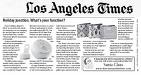
So short of “beating a path to their door” I decided to at least read the recent LA Times article wherein these quotes were found, along with a general description of just what is happening to engender such astounding results at The American Indian Charter School. The reporter, Mitchell Landsberg, was clearly impressed and even amused by the leadership there. But perhaps surprisingly, he seemed a little conflicted on whether what was happening at The American Indian Charter School– not withstanding an API of 967– was actually good for kids. 

la times

But we steal good ideas so I read on:

I read that the school administrators take “great pride in frequently firing teachers”.  Ok.  But we don’t do that at El Milagro. We choose to not give up on  people whether they are students or adults.  So I’ll leave that plan to Oakland and keep reading.

I read that they hand-pick their students and that as one administrator (and parent of a student in the school) confirmed: “They have kids who could go anywhere in the state and succeed.”  Well that’s good for them.  We have kids like that at El Milagro too.  Except they didn’t start off that way.  We didn’t get to cherry pick them. We worked hard and the kids worked hard and their parents worked hard to achieve a level of proficiency. We don’t choose our students… they choose us!

one roomjpegI read that they have, by design, no lab equipment, no computers, no televisions, no games at PE.  They mock multicultural curricula (“the demagoguery of tolerance”)  and reject efforts to build children’s self esteem.  It shows. The director refers to students of color as “darkies”!

Anyway, the tools of instruction at The American Indian Charter School are textbooks and worksheets. It is teacher talk and drill and kill. Hmmmm. Disappointing.

Then I read how discipline is so strictly enforced.  After school and Saturdays.  They are not above calling kids out, humiliating them, punishing them, forcing them to wear embarrassing signs.  One student had his head shaved in front of the school for stealing!  “Classes are preternaturally quiet and focused” writes Landsberg. “They have been told to keep their attention on their work.  They do as they are told.”

Now I am aghast.  So I checked on the website and it is indeed a school in California and the year is indeed 2009 and The American Indian Charter School is indeed a school lauded by the likes of George Will as a model that could close the achievement gap in America.  And admittedly, they do have that amazing API.

Then I read that attendance is mandatory (as it is at El Milagro, too. To an extent.)  When an African American student took a day off from the rigors of The American Indian Charter School to watch the historic inauguration of President Obama with his family, he was punished with extra work and the principal’s recommendation to a private high school he wanted to attend was rescinded.  His mom was justifiably outraged and removed him from the school.  The principal defended her actions:  watching the inauguration, she argued, “is not part of our curriculum.” Now I am outraged too.

So what is the curriculum?  This reads like a horror story.  Where is the magic that explains 967?

I read that the curriculum is, in essence, the California Standards Test.  The American Indian Charter  School” relentlessly and unapologetically teaches to the test.”  They teach almost nothing that does not directly affect standardized test scores.  

And so, taking all of these strategies together, the best practices of the American Indian Charter School– teach to the test, military style discipline, drill and kill, no computers, humiliate the kids–  their students score well on the CST and it all adds up to an API that we should all aspire to and “replicate.” Is that the story?

Well no thank you. If George Will wants to hold out models of schools for others to replicate he can.  But there is nothing about this story or this school that reflects the kind of excellence I would seek for my own children. Good enough for the “darkies” though, hey Mr. Will?

chess

So now I have lots of questions:

Where is the commitment to children, the passion, the love of teaching and learning?  Where is there room for creativity and innovation. Where is the intellectual integrity? How do children become technologically literate in places like this? How do they learn to write and solve problems?

And is this really the price we have to pay to bleed high API numbers out of communities that are already struggling?  Is the California Standards Test a legitimate measure of school success if somebody can produce these results using such outdated and oppressive instructional approaches?

I like the Bay Area and I like Oakland.   I like the rain there.  And I am sure I would like the kids and the teachers of the American Indian Charter School. But you cannot rise to the heights our children deserve by riding on the wings of Icarus.  This is not the Holy Grail.  So if you don’t mind, we will keep looking.

g2rail

11 Comments

Filed under California charter schools, charter schools, El Milagro, public education, standardized testing, teaching

JOURNALING CHAOS 3: “Ticket to Denver”

chaosjpeg

The “I Ching” teaches that “Before there can be great brilliance… there must be chaos.”

This is PART 3 in a series of blog posts that document our research, strategic thinking, observations and debates as we take on one of the last vestiges of the industrial revolution: the practice in schools of organizing kids into grade levels according to their chronological age.  

twd class-1So what if we organized our students for instruction according to the martial arts, mastery-based model that is thousands of years old instead of the archaic, age-driven system that we all perpetuate today?


For starters:

• Students would be grouped according to where they are on the continuum of standards.

• We wouldn’t need grade level groupings at all.

• Students would move fluidly forward and back according to their demonstrated needs and evidence of mastery.

• Teaching would be far more differentiated.

• Students would progress at their own pace.

With regard to testing:

• Some 11 years-olds would take the 4th grade version of the California Standards Test… because that is the level they are ready for.

• Some 11 year-olds may take the 7th grade test.

• Some 11 year-olds might take the 5th grade test for math, but the 3rd grade test for language arts.

• Every student would be “at grade level” because, as in Taekwondo, they would be taking a test to demonstrate what they can do.  It is geared to their level… so they will all be–by definition–“proficient”.

• Since all students would be proficient, schools would not show up as “Program Improvement” and the states’ metrics that are now based on counting percentages of proficient students would be obsolete.  So they will need new metrics.

Since we are a charter school known for our willingness to try stuff,  we are intent on pursuing this model.  We know we will have to do our homework and that we will be accused of ‘gaming the system.’  And yet, our real intention is to completely align our school– curriculum, assessment, and student groupings–  to a standards-based model.

The Adams County School District 50 in Denver, Colorado is already taking a courageous lead on this.  So I’m going to Denver to see how it works.

images

Cross-posted on Leadertalk

Leave a comment

Filed under California charter schools, charter schools, El Milagro, Un-graded schools