Category Archives: children at risk

E-BAY’S LEGACY, AN ACT OF WAR

Meg Whitman once ran E-bay and now she is running for Governor of California. Her platform: she plans on creating jobs, cutting spending and fixing the education system.

Her fix for the education system?  More testing, more “accountability”, and converting failing schools into charter schools. E-bay must have gotten her best creative years.

I wonder, by the way,  what happens to failing charter schools on the Meg Whitman plan.  I wonder what she thinks charter schools actually are.  I wonder why every candidate running for public office wants to “fix” public schools… and if they can really see what is broken.

She says:

For years, California politicians have talked about building better schools. Few improvements have come despite billions of additional spending. Enough talk, we need action. We will lead the charge to put more control in the hands of local educators and parents.  We will put more dollars directly into the classroom instead of costly bureaucrats. If a school fails to improve after three years, under my plan it will automatically convert to a charter school. It’s time California schools make the grade. The future of our state depends on it.

Remember when Reagan was President and his education commission unleashed “A Nation At Risk?” They were convinced the education system was broken too. They said:

“Our Nation is at risk . . . . The educational foundations of our society are presently being eroded by a rising tide of mediocrity that threatens our very future as a Nation and a people . . . . If an unfriendly foreign power had attempted to impose on America the mediocre educational performance that exists today, we might well have viewed it as an act of war . . . . We have, in effect, been committing an act of unthinking, unilateral educational disarmament . . . .”

An act of war?

But what if this notion of failing public schools is a myth?  a complete fabrication?   A distraction from the real root cause of America’s great divide?

If a house burns to the ground, do we blame the architect for the building materials used to construct the house?  Or do we recognize that the real root cause of the destruction… is fire!

If Meg Whitman wants to “fix” California’s schools, she needs to first “fix” the government and then “fix” the economy.  There is a reason why schools in low income areas are consistently outperformed by schools in high income areas: children in low income areas tend to be less ready for school, have less access to health care, be more susceptible to childhood obesity and type II diabetes, enjoy less parent support, have less learning resources and less access to technology.  For starters.  And they have no voice.

And while politicians like to call those ” excuses”… I wonder what would happen if the severe gap in economic prosperity was diminished.  What if all kids enjoyed the exact same benefits and life conditions whether they lived in Compton or Malibu?  What would our education system  look like then?

Politicians can’t fix schools– not with all of the standardized testing schemes in the world. Especially if they aren’t broken.  And there are plenty that aren’t broken.  Yet.

But those same politicians do have an opportunity to significantly improve the quality of life for children.

To tell you the truth, I don’t think Meg Whitman plans on doing that as Governor of California.  I don’t think her fellow politicians in Washington DC plan on improving the quality of life for children either.  Even though my students would benefit mightily from having access to health care, our senators and congressmen can’t seem to get that done.  They are dysfunctional.  They appear to be paralyzed by their own political systems and structures and culture.  They are influenced and driven by a collective greed that blinds them to their opportunity to rescue America’s children… if not their schools.

Bill Moyers wrote:

No wonder people have lost faith in politicians, parties and in our leadership. The power of money drives cynicism deep into the heart of every level of government. Everything, and everyone, comes with a price tag attached: from a seat at the table in the White House to a seat in Congress, to the fate of health care reform, our environment, and efforts to restrain Wall Street’s greed and prevent another financial catastrophe.

The house is burning and the people positioned to extinguish the flames, are instead blaming the builders.  I propose we re-think the the myth:

“If an unfriendly foreign power had attempted to impose on America the mediocre governmental performance that exists today, we might well have viewed it as an act of war.”

2 Comments

Filed under California budget, California charter schools, childhood obesity, children at risk, health care, public education, school reform

LIVING STRONG

It seems like we are swimming in data.

The sun is shining and the lifeguard tower is buzzing with activity.  (I wonder sometimes if they are really keeping their eyes on the water.) I wonder who is up there at all. No matter, we have our fins… and we are swimming in a sea of data.

We swim with the tide and sometimes we push against it.  But one thing for certain when you are swimming in data:  there is no shortage of information.  And no shortage of assessments that produce the data.  It’s like an underwater upwell pouring volumes of new trends into the channel.  Creating more waves.  Faster currents.  A nuanced flow.  And of course, the occasional rip tide that threatens to pull you out beyond the comfortable landforms that tether us all to the beach; like this past week, when a rogue wave washed across and knocked us off our feet… just as we were looking comfortably in another direction.

New data.

California released the results of the 2009 Physical Fitness Tests that were administered  last Spring to all of our 5th  and 7th graders. In a nutshell… our kids tanked!  We were in the bottom 10 in a district of 44 schools.  Bottom 10 because only 14% of our 5th graders met the physical fitness benchmarks for all 6 (out of 6) exercises.  7th grade was not much stronger: 17% met all 6 benchmarks.

They were not asked to swim across the English Channel or benchpress their teacher’s Prius.  They were not required to compete in the Rock and Roll Marathon. They simply had to meet the benchmarks on a prescribed set of exercises:

Sit-ups

Push-ups

Sit and reach

Torso Extension

Interval Run (Aerobic)

Body Mass Index

14% were able to do it.  The very best school in the district managed to have 50% of their students meet the benchmarks.  Statewide… it was only 34%.

So during our staff meeting last Friday we looked at the data as if it were accurate and reflective of our students’ state of fitness.  We identified the tidal trends; made no excuses.  We asked what is up.

“What is up?  How is it that we are a charter school, with all the resources we need to serve our kids–  a track,  a fitness course, a PE program, competitive teams, and a director with a degree in Physical Education… and this is the result?  What is up?!”

And we brainstormed the root causes just like we dig deep into the data on reading and writing and algebra and math and science and social studies.  We looked at the trends.  We looked at our 5th graders’ relative strength (aerobic) and weakness (flexibility!) and how it seemed to shift by 7th grade where their strength was sit-ups and weakness was the torso extension (weakness in the lower back  is a bad harbinger for high school athletics!)

We concluded that these results stemmed from at least three conditions:

• First, we did not do a very good job of preparing our students (or teachers… or parents) for the 2009 Physical Fitness Test.  It twas an afterthought conducted hastily in the Spring while everyone had their eye on the California Standards Test.

• Second, our students are not getting enough EXERCISE.

Many are sedentary couch potatoes who would rather play video games or watch television than go outside and exercise.  Sometimes overprotective parents encourage them to stay indoors.  And in some neighborhoods you can hardly blame them. Our school is bordered by trolly tracks a freeway and surface streets that race and crowd like freeways.  There are shady motels, apartment complexes with high turnover and strange faces, sex offenders, street gangs, graffiti artists, and a lot of unsupervised kids of all ages.  And there are limited places to exercise.

• Third, our students, in general, do not have healthy DIETS. They eat bags of red hot cheetos and takis the size of pillows.  They drink Red Bull and sugary juice mixes and 64 ounce caffeinated sodas– they consume endless fast food and junk food offered in over-sized portions.

And in a community bearing now the full brunt of the nation’s sagging economy–  the unemployment, the lack of health care, the work-three-jobs, the all nighters and grave yard shifts, the eat-to-survive and find-whatever-comfort-food-you-can— our children pay.

According to the National Association of Children’s Hospitals and Related Institutions (NACHRI):

“This is the first generation of children that will be sicker, and die younger, than their parents.”

At El Milagro, this got our attention. So we found some more data:

• 16 percent of children (over 9 million) 6-19 years old are overweight or obese — a number that has tripled since 1980.

• In addition to the 16 percent of children and teens ages 6 to 19 who were overweight in 1999-2002, another 15 percent were considered at risk of becoming overweight.

• Overweight adolescents have a 70 percent chance of becoming overweight or obese adults.

• Obesity-associated annual hospital costs for children and youth more than tripled over two decades, rising from $35 million in 1979-1981 to $127 million in 1997-1999.

• Nearly one-third of U.S. Children aged 4 to 19 eat fast food every day, resulting in approximately six extra pounds per year, per child. Fast food consumption has increased fivefold among children since 1970.

• Approximately 60 percent of obese children aged 5 to 10 years had at least one cardiovascular disease risk factor, such as elevated total cholesterol, triglycerides, insulin or blood pressure, and 25 percent had two or more risk factors.

• For children born in the United States in 2000, the lifetime risk of being diagnosed with Type 2 diabetes at some point in their lives is estimated to be about 30 percent for boys and 40 percent for girls.

• According to the Centers for Disease Control and Prevention, Mexican-American children ages 6-11 were more likely to be overweight (22 percent) than non-Hispanic black children (20 percent) and non-Hispanic white children (14 percent).

• There are more than 8 million uninsured children in the United States.

Sometimes there are treasures that wash ashore from that sea of data.  There is an idea or a thought or a new direction or inspiration or a movement or even the seeds of a revolution.  Like this:

We realized our kids weren’t physically fit and that their lack of fitness was a result of poor NUTRITION and a lack of EXERCISE. And that, like many of the circumstances of their lives, much of it is environmental.  It is a socio-economic phenomenon.   It is for many parents a lack of knowledge, or time, or resources, or energy to encourage a healthier pattern.

And we haven’t helped. So starting in January we are no longer allowing bags of chips and sugary drinks and junk food snacks on our campus.  We are taking the 160-calorie sport drinks out of the vending machines and replacing them with bottled water.  We are prohibiting classroom parties that feature stacks of Von’s cupcakes and dixie cups filled with Mountain Dew.

Healthy snacks only. 100% frozen juice bars instead of popsicle rewards.

We will teach our students how to read nutrition labels.  We will give them the skills to defend themselves against the conspiracy of junk food marketers that intentionally manipulate ingredients– more fat, more sugar, more salt, bigger portions– to lure them in.

And we will inspire our students to exercise.  We will challenge them to be active at least :60 minutes a day.  Academic progress is in large part a function of wellness.  Kids who are fit and healthy and well nourished perform better than sedentary children whose eating habits are haphazard.

That’s what we learned this week from the sea of data.  It was a seminal moment.  A gift to our students that will no doubt take them some time to appreciate. To live healthy.

To Live Strong!

3 Comments

Filed under California charter schools, childhood obesity, children at risk, El Milagro, physical fitness, public education

ZYDECO HELLRAISERS

What happens to Attention Deficit Disorder when it grows up?

Sometimes it is channeled into extraordinary gifts. So

Michael Phelps

Picasso

JFK

James Carville

Robin Williams… …are all reputed ADHD guys.

This is hardly an exhaustive list but it’s enough to give you a flavor. I think if they named every person ever diagnosed with ADHD we would be surprised by some of the folks that were on the list– and yet not surprised at all. We would recognize the extraordinarily talented individuals who have managed to channel the annoying distractability, the daydreaming, the incessant fingers tapping on the desk, the wild-eye passions that seem fueled by IV bags filled with Red Bull.

Jack Nicholson? Paul McArtney? Ellen?

The names give me pause. And patience. So many extraordinary and talented people that it is less of a pejorative label. Or it should be. But I wonder how we channel the energy of our ADHD kids in the current climate of standardized testing which doesn’t care much about piano players or actors or artists or craftsmen or dancers or point guards or revolutionaries.

Ernest Hemmingway was supposedly an ADHD student who– like Mark Twain and Thomas Edison and Albert Einstein– probably would have tanked on the California Standards Test… right after the whole process tied him in knots and drove him to intentionally fall out of his desk and onto the floor. When the art of writing is reduced to multiple choice writing mechanics… real writers implode.

I notice that every year we seem to have a kid throw up on his California Standards Test. I feel for our students who have to carve what they know about math and language arts into tiny black bubbles at the end of a number 2 pencil– when all the while they are jumping out of their skin. I admire their accidental irreverence. I get it.

As we march toward the steadily unachievable AYP benchmarks established by NCLB, I fear that “school” will get more and more difficult for students whose learning styles and interests and modalities do not lend themselves to test prep; and for students who are not particularly strong in- nor interested in– math and language arts principles that can be freeze-dried into multiple choice questions. I fear that English language learners and children with learning disabilities and learning differences will continue to languish even though they are the very kids we supposedly are trying to not leave behind.

As a school leader, I want to know that we are striking the right balance between excelling on the standardized tests and accelerating authentic learning. I want to match the time we spend conducting formative assessments and spiral reviews and test prep strategies with opportunities for children to play and perform and draw and jump in the air and dive out of their desks.

Kids are good at different things, So at El Milagro we honor what they are good at and try to help them find their way to their innate talents that make them feel whole. Maybe that is why I have such an appreciation for individuals who channel their creative high-energy into gold. In spite of us. Like Alex MacDonald, the washboard player for Dwayne Dopsie and the Zydeco Hellraisers.

I first saw Alex perform last Spring on Bourbon Street in New Orleans. Since then they have traveled throughout Europe bringing their Creole rhythms and uniquely zydeco sounds to bars and blues festivals around the world. They are all wonderful magicians. But Alex is mesmerizing. Electrifying. His non-stop energy reminds us that at one point he must have been very interesting to have sitting in the back row of your third period American History class. Somehow, he seems like the kid that would throw up on his California Standards Test.

His school probably didn’t have a washboard department, so how he found his way to the Zydeco Hellraisers is anybody’s guess. Nor do I know where he gets his stamina or his lightening fast hands. He defies our labels as he should. He is simply a young man that absolutely revels in his very unique gift.

Perhaps it requires some zydeco hellraisers to remind us to find the balance between the core disciplines that matter for standardized test scores… and the multiplicity of intelligences that matter to our students.  Stop and admire their talents even if they struggle with dividing fractions… at least the way we teach it.

Our children learn in different ways. Different styles. They have talents that we can’t even fathom. They will abide our lessons and content standards and standardized test regimes until the moment they are free to dive out of their desk and explode across a zydeco stage.

(Cross-posted on Leadertalk)

3 Comments

Filed under children at risk, El Milagro, gifted children, standardized testing

TWO CHICAGOS

chicago 2016The International Olympic Committee decided to hold their 2016 Games in Rio instead of Chicago.  Even a personal appeal by President Obama could not persuade them otherwise.
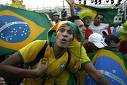
And maybe it is only fair.  As attractive as Chicago may be as a venue, South America has never hosted the Olympic Games. As Chris McGowan writes: “Brazil is one of the world’s top ten economies– after having emerged relatively unscathed from the global economic crisis.”  It is a giant of culture, food, partying, agriculture, music, and biofuel!  It is one of the world’s leading exporters of ethanol (half its cars run on pure alcohol!) Already self-sufficient in petroleum, Brazil recently discovered massive off-shore oil reserves.

riojpegThe IOC was evidently not disuaded by the poverty, crime, pollution, corruption and violence  present in Rio.  After all, it is not like those conditions don’t exist in Chicago.

In fact this week, while the president was flying to Copenhagen to make a personal appeal for his home city, another 16-year old honor student became a victim of school violence.  Last year 34 Chicago school children were killed and 290 were shot.  Several have already been killed this year… and its only October.

Gun violence continues to be one of the leading causes of preventable deaths of young people in our country. The  Children’s Defense Fund reports that:

• In 2005, 3,006 children and teens were killed by firearms, the equivalent of 120 public school classrooms of 25 students each.

• Between 1979 and 2005, more than 104,000 children and teens were killed by firearms in the United States. This is the equivalent of 4,177 classrooms of 25 students each.

• California lead the nation with 475 gun related deaths of teens  in 2005

CDF also reminds us that

• Every second in America, a public school student is suspended

• Every 7 minutes a child is arrested for a violent crime.

• Every 3 hours a child or teen is killed by a firearm.

And that is just for starters.

gunAnd as sobering as that data may be, Derrion Albert was not the victim of random gun violence in Chicago!  He was hit over the head with a splintered railroad tie in the middle of a street melee, and then he was punched and kicked unconscious.  He was not a participant.  He was merely walking home from school.  While he lay in the street dying, another teen captured the entire scene on his cell phone so that it could later be posted on You Tube.

This is Bobby Kennedy’s “Mindless menace of violence”.

Who are their parents?  Where are their counselors and teachers?  Where is the clergy?  Where is the compassion and sense of justice among so many kids that could participate in this melee and watch another student die?

Where is the President?

It is not as if the educators of the Chicago Public Schools don’t know what is happening.  Education Week reported that:

“Chicago is launching a $30 million plan to try to end the waves of annual shooting deaths of student-age children. The nation’s third largest school district says it’ll target 1,200 public high school students seen as most at risk to become gunshot victims. Chicago Public Schools CEO Ron Huberman says the money will go toward connecting the at-risk kids with full-time mentors and finding them part-time jobs. It’ll also help pay to provide safe passage for students forced to go through areas with a high concentration of gangs.”

stop gunsThis is not the first time large expenditures have gone into the public schools to try to keep our children safer.  Back in the early 1990’s, Walter H. Annenberg established the Annenberg Foundation with $1.2 billion in assets, explained that he made his historic commitment to school reform because he was concerned about rising violence among young people: “We must ask ourselves whether improving education will halt the violence.”

Those Foundation grants went to a number of major American cities with large urban school districts, including Chicago where the “Chicago Public Education Fund” was developed.  This not only provided funding to work on grass roots efforts to stem the horrific levels of violence in our urban schools, it provided a forum for civic leaders to get involved in schools.  This all took place in 1992– or just about the time that Derrion Albert was born.   And the chair of the Chicago Public Education Fund… was Barack Obama.

And now all has come full circle as the President returns to America with more than enough challenges on his plate.  The good news about not getting the Olympic Games in Chicago?  The President’s many detractors will not have fresh ammunition to pummel him with every time something goes wrong with the planning or the unemployment numbers stubbornly decline in the heartland.  Perhaps even better news, the President might lend the full power of his office to the kids in his old neighborhood on the South Side.  There are two Chicagos.  One mourns the failure of their city’s Olympic bid and the billions of dollars that would have been injected into the local economy.  The other mourns the death of still another child who just wanted to go home.

Next week Secretary of Education Arne Duncan and Attorney General  Eric Holder will visit Chicago to lend their official support for efforts to protect our children. It will be an uphill battle that will take more than photo-ops and fly-bys.  It will also require a lot more than Walter Annenberg’s millions.  It will require the transformation of an entire community: the schools, the public housing, jobs, career counseling, parent engagement, social services, medical care.  Maybe it will require  the transformation of the nation at a time when there seems to be so little patience for real change.

In fact, teen violence and student deaths are taking place at such staggering and unacceptable levels in our cities, it will take an Olympian effort on the part of our President who knows first hand how such violence threatens to rob America of its very soul.

albert_funeral

1 Comment

Filed under children at risk, gun violence, President Obama