Category Archives: public education

TRADING MACS FOR GLOCKS: A Twisted Vision and the New Frontier

gunsWe’re trading in our Macs. We don’t need them anymore.

Trading our laptops too. We have thwarted the nascent rise of iPads. Now. Before they become too familiar.

I mean, what good is digital literacy if some sinister shadow drops in out of the sky to shoot up the school. And we all know it happens. We all feel that sense of dread lingering, remotely familiar, like the acrid cloud of cafeteria food prepped daily for a thousand kids. We all read the headlines:

L.A. School District Buys 14 Semi-Automatic Rifles To Protect Students

Southern California Schools Get High-Powered Rifles

GOP Lawmaker Wants High Schools To Teach Kids To Shoot

Mother Writes $12,000 Check For Armed Guard At Daughter’s Elementary School

5-Year-Old Suspended For Pink Bubble Gun Threat

Duncan: You Can’t Teach Kids Scared Of Being Killed

The School Where Nearly Every Student Has Experienced Gun Violence

18 States Already Allow Guns In Schools With Few Restrictions

Utah Teacher Wants To Carry Gun Without Telling Parents, Students

Minnesota Teacher Brings Loaded Gun To School For Fear Of Newtown Shooting

Our fences cannot rise any higher and still stand against the wind. We have rows of metal detectors. Our children remove their shoes for inspection as if they were boarding an airplane. They know the drill. We scope their pockets and their backpacks. We x-ray their intent. They are each sworn daily to refrain from brandishing arms. At least in any menacing way. It is our new and collective oath of allegiance to protect one another from mutual annihilation.

We are America’s most innovative school. We are widely renown as the first in any line of early adopters. First to be wired. First to go viral. First to poke holes in the internet firewall. We used to camp out for iPhones but we can’t afford dual priorities: upgrade learning technology or arm to the teeth?

So we invest in the latter. Once secure in our conviction that Macs were superior to IBM’s, we now know what we know: Apple expenditures are so pre-Newtown.

like

So we have glocked up. Every kid. Every teacher.

We ripped out the fitness stations that lined our running track and installed target shooting pods. They are creative. Colorful. They lend themselves to seamless integration of the so-called 21’st Century Skills– to which we have now unilaterally added: “Mastery of Firepower.”

Our students may be prone to childhood obesity and Type II diabetes, but they can freakin’ shoot. And besides, are you going to be the one to tell them they are fat?

Our “Gun Free Zone” is the registration counter, where in exchange for enrolling here you get your guns for free. (Ammunition clips are provided at no cost– however, any modifications are subject to the discretion of individual families.) Frankly, I worry about that policy. In the name of equity, is it fair that some families can afford state-of-the-art ammo packs while others can not? Are we perpetuating another national divide of “haves” and “have more pop”?

teacherOf course, without trained teachers, what good is an entire student body strapped to their sidearms?

So on minimum days we target and crouch and shoot and load and afterwards debrief. There’s a lot of peer coaching. A lot of self reflection and goal setting. We feel morally obligated to out-shoot the kids.  And so we do.

As of late, we are frequently invited to present break-out sessions at state and national conferences: “Shooting Straight:  How Schools Can Target the Real Common Core Priorities.” And: “The New Literacy Standards: How Guns at School Somehow Sharpen Everyone’s Listening and Speaking Skills.”

We’ve done keynotes. Workshops. Webinars. TED-talks. Book signings.

This year we intend to run a booth when ASCD merges with the NRA at the the national gun show in Las Vegas.

And while our academic metrics have virtually imploded, our kids and our staff generally feel good about themselves. We feel like pioneers of the old west. Revolutionaries. And we feel safer in the bargain. Sort of.

Now that we have a baseline established, we can afford to debate whether glocks are enough. We are nothing if not professionally diligent. We are an ever-visionary and forward thinking lot:

“What if Sunnyside arms their kids with higher caliber weapons?”

“How do we keep up with the inevitable modifications and weaponry upgrades– say…Glocks 2.0.?”

“If we hire a sniper coach, where should we place him or her on the salary scale? And would she have to be credentialed?”

“What happens when we discover that we’ve been  left behind in the arms race?”

Taken together the questions are chilling. Where’s the leadership?

So I sidle into my office and remove my firearms as I sit at my desk to Google updates on best practices. I reach for my laptop when I am reminded– that we traded our technology for glocks.  It’s gone.

monkey

More  from Kevin W. Riley…

Leave a comment

Filed under children at risk, education spending, El Milagro, Fighting for Ms. Rios, gun violence, health care, Human-Centered Design, innovation and change, public education, school reform, technology in schools, Uncategorized, zero tolerance policies

A POEM FOR BARACK OBAMA UPON THE INAUGURATION OF AMERICA, PART II


images-2
I have a thousand favorite poets so when I cite Maya Angelou it’s not just because everyone knows and loves her work.  It’s because I know and love her work.  I was mesmerized by her reading of  “On the Pulse of Morning” at President Clinton’s first inauguration in 1993:

“Here on the pulse of this new day– you may have the grace to look up and out and into your sister’s eyes, into your brother’s face, your country, and say simply, very simply, with hope… Good morning.”

Unknown-3On Monday, Richard Blanco becomes the fifth poet to contribute to our Inaugural history when he offers a poem for the nation and the President’s second term.  He will follow some towering shadows cast by Dr. Angelou and Robert Frost.  As a young Latino immigrant, his experience growing up in America will not doubt be reflected in his work.

But I decided you don’t have to be formally invited to Open Mic Day on the Capital steps to contribute to the body of Inauguration poetry.  When I wrote my poem for President Obama on the occasion of his first Inauguration, I was moved by the profound historic significance of  his election.  It wasn’t chosen for the big event but I posted it here anyway and it has gotten thousands of hits over the past four years.  Through the political battles, arguments, threats, criticisms, wars, animosity and divisions… I still have faith in America and our President.

So I am reposting A Poem for Barack Obama Upon the Inauguration of America, with the same hope of national unity that Richard Blanco and Maya Angelou and so many other poets envision for our country.

images-4

“I AM HOPE”

A POEM UPON THE INAUGURATION OF AMERICA
January 20, 2009 and January 21, 2013
Written for Barack Obama,  the 44th and 45th President of the United States
By Kevin W. Riley

Hope.

I  am.

Hope has, even for America’s moment,
Brought more than this moment of redemption.

Hope.
Though I am shackled and thrown upon the swollen deck,
Seaborne and riding the stench of slavery to some new world- lost to life.

Hope. Though I am asleep in Lincoln’s apocalypse.
I am Gettysburg and Manassas and Shiloh.
The dead stacked and shoveled into history’s silent pocket.
In the atrocities a war wrought, even the birds were lost for song;
their throats clutched
In witness of humans who could be so calloused and so cruel.
All in the name of Freedom.

Hope.
I am innocence: Emmit Till and Little Linda Brown
and Addie Mae Collins and her three young friends.

Hope.
I am the blessed martyrs. I am Medgar Evers.
I trust Malcom X with my fury.
I marched from Selma to a Birmingham Jail.
I ripped away the judge’s hood that silenced Bobby Seale
and enjoined the Freedom Riders to endure the flames at Anniston.
I heard the chilling voice of Bull Connor and the sting of riot dogs.
The fire hose.
I saw school buses ignite Roxbury and trigger decades of white flight.
And still I stand.

Hope…
I am the preacher-prophet who foretold that we would reside one day
in a promised land.
He must be with us now.
Though the years have kept his visage young…
His eternal voice is crisp as fire
As he sings from the mountain top.
This morning I heard the sky rejoice-
like the deafening wail of 10,000 hurricanes.

I am Lazarus.
I have redeemed the blood of a beloved brother, gone 40 years.
(Bobby’s picture is still among a shrine of holy cards
in a little house in San Antonio
Where Abuelita says her morning rosary
To Cesar Chavez and a wall of popes whose names she cannot pronounce).

I am JFK for whom Ireland still weeps.

I am redemption for centuries of sorrow;
For a word so foul it sticks in civil throats like drying cactus–
Thistle and rust, decapacitating…
A poison elixir that not all our years combined can exorcise.

I am first Hope. Jackie Robinson and Thurgood Mashall.
I am the first black pilot, the first black principal,
the first black business owner, the first pioneer.
I am first to serve, first to play, first in science,
and first to sail deep into space.
And yet I am last.

I am Hope.
I ride a mighty wave.
I stand on shouldered giants, most for whom history has not reserved a name.
I am beneficiary of the wishes and the words and the blood of legions.

I rise by the toil of Chisholm and Jordon;
on the scaffold stairs built by Jackson and Charles Houston
and Andrew Young.

I am
Hope– tempered, with no guarantee.
But if ever He loved a people
Surely now He has heard our prayers…
Whispered through days and years and generations–
Through all America’s time
To let us be who we must be;
To even once know what it means to be ONE nation.

Alas…
I am only Hope.
My arms are thin.
I speak as if all of God’s angels have somehow filled my lungs
with righteous air.
I am your mouth. His voice.
Our hands–
That the promise of humankind might at last be realized.

But I cannot be who YOU will not be…

So now my name is nailed above Katrina’s door,
Above the Wall Street debacle and the house of cards.
My name is nailed to Iraq and Jerusalem, to all ancient Persia–
And to the suffering of Darfur.

And as I go, so go a hundred nations.

Freedom shines,
A loud bell tolls the moment.
We are astride a wondrous day.
History will remember us as giants…
Or it will not.

Redemption has a name.
I am Obama. And mine is a holy song.

images-7

2 Comments

Filed under Fighting for Ms. Rios, gun violence, health care, innovation and change, President Obama, public education, resiliency

THROUGH THEIR EYES

steel_140610_10-500x333

IDEO, the Palo Alto company famous for designing Apple’s first mouse back in the 80’s, has since created user-centered solutions for everything from computer games to ice cream scoopers, defibrillators and shopping carts.  As one of the world’s leading innovators in Human-Centered Design,  they even create strategies to address such social issues as poverty, nutrition, health, water and sanitation, economic empowerment, access to financial services, and gender equity throughout the world.

It should not be surprising that they also have some thoughts about designing our schools from the perspective of the students who attend them every day. Everything from the culture of school environments and education reform initiatives, right down to more user-friendly student desks.

And, of course, Aiden also has some ideas about school designs as he develops his journals in Fighting for Ms. Rios.

Ultimately, Fighting for Ms. Rios is not just about a kid and his teacher.  It’s deeper than that.  It’s a case for intentionally designing student-centered schools around a culture of what the corporate world refers to as “deep customer empathy”.  Authentic relationships.  Mutual respect. Caring. User-centered design!

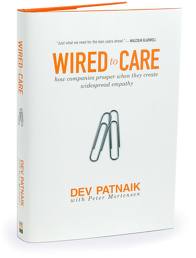
imagesThe notion of “empathy” is a central tenet of Dev Patnaik’s book called Wired to Care. Patnaik, a renown business strategist, writes about how organizations of all kinds prosper when they tap into a power each of us already has: empathy, the ability to reach outside of ourselves and connect with other people.  He believes that when people inside a company develop a shared sense of what’s going on in the world, they see new opportunities faster than their competitors. They have the courage to take a risk on something new. And they have the gut-level certitude to stick with an idea that doesn’t take off right away.

In Patnaik’s view, people are naturally “wired to care” and many of the world’s best organizations are, too. But they must learn to stop worrying about their own problems and see the world through each other’s eyes.

Ms. Rios had a natural gift for empathizing with her students and Aiden writes about it constantly.  In “THE NINTH JOURNAL: The Last Day” he says:

During that time Ms. Rios found hope and inspiration in her students. She believed in every last one of us from Trinity to Atticus Hinzo to Rafael to Angela to Charlie Flowers and Remy Padilla and Vera Ruiz and Inca and even Lester…and me. And Raymond. Especially Raymond.

Raymond, is a special needs student who was placed in her classroom to test his ability to adapt to every-day school routines.   He struggled… (because he had special needs!)  Ms. Rios’ class would have been the perfect placement– but she was a brand new teacher and too easily influenced by Wanda, the burned-out teacher next door.  As we come to know Ms. Rios from Aiden’s writings– a natural born teacher wired to care– we realize that giving up so quickly on Raymond was very much out of character for her:

In his few short weeks with Ms. Rios, he had taught her more about teaching than any university or workshop or conference or colleague ever could.  She knew in her bones that she had given up on Raymond far too soon and she vowed to never let that happen again.  She regretted listening to Wanda.  She should have been Raymond’s advocate.

From that day forward, Ms. Rios never quit believing in her students. No matter what.  She remained resilient. (From “Lambs”)

It is possible (and critical) to design and manage schools–including the systems, services, relationships and programs– from the student out… instead of the outside in.  But to do so, we truly have to see the world through our students’ eyes.  That’s really what “deep customer empathy” is all about– and why, by the end of her first year, we come to regard Ms. Rios as such an extraordinary teacher.  And why Aiden becomes the voice of children in schools everywhere.

DSC_0025

Leave a comment

Filed under California charter schools, charter schools, children at risk, El Milagro, empathy, Fighting for Ms. Rios, gifted children, Human-Centered Design, innovation and change, public education, resiliency, school reform, spiritual intelligence, teaching, user-centered design

MADELINE’S COSTUME

hrc3

The Human Rights Campaign has been profoundly influential in encouraging public schools to develop policies that protect students from any forms of discrimination or bullying– especially LGBT students.  San Diego Unified School District, for example, has developed a model, Board-adopted, anti-discrimination policy that assures children a safe learning environment, regardless of their “actual or perceived” sex, gender, or ethnic group identification.

Adopting policies that prohibit discrimination in our schools is essential for children and staff.  But the real work is in creating safe, inclusive, loving environments that are often the one safe haven in a community.  Like El Milagro.

In “Fighting for Ms. Rios,” Aiden introduces us to Matty in the Fourth Journal: Virtuosos.

Matty was an athlete. Matty was a fierce competitor. Matty played little league. Matty played kickball. Matty wore a Baltimore Ravens football jersey. Number fifty-two. Matty always had a short-cropped haircut and was tall and thin. Matty pounded Augie behind the backstop for trying to cut to the front of the kickball line. Matty cussed and spit and told crude jokes and talked with a full mouth.

For Halloween Matty dressed up as a professional baseball player. A catcher with eye black and all the gear and the shin guards and a cup. (Madeline’s Costume)

Aiden has been playing with Matty since the beginning of the school year, but it is not until the Halloween Carnival– when the kids take a bathroom break and go into separate facilities– that he discovers she is really a girl.  The other kids knew all along.  Perhaps they have known her since kindergarten.  Perhaps they paid attention when their teachers lined up the boys and the girls separately.  Perhaps in elementary school  it just doesn’t start to matter yet.

“Matty is a girl, you dumbass!” said Charlie Flowers. He stopped adjusting the crimson pirate bandana that bordered his crimson head. He paused and looked at me to see if I was serious. “She’s supposed to go into the girls’ restroom.”

Matty is a character based on several students we have served at Mueller Charter School.  Even in pre-adolescent years, some children identify more with children of the opposite gender– and at that age– it is often difficult to tell them apart.  Matty dressed like a boy, wore her hair like a boy, talked like a boy and behaved like a boy.  Enough to confuse Aiden, who seems to blush a little, shrug his shoulders, and move on:  “In any case, it just didn’t seem to matter much at the Halloween Carnival where, at least for one night, we were all hiding behind one disguise or another.”

We have seen children so insistent on behaving like a child of the opposite gender that they refuse to use the school restrooms.  So we just make quiet arrangements for them to use the nurse’s restroom whenever they need to.

Aiden comments on the sensitivity and compassion of the teachers at El Milagro and we can easily imagine that the staff there has adopted policies similar to those inspired by the Human Rights Campaign.  It is as if he knows, even at the age of ten, that  policies don’t change attitudes and that what really matters is how children are actually treated every day.

As we walked around the carnival, I watched all of the adults interact with Matty like she was any other kid. They all knew. Her former kindergarten teacher even called her by her real name: Madeline. “You look like a pro tonight, Madeline! You look stunning!” Matty smiled.

I had a new respect for Matty and for my school. I felt proud of who we were at El Milagro—a place where kids could be who they needed to be for however long it takes to work it all out.

matty

Leave a comment

Filed under charter schools, children at risk, El Milagro, Fighting for Ms. Rios, gifted children, health care, public education, resiliency, school reform, spiritual intelligence, Uncategorized, zero tolerance policies

CHRISTMAS LIVES

MORE STORIES from “Fighting For Ms. Rios:

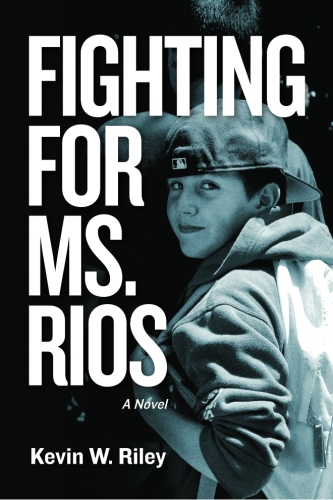
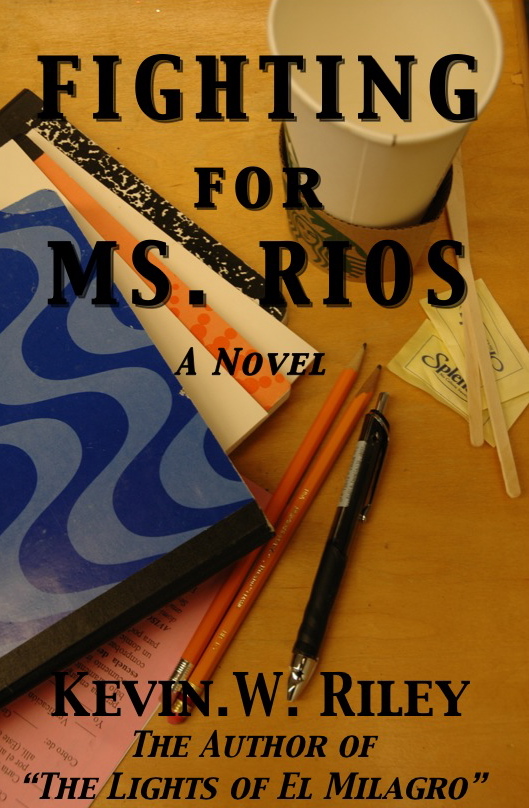
BookCoverImageIn December, Fighting For Ms. Rios was released in both paperback and Kindle formats.  It is a fictional collection of journals written by a gifted fourth grade student named Aiden, about his school, his friends, and his inspiring first-year teacher– Ms. Rios.  I have resurrected my blog to break down some of Aiden’s many stories and themes… all observations about our schools from a child’s point of view.

Christmas lives.  In spite of the best efforts of the ACLU or whoever else is as busy as one of Santa’s disgruntled little elves trying to dismantle Christmas and remove it from all mention in public schools– it is still mentioned. Frequently. And celebrated.

Aiden is in awe at his teacher’s gift for telling stories, especially when it comes to weaving in cultural traditions. In “Storyteller” he writes:

“In December she told stories about Christmas and Kwanza and Hanukkah and didn’t make it sound like she was just trying to provide equal time to be politically correct.”

That’s the thing with Christmas.  We aren’t supposed to talk about it in our schools because we don’t want tax payer dollars expended to propagandize any one faith. No Christmas carols, Christmas trees, Christmas Santa Clause scenes, or Christmas Tannebaum art projects.  It’s one of those holidays that we are supposed to whisper about as an odd tribute to all the people that don’t actually celebrate Christmas.  As if children aren’t aware of the imminent arrival of their favorite day of the year.

But for Ms. Rios, even the arrival of Christmas presents itself as a teachable moment: there is more to December than  racing to the shopping malls to contribute to stimulate the economy.

“The whole world worships God,” she said at the end of the last story of the Christmas/Hanukkah/Kwanzaa season. “Each to his or her own. This is all of humankind’s most spiritual time of year—maybe because it’s so close to the beginning of the new year. Maybe because it’s symbolic of our deep, deep desire to live in peace. Maybe because it represents the origins of our collective religions or the source of our individual faith. But it is universally a time for family. And food. And prayer. And light. And forgiveness.”

Aiden’s own references to Christmas are sprinkled throughout his journals- not as prayers– but as vivid metaphors:

It reminded me of Christmas and how time seems to move so slowly in anticipation of the big day, but then when the day actually gets here, it seems to speed past in a blur. (From– Beware of Bilbo)

 Just before Mrs. Holstrum interrupted her conversation with two other teachers, I heard Ms. Rios talking about her class and her students and “light bulbs that go on and off like Christmas trees.” (From– Minimum Days)

• Every child’s eyes were as big as Christmas morning. I looked around and thought, “My goodness…this is gonna be an interesting year.” And I was right. (From– Labradors)

• One day Ms. Rios said that “being a teacher is like coming out to the living room on Christmas morning and having thirty-two gifts to unwrap.” (From– Storyteller)

There is much to unwrap in Fighting for Ms. Rios.  Aiden is unconstrained by political posturing.  For him, Christmas lives.

images

Leave a comment

Filed under El Milagro, Fighting for Ms. Rios, gifted children, public education, spiritual intelligence, Uncategorized

CARVING UP CRAIGY

MORE STORIES from “Fighting For Ms. Rios”:

Now that my book is published and available (even for your iPad) through Amazon, I want to resurrect my blog.  There are a lot of really good posts here. So I’ll highlight different stories from Fighting for Ms. Rios and connect them back to a previous post.  It all comes full circle anyway.

BookCoverImageAiden is clearly blessed with many talents: he is an amazing writer, of course.  He is athletic.  He seems to have a sixth sense when it comes to adult culture in schools.  And he is quiet capable of defending himself in a fistfight.

Other interesting talents emerge from time to time– but one of the more peculiar ones is his awareness of when he is invisible to adults.  It’s hard to tell how literal Aiden wants his readers to take these passages, but they are definitely there for a reason.

On his first day at school, on the blacktop, he hears a conversation between a teacher and a parent.  How does he hear it?

I always seem to overhear those kinds of conversations between adults—maybe because I am invisible to them.

He overhears Wanda and Ms. Rios speaking about Raymond. And later, when Craigy gets himself in trouble for bringing a knife to school (Carving Up Craigy), much of Aiden’s narration comes from being invisible.

I wondered how I could have sat through that entire conversation and how it never once occurred to Señora Principal Nuñez or the Compliance Director to send me back to class. But I guess it didn’t. And I remained strangely, invisibly, witness to every word.

invisiblePerhaps it’s just a sneaky literary trick that Aiden is invisible and privy to information that normal kids wouldn’t have at school– if it weren’t one troubling detail.  They are often invisible.  Adults run the place.  They call the shots.  They determine who comes and who goes and at what time kids eat and go to the bathroom and play with their friends.  It’s all about command and control.  And when the adults step off-stage they do so in places where the kids aren’t allowed to go:  the office or the teacher’s lounge or the lunchroom or parking lots or the fast food restaurant down the street.

Some of this is just a matter of practicality. Adults in the workplace have different needs and privileges than children in a school.   But what does it mean when a child feels invisible in his own school?  He has no value? No relevance?  Nothing to offer? No wonder Aiden is so insistent that the adults know his name!
Schools often describe themselves as being student-centered– they aspire to focus all their attention and all of their decision-making around what is best for their students.  That is a worthy mission.  But if they could hear their students speak, if the truth was made manifest, how many are falling through the cracks and chasms simply because they are invisible?

“Carving Up Craigy” is from THE FOURTH JOURNAL: Virtuosos

Leave a comment

Filed under children at risk, Fighting for Ms. Rios, gifted children, public education, school reform, spiritual intelligence

SAY MY NAME

MORE STORIES from “Fighting For Ms. Rios”

Now that my book is published and available (even for your iPad) through Amazon, I want to resurrect my blog.  There are a lot of really good posts here. So I’ll highlight different stories from Fighting for Ms. Rios and connect them back to a previous post.  It all comes full circle anyway.

BookCoverImage

Sometimes kids don’t know much… but they know the sound of their own name.  They know it’s sacred.  It gives them an identity on a crowded campus when the day-to-day grind of school life is eating them alive.

In Juvenile Hall and in the schools for our incarcerated youth that are hidden away in the back country here in San Diego, I was always pushing back on the practice of calling students only by their last name.  Like they were in the army.  Or prison.

Every kid has a first name– we call it their given name because somebody took the time give it to them.  It is so unique, it even distinguishes them from other members of their own family.  It may be common or cosmic or utter syllabic nonsense– but it is theirs– and they want us to use it.  They want us to pronounce their name correctly, too– like their moms pronounce them.  With respect and reverence.

Aiden is on to the adults who don’t know his name.

“My name is not honey, babe, baby doll, young man, sir, all star, big guy, hey you, you there, hon, sweetie, champ, kiddo, sport, new kid, mijo, laddie, buster, goofball, or dumbass.”

You can’t fake it.  You know their names or you don’t.  And knowing their names is the first step to building authentic relationships with kids you hope to teach.

 “I love the sound of my name, and though I know there are a thousand other students in my school, I want you to know how to say it.  My name is Aiden:  little fire.”

–From THE FIRST JOURNAL:  Back in Line

desk

1 Comment

Filed under Fighting for Ms. Rios, gifted children, public education, resiliency, spiritual intelligence

THE MILAGRO TRILOGY

For a while I was blogging all the time. Right here.  Some really, really good stuff.  I cranked out blog post after blog post– at least once a week– usually on Saturday mornings.  I would consistently check my stats and it looked like, depending on what I wrote, I’d have quite a few people dropping in.  Then something happened.  I got so tied up in writing and editing my second book, I couldn’t pour any more creative energy into sustaining my blog.  So I didn’t.

Now “Fighting for Ms. Rios” is complete and soon to be released.  It is a story told by a highly gifted fourth grader named Aiden who is not only an extraordinary young writer, but he is amazingly perceptive about adults and their schools. And he can fight.  Aiden writes a series of nine journals over the course of the school year, chronicling his experiences with his friends and with his remarkable first year teacher– Ms. Rios.

I had lots of people edit my book and at one point even had it placed with a publisher called Park East Press.  But I realized publishing can be a sleazy business if you get caught up with the wrong folks– and Park East Press turned out to be the wrong folks.  So I wrestled my manuscript back from them and decided instead to join the hundreds of other entrepreneurial writers and inventors and musicians and filmmakers who value their voice… and I placed my book project on Kickstarter.  Check it out.  There is even a book trailer there.

In the meantime… “Fighting for Ms. Rios” will be released on bookshelves and Kindles in September.  But that’s not all.  I’ve nearly finished a sequel called “Broken in the Middle,” where our gifted little writer, Aiden, is now in 7th grade and struggling to rise above the worst adversity that a kid will ever face.  The theme of the book is resiliency, and it is a hopeful story.

And of course there is a sequel to the sequel.  In “Catching In A Crowd” Aiden is a senior who attends a very unusual charter high school.  He is a decorated high school athlete, but the real offers are coming in from schools that specialize in creative writing.   In the final book of what has now become the Milagro Trilogy, Aiden’s journey through the K-12 system is complete.

So that’s where I’ve been.  Writing the Milagro Trilogy instead of blog posts.  But I intend to resurrect my blog, if for no other reason than to update you on the progress of the Trilogy and Aiden’s latests exploits.

Let me know what you think.

Leave a comment

Filed under California charter schools, charter schools, El Milagro, gifted children, innovation and change, public education, resiliency, teaching

GENIUS

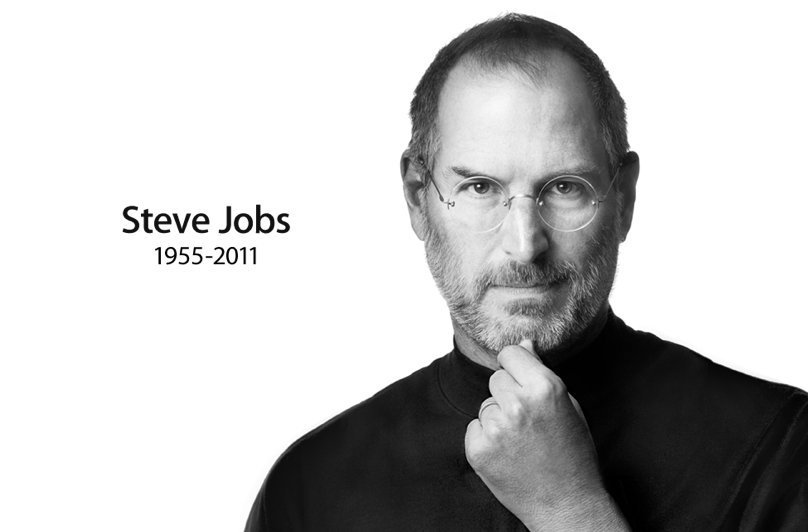
Steve Jobs died today and I have been reading the tributes and eulogies pouring in from the very devices that he created.  I realized something as I read about him.  He lived.  He envisioned a future in which the form and function of technology could be so de-mystified that anyone could access mankind’s most promising tools.  Steven Jobs created computers that fit in our back pockets and phones that can tell us our location or divine the stock market dive or provide real-time weather updates in Jakarta or Jersey City.

The most compelling tribute came in his own words– his speech to the graduates of Stanford University in 20o5:

“Remembering that I’ll be dead soon is the most important tool I’ve ever encountered to help me make the big choices in life. Because almost everything — all external expectations, all pride, all fear of embarrassment or failure – these things just fall away in the face of death, leaving only what is truly important. Remembering that you are going to die is the best way I know to avoid the trap of thinking you have something to lose. You are already naked. There is no reason not to follow your heart. … Stay hungry. Stay foolish.”

He lived 6 more years and saw the evolution of the IPad and smarter smart phones and lots of other stuff.

Maybe in our schools we should quit debating the wisdom of using the tools and toys that Steven Jobs created and just appreciate how influential they are in ours students’ lives.  It is how they learn.  It is how they communicate.  And in fact, if it were not for Apple’s visionary instinct to link technology to public education way back in the early 1980’s, we would not have been nearly as successful in bridging the academic chasm that separates students along socio-economic lines.

History books will soon place Steve Jobs along side of the world’s greatest inventors:  Edison and Franklin and Ford and Da Vinci.  His genius made our jobs as educators easier- yet, somehow,  more urgent.

“Stay hungry,” he said.  “Stay foolish.” Then he left as if our next great genius is sitting in a classroom somewhere in America.  And of course she is.

Leave a comment

Filed under gifted children, public education, technology in schools, Uncategorized

BEYOND YOUR SCHOOL’S TATTOO

A few years ago The Journal of the American Academy of Dermatology released a study on the trend of tattooing. In it, they estimated that 24% of the population between the ages of 18 and 50 had at least one tattoo. But that was five years ago. It is likely much higher now.

And the most popular tattoo? It is the tribal band, a sun or butterfly, or some Chinese script that one can only hope means what you think it means when you commit to wearing it for the rest of your life.

A tattoo is all about commitment and communicating your “brand”.

So I wonder why our parents and our teachers don’t routinely get tattoos of our school logo. Come to think of it, I see all kinds of tattoos every day at my school, but I have never seen even one that promotes our brand.

That’s troubling. Not because I want to see a bunch of tattoo designs of our school, but because tattoos are the the ultimate expression of a customer’s faithfulness to a product. The single most powerful indicator of customer loyalty is when clients willingly share their positive experience with family and friends and urge them to see for themselves. It is the concept of “net promoter”.

And how do citizens of a capitalist and democratic society express their product loyalty? Through their frequent patronage. By word of mouth. By wearing a tee shirt (Hard Rock Cafe-London?) Through Twitter and Yelp and Facebook.

And by affiliating oneself to an idea… symbolically captured in a tattooed brand: the mercedes benz hood logo, the channel interlocking “c’s”, the nike swoosh, the flirtive persona of the playboy bunny, the venerable “NY” of the New York Yankees.

If you were to Google tattoo designs for Harley Davidson you would find pages and pages of them and no shortage of examples carved into every conceivable body part. It is a small price to pay for attaching oneself to the notion of raw power, independence and engineering excellence. Tattoos are, among other things, metaphoric.

If you Google tattoo designs for your school, on the other hand, chances are you won’t find any. You won’t find my school either and that’s the problem. Our stakeholders would sooner ink images of automobiles or household appliances or tobasco sauce to their forearms than their neighborhood school.

There may be some reasons for that:

• Product brands are familiar and reliable and often represent an attribute that an individual is willing to “advertise” for the rest of his or her life. It is less about the product and more about the metaphor. And our schools don’t make good life-long metaphors.

• When schools do show up as tattoos they are logos for universities like USC or Notre Dame or the bright red “A” of the Crimson Tide. But don’t be mistaken. These tattoos are not in tribute to the math department or to the fine services rendered over in accounting. They represent football teams that win more than they lose. Teams with history and swagger. We all like a winner. The Trojans may be on probation but they certainly aren’t in Program Improvement.

• Perhaps most importantly, if someone is willing to tattoo the icon of a business or product to their body, it is because that brand is incontrovertible and well defined. There is no going back. There is, for example, no debate about who (or what) the Apple or Target icons represent.

The neighborhood elementary school? That’s a different story.

But if people have a positive enough experience in the marketplace, if they are so passionate about a product that they feel it in their bones, if they are willing to shout from the rooftops, to at least buy the (Ferrari) tee shirt until they can afford the car– then you have a brand that works.

And if people are willing to compromise their career aspirations for a visible tattoo, to endure the stinging pain and fuss with the healing process, to brook the criticism from mom and the in-laws, to say nothing of their jealous friends’ incessant chiding–it is only because they believe so deeply in what that brand represents.

And, sadly, that is why there aren’t a lot of public schools represented in tattoos. Neither for metaphoric value. Nor for the sake of sentiment.

When it comes to our experience in public schools, there simply is no “brand” identity that invokes the kind of passion required to allow some 19 year old to carve a Chevy monster truck with Bridgestone tires into your ribcage. We forfeited that responsibility to the marketing genius of politicians who chose instead to brand public schools in a far less generous light: as ineffective, archaic, moribund sinkholes that waste taxpayer dollars.

Time for a different brand. Time to promote the extraordinary capacity of teachers and schools to not only engender amazing academic results in whatever test you want to gives us… but to simultaneously prepare students for a future that they will actually inherit– one that will no doubt require them to think, create, innovate, problem solve, communicate (in multiple languages) and work effectively with others.

What would that brand look like? And would you be willing to tattoo the icon to your body if it all lead to extraordinary results?

(This post also appears on LeaderTalk)

Leave a comment

Filed under charter schools, El Milagro, innovation and change, public education, school reform, teaching