Category Archives: teaching

EL MILAGRO AT A CROSSROADS

crossroadsThis is the anniversary of my first blog.  I have now been blogging for a full year.  59 posts, 147 comments and countless hours and caloric expenditures of creative energy later… here I am.  Somewhere.

But this week I had an epiphany.  

On Thursday  I contributed a comment to Scott McLeod’s blog called Dangeously Irrevelevant, and somehow I think it got deleted.   He is a professor in Iowa and a frequent critic of public education and his own children’s schools. Blogs are good for asking challenging questions and he usually asks some tough ones.  But I took exception to this:

Does anyone think that we were doing a fine job of meeting the needs of underserved populations before ‘the tests?’ Have we all forgotten that school has been boring for generations?

It’s not ‘the tests.’ It’s our unwillingness and/or inability to do something different, something better.

It’s not ‘the tests.’ It’s us.

So whose schools are we talking about?  His kids go to school in Iowa for God’s sake– hardly the crucible for school reform.  Yet this is the kind of statement I see made all the time, especially from university professors who have little room to question the quality of instruction at the K-12 level. So I said, in effect, “I disagree.  We are doing something different at Mueller Charter School and it certainly isn’t boring.” And I cited our partnership with the Chula Vista Nature Center as an example.

Maybe citing Mueller Charter School is considered self-promotion on somebody else’s blog.

Maybe my objection was deleted because I used my own school, as I often do, as an example of a public school that works.

Maybe the critics of the K-12 system don’t like to acknowledge “isolated examples” of schools that work– even though charter schools exist to serve as innovative and sometimes “isolated examples” of courageous change. The way I see it, one example from El Milagro is as valid as criticizing the entire K-12 system on the basis of a single school in an Iowa cornfield.  

So whatever. Dangerously Irrelevant has to live up to its name.  My blog merely needs to live up to El Milagro— the miracle.

All I know is that I am investing too much time commenting and debating in this medium; I’m expending too much creative energy on trying to be a participant and build an audience for my blog.  

I have a school to run.  I have students and staff who need my creative energy to be devoted to them. I have several book projects winding their way to completion.  And we have two extraordinarily promising projects on the drawing board that could profoundly transform our school (and any other school that pays attention to our work.)  

So this is as good a reason as any to steer my blog (and my blogging) in a different direction.  I’m just going to document the transformation from Mueller Charter School into El Milagro and leave the debating to the critics on the sideline.

As for the two projects… stay tuned.

2 Comments

Filed under California charter schools, El Milagro, environmental studies, public education, teaching, Uncategorized

INSTANT ABACUS

abacusjpegIt’s Week 2 of the California Standards Test and students are fingering their math facts like an abacus.  Many of our children couldn’t wait for the math portion of the CST.  They are descendants of the Mayans and ancient astronomers of the Yucatan.  They know mathematics.  It flows through their blood in algebraic platelets and word problems with multiple right answers. 

Math is our advantage.

But these are also the children of the video game and “Guitar Hero”; the dance step and :30 second wait for an Original Dream Machine with an extra energy boost.  They call upon the internet and it responds immediately– or they will divine a better connection.

The response is immediate.  The results appear promptly.  And the sociologists decry us all as the generation(s) somehow spoiled in our expectation of instant gratification.  And they may be right.

aim

But when it comes to the standardized testing game, we receive anything but instant gratification.  In fact, we will wait three months for the results.  They will come in late July, most likely the first week after our teachers return from a brief summer nap.  By then they will already have met their new students and new colleagues and new parents.  And right about the time that they are adjusting to the idiosyncracies and learning styles and potential and challenges of a new class, last year’s data will arrive with a crash on the doorstep.  Like the morning paper thrown too hard from a passing car.  One that slams the screen door at the bottom and sends the frightened cat racing through the house with her ears pinned back.  Scared shitless.   

The test results will of course make headlines in the local section of the Union-Tribune.  There will be a complete analysis.  They will be posted school by school on the internet.  And those of us who strain every day against an odd alignment of conflicting systems, will immediately recognize that no matter how good the news or how bad the news… there is not a thing that can be done now to change our history.

Schools will go into Program Improvement.  There will be sanctions and consequences.  Administrators will be shuffled.  Teachers will be placed on assistance plans.  But none of those steps can change the outcomes from a group of children who have now come and gone.  

So if the California Standards Test is so important that it can change lives and careers and entire communities… why does it tak three months to get the results?

This is after all the age of technology.  Instant gratification.  If it is so high a priority, tell us how our students did on this morning’s math assessment… but tell us now.  I’ll even give you a week. No excuses.  I don’t want to hear how many schools there are in California and the hundreds of thousands of tests that have to be scanned or the logistics of reporting it all back or any of those other stock complaints.  When we were chided about our low API a few years ago, no one wanted to hear about our families in crisis or our children who have lived in multiple foster homes or the child attending his 22nd different school or the inherent struggles for second language learners.  The mantra of the “Age of Accountability” is “No Excuses!  So we will push our students up the mountain side in search of miraculous growth.  We will keep them whole and alive.  We will challenge and cajole and celebrate them.  And we will test them.  

testAnd this morning, they will each complete question number 21– a pre-algebraic word problem with one absurd possible answer choice, one answer choice that will trick a number of children who aren’t yet test-savvy enough to smell a rat, one answer choice that is correct and one answer choice that goes down smoothly…a sugar sweet placebo to remind us all that standardized, multiple-choice tests are to the disadvantage of the children that actually think. But they don’t know if they got question #21 right. They don’t know if they fell for the tricks and the traps so they cannot make mid-flight adjustments like they do on their video games. They’ll never know.

And by the time the results come back they won’t care!  Because kids are like that. They want to know the results right now… or heck with it.  By next July they’ll have other fish to fry.  For teachers it is a different story.  The percentage of children that tanked on #21 will be instructive.  Sort of.

giftsBut imagine what our teachers might do with the data if they could get it back next Tuesday. As they unwrap the tangled trends: 

• They could review the results with students so they know where they are strong and what areas they need to work on with 5 weeks left in this academic year.

• They could create an individualized summer learning plan for students so they could bridge some gaps in their learning before the next school year starts.

• They could meet with parents and triangulate the CST results with evidence of classroom work and other local assessments.  By then, parents would know exactly what level their children are on– their academic strengths and areas for growth.

• They could provide parents a summer reading list based on the CST lexile report.

• They could bring some closure to the school year and prepare each child’s file for transferring on to the next teacher.

• They could identify appropriate grade level placements for the next school year.

• They could meet with next year’s teacher with definitive data.

• Grade levels could re-group around the data and identify areas that need to be re-taught, or celebrated, or re-enforced, or tossed out altogether.  

• They could make informed decisions about the programs and policies and approaches and innovations that were successful and the ones that weren’t.

• They could fully capitalize on their expertise in using data to leverage informed, strategic change.

And of course we do all of these things in time.  But if the system were better aligned, and the data were returned to us, and the legislators and test bureaucrats in Sacramento had to stretch as much as we did… we would all have the tools we need when those tools would have the greatest impact.

At El Milagro we are in search of results.  Now.  Instantly.  No excuses.

gold 840

Leave a comment

Filed under California charter schools, charter schools, El Milagro, public education, standardized testing, teaching

CELEBRATE… THE SEA BREEZE, THE 840

stillIt is Day 3 of the 2009 California Standards Test and it is quiet across the campus.  Still.  Ghost-like.  Except for the traffic up on I-5  whistling like a turbine and leaning ceaselessly into the North wind.  The South.

Our kids have prepared— not PREPPED– but prepared, all year.  They studied the right stuff and learned the right skills and held the same data up to the magic moonlight like the rest of us did.  So they are ready.

It is a precise science now– the advancement of a school toward the testing regime.  There are balloons signaling “840”– our school-wide goal. As if anyone could forget that that is our school-wide goal.  It is, after all,  painted in fresh colors on our psyches.  We set the goal ourselves and based it on some somewhat arbitrary variables like (1.) we have grown 40 points in one year before and (2.) the school down the street is at 840 and (3.) we are just 40 points better at teaching than we were at this time last year so (4.) what the hell!  840.  

danceeeeNow we are in it.  And that heads-down, pencil-gnawing silence of testing is mixed in with a healthy dose of celebration.  Every day.  Today the staff will play the 7th and 8th graders in flag football.  Yesterday there was a school-wide movie, a huge game of  “Capture the Flag” and a chess tournament.  The day before we cranked the music up and danced on the black top.  Testing time is also a celebration of learning.  We equate it with the team that practices all week long for a big game on Saturday.  The practice is fun… but it doesn’t compare to the rush of competing in bright uniforms against another team.

Test days are game days!

Still, the nature of the whole testing thing worries me.  There are at least these 10 things I hate about the test in California:

• It is a test of basic skills in language arts and math but we don’t test in the primary language of our students. So now it is not only a test of basic skills, it is a test of language acquisition.  Our English Language Learners (ELL’s), on top of the other mountains they have to climb, are not really given a chance to show what they know.

• While the mobility rates of students is controlled for (students who transfer in after October don’t count toward the “840”)… they still count.  Including the 4 that transferred in from other schools last week.  

• We will have to wait for 3 months for the results.  If we are leveraging the future of the nation on these results… why can’t we find the technology to score these things and get them back next week?  We need the data.  

• I have read California’ “Released Test Items”.  I know what is on the CST’s.  It covers some standards.  But it misses plenty.  Our kids are gifted in many ways and not all of those intelligences are tested.  Most aren’t.  They will get no credit for their musical or athletic talents.  Their ability to speak two languages, a gift so many adults covet, will neither be assessed nor mentioned.

• Our 8th graders will be gnawing on their #2 pencils for 90 minutes a day, for  8 straight days.  They will test in language arts, social studies, science and algebra.  It is too much testing.

• I hate the bubbles.  But I guess it is fun for kids.

• I hate that grade level Proficiency is harder to demonstrate in California than the rest of the country.  The test is just harder.  Other states are sand-bagging their kids so they have less “Program Improvement” schools.  And they know it.

• I hate that there is no room for creativity.  Daniel told me that the test is too easy and that the “questions suck”.  He will get the maximum scaled score of 600, again, and for him the questions will suck.

• I hate that the California Standards Test is standardized, even if teaching and learning and children are not.

• I hate that we get only one shot at this. 

bubbles


But enough whining.  There are at least as many things I like about the California Standards Test:

• The data will allow us to continue to improve and leverage significant, revoultionary change as a charter school.

• We will know that our students are learning and that they are learning what they are supposed to be learning.

• The content standards, the “rules of the game”, are now crystal clear.  They are out there.  

• Parents an students know what those rules are.  They know what they have to master in order to be considered “Proficient”.

• Being “Proficient” matters to our students.  To every one of them.  It creates a clear, unambiguous goals for them to achieve and a pathway to work from.

• Our students are always going to fill in bubbles on standardized, multiple choice tests. They will fill in bubbles in AP geography mid-terms, on the PSAT and SAT and GRE, on the driver’s license exam and on the state Bar exam.  Our students are learning great strategies (and developing healthy attitudes) about all of these.  They are getting good at filling in bubbles.

• The CST is a school-wide culmination of learning.  It is an EVENT.  It is a celebration! We build towards it all year.

• The CST data is summative.  It doesn’t help us make in-flight adjustments.  So it inspired us to find our own assessment system; our own formative tests that help us monitor our students’ academic growth all year long. In real time.

• The CST gives every teacher, employee, student and parent a common mission; a target. 

• The CST is data.  You grow or you die.  No excuses.

feetball

As I was writing these last few bullets… I noticed a few students going down to the rest rooms.  They have been at it for nearly two hours and they are starting to emerge from the caves.  Exhausted. But there is still a sparkle in their eyes.

“Morning guys.  How did your testing go?”

“It was easy!” they answer in unison.  Like they practiced it.  Or expected it.

When they say it was “easy” it could be a good thing or a bad thing.  We don’t know.  We won’t know for three freakin’ months.  In the meantime, we will celebrate teaching and learning and get ready for Day 4 of testing tomorrow.  And we will try to preserve our undefeated record in flag football against a very test-weary but game group of 7th and 8th graders. And we’ll pump one more day’s worth of helium in the balloons. 

Meanwhile, the sea breeze blows across the playground and the balloons bow.  840.

840

1 Comment

Filed under charter schools, El Milagro, public education, standardized testing, teaching

AT GUNPOWDER POINT, NEW FIRE

marshGunpowder Point is bathed in ocean breeze and bird poop.  It is now a protected marshland in what seems to be the last square foot of undeveloped land in Chula Vista.  Bordered by freeway noise to the east, and insulated by acres of natural foliage, the Nature Center leans into that stealthy wind.
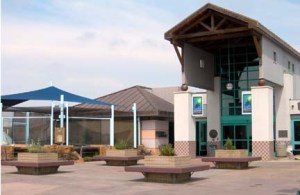
turtle_lagoon_frontAnd all of this matters.  The Nature Center is less than two miles from El Milagro and is perhaps a missing piece to the persistent dream we have had of utilizing the natural resources of San Diego Bay as a daily classroom.  It is one thing to go on a field trip … it is another thing to attend school in the slough, to walk among the endangered Clapper Rails, and observe the hypnotic swimming patterns of sand sharks. Every day. As a part of the curriculum. 

forclusre1The Chula Vista Nature Center is facing tough times in the struggling economy.  Chula Vista itself was once listed among the fastest growing cities in America.  Today, whole rows of streets and neighborhoods prop “For Sale” signs on foreclosed lawns, where the dreams of families were packed so hastily  and moved, months ago, to higher ground.  The city is in trouble.  And they fund the Nature Center.  So we want to help.  

After years of diligent budget management under  the watchful eye of  Mr. Wizard, Mueller Charter School is well positioned to weather the otherwise unforgiving fury of a distressed state budget.  So we want to lease a classroom space from the Nature Center.  We want to move our middle school science classroom there and weave them into the daily rotation.  Instead of going to science in room 902, their classroom would now be located on Gunpowder Point.  We can provide the City of Chula Vista a badly needed new funding stream to save the Nature Center; they can provide us a chance to model learning in the real world– the charter vision come to full fruition.  

This is an area rich in history.  It was once home to the Kumeyaay Indians and Spanish settlers.  It still bears the ruins of the old Hercules building where kelp was harvested for gunpowder and potash in World War I.  It was a lemon grove and movie set.  It was the scene of horrific fire that destroyed it all.  And beneath the protected marsh and slough, you just know, generations of human settlement have collected layer upon layer of artifacts.

baldeagleheadImagine children rotating through varied learning opportunities over the course of a school day: contributing to data collection and exhibit management, developing individual research projects that make a significant contribution to the body of knowledge accumulated here, serving as museum docents and guides at the sting ray petting area, performing community service to help maintain the sprawling acres, advocating for green energy.  Imagine children not just simulating the work of science, but being scientists. Contributing.  Developing not just an appreciation for the fragile interdependence of  living ecosystems, but a profound reverence for their own place in the world.  Here there are owls and sharks, reptile and eel aquariums, there are marshland aviaries, and shoreline birds.  There are rare sea turtles.  There is an adult bald eagle.  

Every day, every student would pursue answers to one urgent question that scientists all over the planet are researching.  Something like this:   “How do human developments along our natural waterfronts contribute to and compromise the fragile ecosystems that exist there?”  Our 7th and 8th graders would explore, investigate, experiment, and publish their findings through wikis and blogs in collaboration with children from around the world.  

This is real science.  Authentic learning.  John Knox says you have to teach and learn science with all five senses– and for all you’re worth.  You have to be outside.  In the middle of it.  You have to get your feet muddy and splash aquarium waste water on your shoes.  Appreciate the stench of the owl barn. The sting of the cactus needle.  The rotting kelp.

We are poised for an extraordinary partnership and, for our students, the learning experience of a lifetime.  Here on Gunpowder Point, where early Chula Vistans fought the world war from the banks of San Diego Bay, there is an opportunity to give meaning to the daily joy of learning.  Here in the marsh and the wetlands– new fire.

cape_cod_beach_fire

5 Comments

Filed under California charter schools, charter schools, El Milagro, environmental studies, teaching

A LONG KICK AGAINST THE WIND

filmstrip06ew

Yesterday was my day to post on Leadertalk, which is one of several blogs managed by Education Week. Educational leaders are invited to participate– and my day is the 20th of every month.  So I am always thinking about what I want to post on Leadertalk.  It is harder to add photos and I feel a little more confined, like I have to be much more careful since it is someone else’s deal.  Nevertheless, as a neophyte blogger, it is a cool opportunity.

So I decided to post a hybrid piece, combining the elements of what I published here at El Milagro Weblog last week and my idea for today. 

Because as of today we are 5 instructional weeks from the California Standards Test (the CST’s!)  and our teachers are studying their formative data and making some very strategic adjustments in how they work with their students on the final push.  5 weeks is the blink of an eye and they know it.   We are still a long ways away from where we need to be.  In fact, our MAPS data tells us that 22% of our English language learners are now operating at a proficient level in language arts and 23% in math.  We need at least 50% proficiency to reach the state’s Annual Yearly Progress (AYP) goal.  

This is crunch time.  Our teachers are as serious and as focussed as I have ever seen them.  There is no panic.  There is no quit.  There are no false illusions about where we are.  So it will be interesting to see how our students perform on California’s standardized tests in May.  

field-goal1This is also the time period in which we cease to philosophize about the wisdom of standardized tests and what the pre-occupation with language arts and math might be doing to our students’ broader abilities to think and innovate and solve problems and reason.  This is not the time to engage in the political debate.   An NFL coach may not like the rules for sudden death overtime, but when you are out of downs on your opponents’ 20-yard line, you better just trot out your kicker for the game winning field goal and argue about the rules of the game later.

ny-timesjpeg2So we are playing to win.  And when we win, we expect that there will be some interesting headlines in the morning newspaper.  Something like:
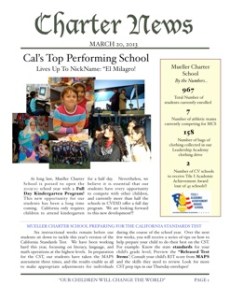


“California Charter School Shocks Education World”

or

“Mueller Charter School Achieves Unprecedented One-Year Gains”

or

“State Department Questions Legitimacy of Dramatic Test Results


It is a healthy exercise  to visualize your organization’s success and there are many ways to do it.  But try visualizing the newspaper headline that captures the essence of your  mission and celebrates the moment at which all your collective dreams and ambitions come to full fruition.  What will the headlines say? 

“Charter School Caps Decade of Innovation by Tipping 901 on API”

hands-up

As a visualization exercise, this headline is dramatic.  But it is more than an exercise… it is our mission.  And it is attainable.  We have implemented a longer day, a daily English language development program in every classroom, our assessment tools have improved and so has our capacity to use technology.  And those are just the highlights. So now all that is left is five weeks of instruction, a 45-yard field goal (against the wind)  and the long vigil at the news stand.  Just what will your headlines say? Perhaps ours will read:

“California’s Top-Performing

School Lives up to Its Nickname:

El Milagro!”

headlinez

Leave a comment

Filed under California charter schools, El Milagro, public education, teaching, technology in schools

50 QUESTIONS

“We are looking at schools that are producing genius… collaborative, gregarious, brave children who care about stuff  like their culture. Around the world people are testing out the ingredients of what makes that work and those ingredients are being assembled into some stunning recipes in different places.  It is a very exciting time for learning. It is the death of education but the dawn of learning and that makes me very happy.”

Stephen Heppell, CEO Heppell.Net, Ltd., UK from the video:  “Learning to Change– Changing to Learn”

2cIn 1985  I bought my first personal computer– an Apple IIc with the chicklet keybpoard and alien screen.  It seemed almost portable enough to carry around like a briefcase.  Or maybe like a computer that could sit right on your lap.  Compared to those old green Kaypros and clunky Apple IIe’s, it was revolutionary. I had a milk crate in my living room and that’s where I put the screen.  I wrote my entire dissertation on my Apple IIc and stored every chapter on a box of labeled discs.

I envisioned a whole classroom lined with Apple IIc’s.  I taught writing and the whole “word processing” phenomenon appeared– in the mid-1980’s– as if it was going to stay.  In fact, when the old grey-haired English teachers bitched in the faculty lounge about “word processing” and how it would never replace the pencil and paper and that it would only make children intellectually lazy because it insulated them from the rigors of real writing (which, to my knowledge, none of them had ever successfully  done)– I refused to join the debate.  I just went back to my classroom, wrote more grants (on my Apple IIc) and lined the walls with the computers that seemed to engage children in writing in a way that few other strategies could.  

mac-floppiesThen a teaching colleague named David Mika pulled up to Muirlands Junior High School with his new Macintosh thing.  You could actually manipulate the cursor right on the screen and “Oregon Trail” evolved accordingly.  And the discs were smaller and made of hard plastic.   They just fit in your pockets better.  They didn’t fly as well as the old floppy discs though.  (I could flip the old discs halfway across the playground.  Digital frisbees. They could put your eye out.  But soon enough they were replaced by CDs which sailed three times as far as the floppies so I startted to feel better about where the technology was headed.)  And so I upgraded my classroom with first generation Macintoshes while still making the best of the now-antiquated IIcs.

Then we could MacDraw and add art work and graphics on color screens.  Then there were internal operating systems.  Then they added audio.  And the high-techpersonal computer wars between IBM and HP and Compaq and Apple and others resulted in business disasters and technological wonders.  Marketing pitches tapped into a nation’s fears about losing our humanity.  IBM’s signature advertising campaign featured Charlie Chaplin in black and white, approaching the PC on a table adorned with a vibrant red rose.  “High TECH”, said John Naisbett, “demands high TOUCH.” And thus, the rose.

Soon enough computers were creating more computers.  The technology was showing up everywhere– from our watches to our automobiles.  And then the internet was born.  And then DVD’s and scanners and document cameras. Then IPods and IPhones and Kindles and Wordles and Wikis and Facebook  and Flip cameras and Wii and Prometheon Boards and Blogs and we know we are only scratching the surface of innovation that our economy and environment will inevitably demand.  Progress is insatiable.  That’s why it is called progress.

And that’s the history of computers in schools.  25 years in a nutshell–  from the Apple IIe to MacBook Pros on every desk and I wonder:  Why are we still not seeing a technology-driven transformation in teaching and learning?  And lots of other people are wondering that too.  In fact we have never seen a complete technology-driven transformation in our schools.  There always seem to be a few tech-savvy teachers on each staff– like David Mika. Eventually they end up in High Tech Charters or become district technology coordinators who advocate for the infusion of computers into every classroom.  They go to tech conferences and write Technology Plans and sometimes they get so comfortable in their knowledge and their favorite strategies that the tech wave crashes over top of them just like it crashes over everyone else and they don’t even know what hit them. 

The knack for integrating technology and effective pedagogy,  it seems, has to come from within.

armando

So on Friday we had our weekly 15 minute staff meeting at Mueller Charter School.  The teachers were asked to watch the video “Learning to Change-Changing to Learn” on You Tube and to write a compelling question inspired by the video that no one else is likely to ask.  Create the $64-million question and bring it to the meeting. And so they did.  And in the space a of a very short time frame, 50 questions were generated that encapsulated all the fears and cynicism and pragmatic reticence and wide-eyed possibility that technology brings to the tough work of teaching children.  

picture-7

Our teachers get it.  The world is changing.  The needs of our children are changing and you can see the themes reflected in the Wordle above.  Toffler said:  “Schools must not just prepare children for the future… they have to prepare them for the right future!”– one of  relationships, community, connectivity, and access.

i-poddiesjpeg1In the range of “50 Questions” there are the understandable doubts about techno-distractions and gimicks and silvery sirens that are more toys than tools.  There is evidence of the constant numbing pressure from standardized tests and unattainable goals of NCLB. Yet somehow there is also that awful realization that the video is right: that our “children are exposed to a much more rich and stimulating environment outside of school than in school.”  

And these teachers– most of whom belong to Generation Y; most of whom were raised and schooled in the post-Macintosh world when the light switch for the internet had long since been flipped on… most of whom have Ipods and text daily with friends and update their Facebook page in between prepping for another challenging week at El Milagro– these teachers still stretch to find the application. 

So my epiphany, humming like the IIc  with its ET-head monitor– lead to these   “5 Tenets for Integrating Technology at Mueller Charter School”: 

TENET 1: The mission of our charter is still to get 90% of our children to grade level as measured by the California Standards Test; 

TENET 2: Since the standards and competencies required by the CST are not enough, we must also help children develop the behaviors, attitudes and skills that are appropriate for the 21st Century: critical thinking, entrepreneurialsism, innovation, collaboration; (“I’m calling on our nation’s governors and state education chiefs to develop standards and assessments that don’t simply measure whether students can fill in a bubble on a test, but whether they possess 21st century skills like problem-solving and critical thinking and entrepreneurship and creativity.” –President Barack Obama, March 10, 2009)

TENET 3: There are multiple pathways  to mastery of these standards– but every pathway  requires that we ENGAGE our students in their own learning;

TENET 4: The “tools” for engaging learners may include pencil and papers, books, teacher charisma and other conventional methods–  but they include technology as well. (“Every turned off device ,” the video warns, “is potentially a turned off child.”)

TENET 5: The more IMAGINATIVE our teachers are in using technology, the more likely they will use the right technology in the right way for the right outcomes… and the more they will heighten student engagement… and inevitably, student achievement.

We are not short on imagination.  Nor are we lacking in resources or information about the latest in tech trends.  We only needed to pause between our own texting and Googling and downloading music to examine our teaching practice and assess the degree to which we use all of our tools to inspire and engage.

dsc019863Now that I think about it, every outstanding teacher I have met since  propping up my Apple IIc on a milk crate in 1985 seems to possess that common gift of Imagination.  They all have an ability to integrate the use of new tools, new strategies, new technologies to heighten student engagement, and to engender extraordinary learning. They are willing to stretch and take risks. To imagine.
I listened on Friday as our teachers discussed their 50 questions.  It was the sound of still another generation of teachers learning to change– yet desperate to maintain their humanity.  


rose

4 Comments

Filed under teaching, technology in schools

TEACHING THE MOUNTAIN TO BREATHE

“I always think that we all live, spiritually, by what others have given us in the significant hours of our life. These significant hours do not announce themselves as coming, but arrive unexpected. Nor do they make a great show of themselves; they pass almost unperceived. Often, indeed, their significance comes home to us first as we look back, just as the beauty of a piece of music or of a landscape often strikes us first in our recollection of it.”  –Albert Schweitzer, Memories of Childhood and Youth

palomarI run into former students in oddball places.  I met one in a hospital elevator a few years ago.  She was holding two kids in both arms and struggling to push the button to go up.  “Dr. Riley!  Remember me?”  My wife looked at me kind of funny.  “Ugh… well…ugh…”  

“You were my journalism teacher!”  

“Oh yea…  what year was that?”  

And though I am usually good with names, I couldn’t place her, or her name, or her two babies.  So I pushed the button for her as she struggled to get a hold of her life that was no doubt far more complex now than it was when we were learning how to write story  hooks.  And we went up a few floors.

We re-connect in random places.  And at random times.  

I saw a former student at the beach where he now lives since he became a professional surfer.  I met one in a 7-11… now a competitive body builder (and it shows).  One was working at a jewelry store… another at a coffee shop.  One stopped by a few year ago and dropped off a job application…  after high school and college she decided that she wanted to be a teacher too.  One was in the WTC during 9-11.  Or was it his older brother? (I remember frantically tearing the books off the shelf, searching through the yearbooks for some confirmation either way. Then there was a feature article in the Union-Tribune. Turns out it was his brother… who I remembered too.)   I have met their children and their spouses and heard about their many careers and the twisting paths in so many life journeys that I influenced… maybe… even for a split second… even to the slightest degree. Even when I didn’t realize it.

So this week I heard from Tod.  

He had been one of six students of the 8th grade graduating class of Palomar Mountain School.  After 30-some years in education, thousands of children and many different assignments and schools and districts… these are the six who I will always remember.  They were my first class.  

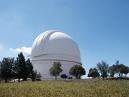
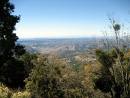
schoolPalomar Mountain School is a tiny, one-room school house a few hundred yards from the world’s largest telescope.  From this location, on the top of Palomar,  astronomers have been peering out into space for decades.  It is here, where it seems that God has been peering back.  The school sits back in the trees, nestled behind a ranger station on the last hairpin turn leading up to the telescope.  If you blink… you will surely miss it.
In the early years of my teaching career I was a football coach and a substitute teacher and I couldn’t land that first full-time teaching position.  So I responded to a desperate call from Palomar for a certificated teacher  who was willing to make the drive every day up the side of a mountain to teach in a tiny school where you would have the entire 6th, 7th and 8th grade class.  It didn’t pay much but there were benefits.  No traffic.  No noise.  No fast food restaurants.  No principal.  No textbooks.  No California Standards Test (and, in fact, no standards)  I was free to do whatever I thought a handful of 6th, 7th and 8th graders should do….  to teach them whatever I thought that they should learn. And I guess my instincts were right.  

Later I realized that many of the instructional strategies that I was using actually had a name and were rooted in real research. I realized that…  In this self-contained, un-graded, multi-age classroom, we were differentiating instruction through an integrated and thematic curriculum; we were, appealing to the multiple intelligences and learning styles of a culturally diverse group of children, providing a gradual release of responsibility, engaging all learners and monitoring their academic growth through the use of a multiplicity of authentic assessments.

viewBut when it is just you and 16 kids and crisp mountain air and a neighborhood so quiet you can hear the deer sneeze;  when the shadows of the world’s largest telescope is cast across your playground;  when you have no textbooks even if you wanted them (and I didn’t);  when you are at the early stages of your teaching career and you want to bring the whole world to your students and be a force for good in their lives; when you are just naive and idealistic enough to believe that you can single-handedly change the world for every child… that is a muse worth capturing.

And so I did.

Not long after Tod and his sister Patti graduated, I left Palomar Mountain School to work in a real school with textbooks and a principal.  It was an adjustment but I guess I never forgot the six kids from Palomar… or what they had taught me about teaching.  Or about the force we can be for children if we allow our life journey to benefit others.

I had not heard from Tod nor Patti since the day they graduated.  Until this week when Tod found me on Facebook.  He sent me a message to tell me that he had grown up, graduated from college and is now a civil engineer in North Carolina.  Just like that.  An adult lifetime, a career,  captured in a sentence.  He reminisced about those days at  Palomar Mountain School– the pop quizzes and playing over-the-line and touch rugby in the snow.  He said that, in fact, he had played rugby all through college and even later for the Raligh Vipers.  

Tod e-mailed his sister Patti and she sent me a message too.  She told me about her education, her marriage, her career.  They both sounded so happy and so complete.  And they triggered the flood of memories from those very simple times when I taught children from some place deeper even than the heart. Where I discovered the power of imagination, and ingenuity, and innovation in teaching. Where I uncovered my own eventual career passions: like student advocacy, equity, resiliency…  long before I could even define those words.  Where I realized how magic teaching can be.  And how we influence our students mightily. And they influence us.

I shared Patti and Tod’s story with my teachers at our Friday lunch meeting yesterday.  I reminded them, that no matter how frustrated, or disappointed, or discouraged they may get…  they are having a profound effect on the lives of their children. And they may not know it.  They may never know it.  Until one day when they run into a former student in the elevator or they get a note on Facebook.  

“…we all live, spiritually, by what others have given us in the significant hours of our life…”

And I reminded them of how fast it all goes by.  God’s work… in what seems to be a matter of fleeting moments.  That if you blink…

palymar1

Patti turns 4o soon.  She is older than 2/3 of my teachers…who are now older than I was, when I stood there in a clearing in the forest on Palomar… listening to the awesome silence of the mountain… and catching a glimpse of the world’s largest telescope when the wind blew.  And the trees swayed.

spectacularjpeg

3 Comments

Filed under charter schools, teaching