

Sunday morning. In the half light of dawn I awoke to screetching tires and a muffled thunk and an anxious silence that should have been filled by my car alarm.
Newspaper Guy takes the corner at the end of our street on two car wheels and races by our house with the urgency of a man on a singular  mission. On most days he has a partner who leans out the window and fires the morning paper across the lawn and into our driveway, slicing of a row of agapanthus at the bud. Newspaper Guy is not a 14 year-old kid with a paper route. He is a full grown adult who drives a Cooper and delivers his morning news with a cold disaffection for how it is to be consumed.
We are the last house he delivers to so when he finally lets the San Diego Union-Tribune fly toward our driveway, it’s for all he’s worth. Today the thick Sunday paper hit my Armada square in the tailgate at full velocity (plus additional “english” generated by the forward lean of a speeding Cooper).
It should have set the car alarm off but it didn’t. If you hit my car hard enough with softball it will go off. Hit it with the morning newspaper it won’t. And I think I know why. Here’s my theory: there isn’t enough weight in the daily paper to do any damage; there isn’t enough substance. It’s air. You can throw it in the rose bushes if you want to. Throw it against the hummingbird feeder. Throw it right through the freakin’ window for all I care. Nothing breaks.
At my house, none of us actually read the morning paper anymore. But we subscribe to it… for three totally practical reason: first, it comes with a rubber band wrapped around it and those are always handy devices for binding stuff. Second, it comes inside a plastic bag which I use when I clean up after our dogs. And third… it is an effective way to stoke a fire in our fire pit (though, quite honestly, I am gradually moving more to the Duraflame firestarters. Less ash.)
The morning paper definitely has some utility but what is not so good for is news. Not anymore.

Just two weeks ago, for example, I followed the development of the Iranian uprising– from the very beginning– on Twitter. [It was dramatic to follow events unfolding in real time. Many of the contributors to the Twitter stream were front-line participants in a moment of history. It was a day and a half before the story really picked up in the SD Union Tribune. Was there some fiction in the Tweets? spin? hyperbole? false reporting? sensationalism? Of course. But no more so than one might find in the editorial section of any local newspaper!]
And I haven’t replaced the morning newspaper with Twitter alone.
To follow President Obama’s daily challenges or to sample a cross-section of American culture I read the Huffington Post.
To follow the very latest events in K-12 public education, especially with charter schools, I subscribe to Education Week on-line and read from my laptop.
If I missed an event like an epic, come-from-behind win by the Padres… I download the replay of the most significant plays on You Tube. The rest of the scores I get from MLB.com, with the depth and details of teams I am most interested in.
If I want to read opinions from regular, everyday folks I read their blogs.
If I want some good, honest feedback and recommendations about books I might want to read, I browse through reviews written on Amazon.
If we want to publish “accurate” information about an event at my school, we don’t call reporters and wait for them to come cover the good things we are doing anymore. We just place the story on our school’s Facebook page.
If we want to include additional photographs of that same school event, we publish them on Flickr.
If I want tomorrow’s weather, or the local movie listings, or the stock market trends I find them all instantly on my I Phone.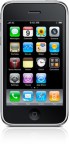
If I want to read today’s edition of a credible newspaper that is simultaneously being read by people, literally, from around the world– I download the NY Times onto my Kindle.
Now, don’t get me wrong… I’m not a techie or a gadget snob. I’m not even particularly computer savvy. I just want the information I want. And the morning newspaper has been replaced as a conduit for information, by tools that are faster, more portable, more accessible… more accurate. Five years ago most of these tools didn’t exist so I would go out of the house in the morning and pick up the paper and read it cover to cover. If it was late or soaking wet from the sprinklers I would be pissed. Now I don’t count on the newspaper as a source of reliable and real time information anymore so I don’t really care if it is late or wet or missing the sports page or written in Italian.
Ironically, I pay for my annual newspaper subscription on-line, so it is kinda hard to cancel. Out of sight out of mind. Besides, I can’t bring myself to totally discontinue the service. Even if I don’t read it. I know it’s there on the driveway. I know that the ink and the thin newsprint and the smell of the presses and the photos and the banner headlines are all good for something. The morning newspaper is like an art project. A slice of Americana. Nostalgia. A link more to the past than to the current events that are so symmetrically displayed in shaded boxes and neat columns of formulaic print.
And it still does things my IPhone and Kindle and laptop can’t do:
 For example, we can still use it to line the parakeet cage or paint bookshelves on the garage floor. We can use it to make paper mache Kachina dancers. We can recycle it. We can lay it down in the garden and fight off the weeds. We can make origami hats with it. We can use it to pack up our glasses and dishes and move away.
Newspaper publishers realize (I think) that their industry has not kept pace with the demands of consumers:
The New York Times has had to sell part of its recently constructed headquarters, the Boston Globe is said to be worth barely 20 million dollars, the Rocky Mountain News has closed, the San Francisco Chronicle could be next. The Philadelphia Inquirer, the Chicago Tribune and the Minneapolis Star-Tribune, have all filed for bankruptcy protection.
The San Diego Union-Tribune, like other newspapers all across the country, has experience massive job losses and drastic cost cutting measures. Meanwhile, universities report high interest in their Journalism Departments and Facebook welcomes 700,000 new users every day!
The morning paper hasn’t kept up with the news.
The conventional publishing industry sorts and packages the news and charges consumers for it as if it were a rare commodity– and that is not a game that is working anymore. Like the auto industry and the railroads before it, the newspaper publishers now run their presses on borrowed time. They are an anachronism in the age of technology; a sacred cow gently grazing from room to room in a house of cards.


 Maureen asked: “Is it LEGAL to group kids for instruction– and eventually assign them a standardized test– according to their proficiency levels?” and “Is it ethical?”
 Jonathan noted: “There are a lot of ways to demonstrate mastery of state standards other than by a standardized test. Are you giving the CST too much credibility as the main determiner of students moving forward? Are there other ways kids can demonstrate mastery of the state standards?”

 This is also the time period in which we cease to philosophize about the wisdom of standardized tests and what the pre-occupation with language arts and math might be doing to our students’ broader abilities to think and innovate and solve problems and reason. This is not the time to engage in the political debate. An NFL coach may not like the rules for sudden death overtime, but when you are out of downs on your opponents’ 20-yard line, you better just trot out your kicker for the game winning field goal and argue about the rules of the game later.
 So we are playing to win. And when we win, we expect that there will be some interesting headlines in the morning newspaper. Something like:
 In 1985 I bought my first personal computer– an Apple IIc with the chicklet keybpoard and alien screen. It seemed almost portable enough to carry around like a briefcase. Or maybe like a computer that could sit right on your lap. Compared to those old green Kaypros and clunky Apple IIe’s, it was revolutionary. I had a milk crate in my living room and that’s where I put the screen. I wrote my entire dissertation on my Apple IIc and stored every chapter on a box of labeled discs.
 Then a teaching colleague named David Mika pulled up to Muirlands Junior High School with his new Macintosh thing. You could actually manipulate the cursor right on the screen and “Oregon Trail” evolved accordingly. And the discs were smaller and made of hard plastic. They just fit in your pockets better. They didn’t fly as well as the old floppy discs though. (I could flip the old discs halfway across the playground. Digital frisbees. They could put your eye out. But soon enough they were replaced by CDs which sailed three times as far as the floppies so I startted to feel better about where the technology was headed.) And so I upgraded my classroom with first generation Macintoshes while still making the best of the now-antiquated IIcs.
 personal computer wars between IBM and HP and Compaq and Apple and others resulted in business disasters and technological wonders. Marketing pitches tapped into a nation’s fears about losing our humanity. IBM’s signature advertising campaign featured Charlie Chaplin in black and white, approaching the PC on a table adorned with a vibrant red rose. “High TECH”, said John Naisbett, “demands high TOUCH.” And thus, the rose.

 In the range of
  Now that I think about it, every outstanding teacher I have met since propping up my Apple IIc on a milk crate in 1985 seems to possess that common gift of Imagination. They all have an ability to integrate the use of new tools, new strategies, new technologies to heighten student engagement, and to engender extraordinary learning. They are willing to stretch and take risks. To imagine.




 "El Milagro Weblog"