Category Archives: Uncategorized

CHRISTMAS LIVES

MORE STORIES from “Fighting For Ms. Rios:

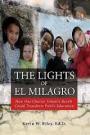
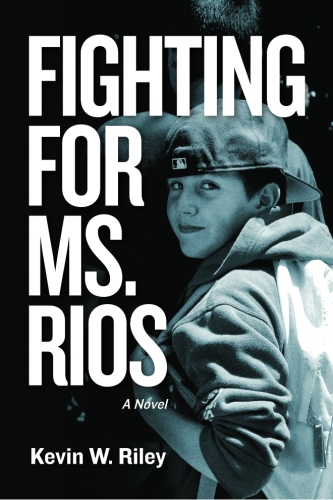
BookCoverImageIn December, Fighting For Ms. Rios was released in both paperback and Kindle formats.  It is a fictional collection of journals written by a gifted fourth grade student named Aiden, about his school, his friends, and his inspiring first-year teacher– Ms. Rios.  I have resurrected my blog to break down some of Aiden’s many stories and themes… all observations about our schools from a child’s point of view.
Christmas lives.  In spite of the best efforts of the ACLU or whoever else is as busy as one of Santa’s disgruntled little elves trying to dismantle Christmas and remove it from all mention in public schools– it is still mentioned. Frequently. And celebrated.

Aiden is in awe at his teacher’s gift for telling stories, especially when it comes to weaving in cultural traditions. In “Storyteller” he writes:

“In December she told stories about Christmas and Kwanza and Hanukkah and didn’t make it sound like she was just trying to provide equal time to be politically correct.”

That’s the thing with Christmas.  We aren’t supposed to talk about it in our schools because we don’t want tax payer dollars expended to propagandize any one faith. No Christmas carols, Christmas trees, Christmas Santa Clause scenes, or Christmas Tannebaum art projects.  It’s one of those holidays that we are supposed to whisper about as an odd tribute to all the people that don’t actually celebrate Christmas.  As if children aren’t aware of the imminent arrival of their favorite day of the year.

But for Ms. Rios, even the arrival of Christmas presents itself as a teachable moment: there is more to December than  racing to the shopping malls to contribute to stimulate the economy.

“The whole world worships God,” she said at the end of the last story of the Christmas/Hanukkah/Kwanzaa season. “Each to his or her own. This is all of humankind’s most spiritual time of year—maybe because it’s so close to the beginning of the new year. Maybe because it’s symbolic of our deep, deep desire to live in peace. Maybe because it represents the origins of our collective religions or the source of our individual faith. But it is universally a time for family. And food. And prayer. And light. And forgiveness.”

Aiden’s own references to Christmas are sprinkled throughout his journals- not as prayers– but as vivid metaphors:

It reminded me of Christmas and how time seems to move so slowly in anticipation of the big day, but then when the day actually gets here, it seems to speed past in a blur. (From– Beware of Bilbo)

 Just before Mrs. Holstrum interrupted her conversation with two other teachers, I heard Ms. Rios talking about her class and her students and “light bulbs that go on and off like Christmas trees.” (From– Minimum Days)

• Every child’s eyes were as big as Christmas morning. I looked around and thought, “My goodness…this is gonna be an interesting year.” And I was right. (From– Labradors)

• One day Ms. Rios said that “being a teacher is like coming out to the living room on Christmas morning and having thirty-two gifts to unwrap.” (From– Storyteller)

There is much to unwrap in Fighting for Ms. Rios.  Aiden is unconstrained by political posturing.  For him, Christmas lives.

images

Leave a comment

Filed under El Milagro, Fighting for Ms. Rios, gifted children, public education, spiritual intelligence, Uncategorized

GENIUS

Steve Jobs died today and I have been reading the tributes and eulogies pouring in from the very devices that he created.  I realized something as I read about him.  He lived.  He envisioned a future in which the form and function of technology could be so de-mystified that anyone could access mankind’s most promising tools.  Steven Jobs created computers that fit in our back pockets and phones that can tell us our location or divine the stock market dive or provide real-time weather updates in Jakarta or Jersey City.

The most compelling tribute came in his own words– his speech to the graduates of Stanford University in 20o5:

“Remembering that I’ll be dead soon is the most important tool I’ve ever encountered to help me make the big choices in life. Because almost everything — all external expectations, all pride, all fear of embarrassment or failure – these things just fall away in the face of death, leaving only what is truly important. Remembering that you are going to die is the best way I know to avoid the trap of thinking you have something to lose. You are already naked. There is no reason not to follow your heart. … Stay hungry. Stay foolish.”

He lived 6 more years and saw the evolution of the IPad and smarter smart phones and lots of other stuff.

Maybe in our schools we should quit debating the wisdom of using the tools and toys that Steven Jobs created and just appreciate how influential they are in ours students’ lives.  It is how they learn.  It is how they communicate.  And in fact, if it were not for Apple’s visionary instinct to link technology to public education way back in the early 1980’s, we would not have been nearly as successful in bridging the academic chasm that separates students along socio-economic lines.

History books will soon place Steve Jobs along side of the world’s greatest inventors:  Edison and Franklin and Ford and Da Vinci.  His genius made our jobs as educators easier- yet, somehow,  more urgent.

“Stay hungry,” he said.  “Stay foolish.” Then he left as if our next great genius is sitting in a classroom somewhere in America.  And of course she is.

Leave a comment

Filed under gifted children, public education, technology in schools, Uncategorized

A GENERAL’S LAMENT

Now I am conflicted.

Usually when some CEO from a dysfunctional industry shares his or her insights on how I can better do my job as an educator, it is easy to dismiss.  Is serving in Congress really all the experience you need to become an authority on educating children?  Or is running a computer start-up sufficient enough to make one an expert in the nuances of pedagogy?  Or is joining the Rotary Club?  Or having your own kids?  Or coaching a little league team?  Or managing a fast food outlet? Is not being an educator  really all it takes to know what ails the public education system?  Really?

I think educating another human being is far more complex a process than dentistry… but when it comes to root canals I’m more than willing to defer to my dentist, Dr. Disraeli.  I have a healthy regard for his expertise.

And yet, for whatever reason, EVERYBODY is an expert on what is wrong with our schools and what we should do to fix them. So I really was conflicted on Sunday morning when I read an editorial by James Comstock, a retired Army Major General who is the latest non-expert expert to weigh in on how screwed up our schools are.  His is a little different take.  He wrote:

“A report by the nonprofit Mission: Readiness estimates that 75% of young Americans are not able to join the military and one of the leading reasons is a failure in our education system.”

The Major General cites the current high school drop out rates, the high percentage of physically unfit kids, and the incidence of juvenile crime as deal breakers for individuals who might otherwise want to join the all-volunteer armed forces.  And they are.  These are the trends that every community must address through a combined effort of public policy, law enforcement, health care, social services, fitness, recreation and business. And yes, education services—from Pre-K to the university.

But not having enough enlisted recruits to slake the military’s thirst for perpetual war is not what keeps me awake at night.

It’s not that I’m unpatriotic or that I don’t appreciate the military service of my father and my two older brothers and the millions of other American veterans.  I am.  That’s why I am conflicted.  I want our students to be academically qualified for West Point (or USC)– not necessarily to enlist in the army.  So I did some research about who really does join the armed forces.  I was pleasantly surprised.  I learned that:

• Members of the all-volunteer military are significantly more likely to come from high-income neighborhoods than from low-income neighborhoods.

• Only 11 percent of enlisted recruits in 2007 came from the poorest one-fifth (quintile) of neighborhoods, while 25 per­cent came from the wealthiest quintile.

• American soldiers are more educated than their peers. A little more than 1 percent of enlisted personnel lack a high school degree, compared to 21 percent of men 18–24 years old, and 95 percent of officer accessions have at least a bachelor’s degree.

• Contrary to conventional wisdom, minorities are not overrepresented in military service. • Enlisted troops are somewhat more likely to be white or black than their non-military peers.

• Whites are proportionately represented in the officer corps, and blacks are overrepresented, but their rate of overrepresentation has declined each year from 2004 to 2007.

Evidently the military is actually meeting its recruiting quotas with quality folks who are drawn—no doubt—from the public school system.  We must be doing something right if it is our alumni who are fighting the general’s war. If you ask me the purpose of public education is in the United States today— or what legacy I might one day leave behind in my leadership of public schools— I honestly would not list feeding the military pipeline as one of my accomplishments. I am not striving to close the achievement gap as a patriotic gesture.

“America’s military strength depends on its young people,” says the Major General.    “Encouraging physical fitness in schools and providing children with the quality education they deserve will help insure our national security for years to come.”

It turns out Major General Comstock isn’t the only high-ranking officer who wants schools to do better in the interest of maintaining our military supremecy.  Former Chairmen of the Joint Chiefs of Staff, Generals Shalikashvili and Shelton stated that “investing in our children through early education is a plain common sense issue critical to our National Security.”

Indeed.

But I’d like to believe– however naïve it may sound– that the more advanced and effective our educational system becomes, the more equitable the opportunities we provide for our students, the more just our society, the more civil and fair and moral our nation… the less we would have need for a military at all.

I still sit in awe of the extraordinary courage displayed by Patrick Tillman when he abandoned a multi-million dollar NFL contract to join the Major General’s army for a soldier’s salary. Brilliant.  Beautiful.  Athletic.  Young.  Patriotic.  The very, very best of America’s youth.  Killed by friendly fire and then buried in bureaucratic lies.

I wonder what would the army would do if our public schools produced more children of the quality of Patrick Tillman.  Until that is resolved, maybe we strive to prepare children to change the world in their own way, to be all they can be, and manage our own conflicting feelings about patriotism, and the “failures of the public school system”, and the supposed dearth of soldiers qualified to execute a war.

Simultaneously posted on Leadertalk

Leave a comment

Filed under Uncategorized

RAINMAKERS

I was asked by Scott McCloud to be a guest blogger on his site called “Dangerously Irrelevant”.  He invited several veteran administrator/bloggers to respond to this question:

“What do administrators expect of their teachers?”

You can find my post at Dangerously Irrelevant.  Or just read it here!

When Scott first invited me to contribute a post in response to “What Does Every Administrator Need from Teachers” I immediately thought about the “Seven Gifts of El Milagro” that I wrote about a few years ago. At Mueller Charter School (aka. “El Milagro”) there just seem to be some common attributes shared by our most effective teachers. In the long grind of the school year and the relentless escalation of demands imposed by No Child Left Behind, I have come to expect these seven attributes from all of our teachers: commitment, talent, innovation, collaboration, intrinsic motivation, resiliency, and compassion.

THE GIFT OF COMMITMENT
The first of the Seven Gifts is the Gift of Commitment; an ability and willingness to focus like a red laser on the battle at hand. A belief in the cause. We look for warriors, and not just in the poetic sense of the term. True warriors are relentless in their pursuit of the mission. Even in the face of personal loss and harm, they give of themselves. No excuses. No compromise.

Trapped

THE GIFT OF TALENT
While it would be nice to place a classic and complete teacher in every classroom, we have to settle for talented and inspiring and academically curious idealists. Our teachers have to have a strong, foundation in literacy and mathematical reasoning. They have to have that content knowledge.

But math and language arts content is not enough. Nor is science, social studies, physical education, and the visual and performing arts content. In between, who will make Yo-Yo Ma as real as Beyoncé? Who will inspire children to take a second microscopic look at a cricket’s wing and marvel at the intricate similarities that exist among living things? Who will explain how the same people who gave us Babylon, now give us Hamas? Who will teach children to sing with whatever voice God gave them…if not their teacher?

At El Milagro, our teachers must first be talented human beings if they are going to be talented teachers. And talent is formed from each individual’s unique amalgam of interest and curiosity, their personalities, their life experiences, their natural gifts. And, of course, their ability to translate their excitement and love for learning to others.

THE GIFT OF INNOVATION
The grand metaphors of life do not escape the creative observer. Life, in and of itself, may very well be the metaphor. In the meantime, however, there are those whose minds can bend and accept ambiguity and change and chaos and the long rough ride. There is a flexibility in their mental constructs. They solve problems with a sense of humor. They are confident in their own efficacy.

We used to say that we were looking for people who were capable of “thinking outside the box” until thinking outside the box became its own confining metaphor. So now we are just looking for gifted innovators…people with imaginations, playful spirits, and an ability to create El Milagro from Mueller Charter School. We are looking for Picasso or George Lucas. We are looking for Andy Warhol to find something useful to do with a can of soup besides open it with a rusted kitchen tool. We are looking for Christo to drape Central Park in orange banners and photograph the tourists as they run through them—catching and consuming them as if they were snowflakes melting in their mouths for the first time.

A GIFT FOR COLLABORATION
We are not the passengers. We are the crew. We row together or die in irons. There is no option for reclusive entrepreneurs concocting innovations in the broom closet. We share. We talk. We brainstorm and ask lots of questions that begin with “What if…” Our teachers communicate about their students’ progress on a regular basis. They collaborate with anyone who wants to play. And they all want to play.

THE GIFT OF INTRINSIC MOTIVATION
We are looking for teachers who have the rare ability to find inspiration in their own magic; teachers who are driven only by a compulsion to serve. Indeed, if people are intrinsically driven to achieve greatness on behalf of others, and to be a part of a passionate force of change, there is simply no more powerful source of motivation. If we are truly committed to the success of every child…then nothing can motivate us but their success! Nothing. Not money, not fear of sanctions, nor a manager’s praise.

THE GIFT OF RESILIENCY
Our teachers have to be resilient. That’s why we seek warriors who will not take “No” for an answer. Our teachers will not be denied. They fall and they rise up. They fall and they rise up. Their resilience is as much a part of El Milagro as anything else we do. We can’t promise much. But we can promise you will stumble and swear and agonize over the challenges: the mobility, the poverty, the ambiguity. The never-ending meetings and demands when you are sick and tired and buried and when you just want to hide out in your classroom and catch your breath.

And just when you arrive at your breaking point, in that moment when you discover that you cannot succeed at El Milagro unless you are resilient…you rise yet again. Bouncing back. Modeling persistence. While children all around you notice that the mysterious strength that they are drawing from their teacher somehow carries them—and they discover in themselves the strength to overcome anything.

THE GIFT OF COMPASSION
In “A Love Poem for My Students”, Ms. Michel, one of my first grade teachers wrote of her compassion for her students.  In part, it says:

I live to learn how to teach
my young people how to reach
the stars.

By far—
they are the most blessed gift given to me.

Ms. Michel has many gifts as a teacher. But the ones that her students derive the most benefit from are her commitment… talent… innovation… collaboration… intrinsic motivation… resiliency… and compassion. The Seven Gifts.

She reminds me of the verse I once read from Exodus: “You are blessed. You are a blessing to others. You are a blessing to the world.” I suppose, in the end, that that is what I ask of teachers every day: to bring the seven gifts and be a blessing to the world.

Leave a comment

Filed under Uncategorized

SURVIVORS

Isaac got in between his mom and her boyfriend when they were fighting and caught the flying coffee pot right on the corner of his cheekbone.  Even through the stitches he refused to cry.

Andre lost his little sister when she rode her bicycle in front of the trolley.

Erica has a parent in prison.  Both of Emilio’s parents are incarcerated.  Joaquin never knew his parents.  Beto is the parent because his mom works three jobs and is still below the poverty level.

Survivors.

But teaching survivors how to add fractions or to sort between metaphors and similes or to distinguish the relative power of the three branches of government– all while their lives are falling apart around them—is almost cruel.

Then again, it is essential to the healing.  In the worst of life crises, school is often the one stable element in children’s lives.  So we go on.

But it is a lot to ask children to overcome adversity on their own.  They need the support and the structures to persevere.  So at El Milagro we build on their natural assets.  We intentionally teach them to be resilient, and in fact, to come through fire stronger than before.

We create the processes to monitor students, assess the extent of the services they need, and marshal our resources to fully support them outside of the classroom.  Some students need counseling.  Some need to be in a support group.  Some need vision screening, or a free lunch card, or a Big Brother.  Some need the intervention of child protective services.  Whatever their needs, we have the system to address it.

Recent reports that the national poverty level has worsened came as neither a surprise nor an epiphany for us.  We see the effects every day.   We find ways to mitigate against the environmental factors that make academic achievement difficult to engender. Not impossible.  Just real tough.

We have become experts in teaching children to overcome poverty; to be resilient.  Maybe that is as it should be.  But it would far better for kids if the root causes of poverty and despair where addressed in their communities; if there were real systemic solutions to unemployment, crime, neglect, and lack of health care.

If only adults were as resilient as the children they are obligated to serve.

Leave a comment

Filed under Uncategorized

A BLINDING FLASH

I’m back.  I have been sleeping.  Drifting through the universe.  Holding on for dear life.

I’m trying to get my second book published and figure out where I go from El Milagro.  So I am going to resurrect my blog and lose myself in thought again.  Maybe Mondays.  I don’t know.

Here’s what I do know…

We got our test results back and they were very strong… very satisfying- at least  from the standpoint of trying to engender higher test results.  We had to give up a lot to get our 35-point growth on the Academic Performance Index (API).  We had to give up science and social studies, for instance.  We also had to give up the arts and music– not that we were ever real strong in those areas before.  We had to give up creative writing and critical thinking and dancing on the blacktop and “the Mission Project” and quality physical fitness time (though we implemented a new standard for nutrition) and problem solving and the science fair.  Our kids did not weigh in on either the ecological crisis in the gulf or Arizona’s immigration policy. In fact, they didn’t apply their learning to very many authentic tasks at all.

But we got to 835 on the API and there is satisfaction in improving our teaching and learning– if in fact we improved our teaching and learning beyond what is required to prepare children to take the California Standards Test.

This year we are striving to improve the API from 835 to 860.  But this time…we are bringing the rest of the state’s curriculum back and organizing around multi-age classrooms.  We are also emphasizing the importance of the 21st Century Skills… since we think it is pretty important that our children can actually compete in a future when grade school accountability movements may very well have run their course.

We will take the 35-point increase on the API because it is better to leverage growth than to have to explain why our students aren’t keeping up with the test prep academies.  We will be all about growing their basic literacy skills.  But we can’t be blinded for a moment by the bright flash of the API or the illusion that it is enough just to get higher test scores.

1 Comment

Filed under innovation and change, school reform, standardized testing, teaching, Uncategorized

TOOKIE’S REDEMPTION

The death penalty is barbaric.  I read today that in the middle east they are going to execute a guy for too many spiritual musings on his television show.  He got in a little too deep with the mystics.

But how is it any better here in America? In 2005, the state of California executed Tookie Williams.  He was one of the founders of the Crips and along his journey towards becoming an educator and author of children’s stories and a living model for staying out of gangs… San Quentin finally pulled the trigger.

Somehow, I don’t feel any safer that Tookie Williams was executed.  In fact, as a citizen of California, I felt complicit in his execution because we the people decide these things.

Then I read in the San Diego Union Tribune this morning that the state’s system for the “death penalty” is essentially broken.  That Tookie Williams was one of only 13 death row inmates actually executed since 1978.  Apparently far more people die on death row from natural causes– which I actually feel better about.  Except for the fact that the state spends $137.7 million dollars a year to sustain it’s “death penalty” option.  By contrast, to manage cases toward a verdict of “life without parole” costs only $11.5 million dollars a year.  So the seldom-actually-used death penalty in California costs 10 times what it costs to sentence an inmate to “life without parole”.

You know where I am going with this?

One of my students at USD posted a great piece on our class blog in which she examined the overall prison system in comparison to public education.

Over the last twenty years, state spending on prisons has increased by 40% while spending on higher education has decreased by 30 percent (Williams, 2007).  Today in California, 11 percent of the state budget goes to prisons while only 7.5 percent goes towards higher education.

We will spend  $7,000 per student at El Milagro, but it will cost $90,000 to keep inmates incarcerated on death row!

Seems like we have our priorities ass backwards again.  And it seems like an easy fix.  It will be far easier to sustain and improve public education if we dismantle the costly and barbaric business of capital punishment.

Leave a comment

Filed under California budget, education spending, El Milagro, public education, Uncategorized

TWO AMERICAS, ONE STORM

NOTE:  It’s been kind of hard to keep up with my weekly blog entries lately… so thanks for staying with this site for the last few weeks. I am working on final edits for my second book (“Fighting For Ms. Rios”… and managing the blog for my class at University of San Diego (check out some excellent posts from my students there).  We are also making advance preparations to launch a little revolution… which will itself be the subject of the next few posts.  Stay tuned!

There is another “Achievement Gap” in America and it is gathering on the near horizon like a storm cloud. Mark my words. That storm will come and we will see our future as a nation engulfed in another predictable catastrophe that didn’t have to happen.

I want Arne Duncan and our President to hear me. I am not in Washington DC or the halls of the state senate in Sacramento. I am at El Milagro and we are fending off foul weather.

Here’s a gap that’s deep and growing deeper by the day:

It starts in schools that struggle to keep pace. For whatever reason. Maybe it is the leadership, maybe it’s the teachers, maybe it’s the kids or the parents or the books or the pedagogy or the water or the facilities or the lack of light. In the end, it doesn’t matter. Because schools that don’t keep pace with AYP have to circle the wagons and teach harder. More reading. More math. Then more reading still. More math still.

And while reading and math crowd out the rest of the curriculum– as schools eliminate science and social studies and the arts and physical education to make way for more focussed/rigorous/aligned instruction in basic skills (aka “test prep”)– something big goes missing:

Creative thinking, innovation, critical thinking, problem solving, application, play, self-discovery. Joy. Learning.

…the skills our kids need to compete for jobs. For economic growth. For America. For global survival.

So in communities where kids struggle against artificial goals enshrined by NCLB… they fall further and further behind in the very skills and attributes that prepare them for the 21st century workplace. Basic skills are critical… but Facebook and Google and Apple and Amazon did not become giants on the strength of the standardized test scores of their employees. They rise or fall on their ingenuity.

High performing schools and districts and communities have the luxury of ignoring the inherent threats of high stakes testing. They don’t have to panic and fire their music teachers. They can sing and dance. They can prolong their analysis of world events and enter the local science fair. The can critique good art and celebrate the natural giftedness of their students. They can provide a comprehensive and enriched curriculum for all.

So the Gap widens. Can you see it? Low achieving schools, with their disproportionately large number of low income students, English language learners and other children of color, pressured to turn their fate around, are forced to abandon the very skills their students need the most– the ability to create a new world. While their counterparts in high performing schools think and invent and find their wings.

That white and asian children consistently outperform Latino and African American children in reading and math on standardized tests is a problem. But that is not the only problem. And it certainly isn’t the most urgent.

There are two Americas. For the past 50 years public education has been a primary force to eliminate the distinctions between rich and poor; between our many ethnic and racial differences. But we are the unwitting force now dividing the chasm anew. Two Americas. One storm. One nation falling like a house of cards.

2 Comments

Filed under charter schools, children at risk, El Milagro, innovation and change, public education, school reform, standardized testing, Uncategorized

ON THE ONE YEAR ANNIVERSARY OF PRESIDENT OBAMA’S OATH

One year ago this morning.  Hope.

Today, I am not so sure.  But I haven’t given up yet.  I am still astride the bandwagon.  I have seen signs of the change that history promised.  Then I realize, change is in the eye of the beholder:

I had hoped for an end to war.

I had hoped for an end to Wall Street’s hammer-hold on our nation’s leaders.

I had hoped for jobs and for the arrest of the economy’s free-fall.

I had hoped for clean air again.

I had hoped for harmony; an end to partisan bickering.

I had hoped for health care for our children.

I had hoped for a better plan than this blind obedience to endless testing in our schools.

I had hoped for miracles.  Hundreds of them.  Each laid out– day by day by day.

So much has happened in one year it is easy to forget the spirit of pure joy I felt on Inauguration Day.  There was the return to Afghanistan and Professor Gates and the Rick Warren thing and Gitmo and Coppenhagen and bail outs and declining polls and double-digit unemployment and stalled health care plans and tea party whackos, and Arne’s Race to the Top of God knows what. And Haiti. And CNN’s incessant commentary.  Most of it unfavorable.

I’m wondering… if it has taken me twenty years to learn how to be a decent principal, how long does it take to learn to be the president?

I’m wondering… What really does happen to a dream deferred?

I’m wondering… what can I DO?  As I wait for America’s resurrection.  Besides just hope.

1 Comment

Filed under Uncategorized

ZERO IN-TOLERANCE

The airport security line at San Diego’s Lindbergh Field was as long as I have ever seen it yesterday.  It stretched from the central hallway of Terminal One, past the baggage claim area, up the escalator, across the footbridge to the southeast parking and halfway down I-5 to National City.

Well maybe not that far.

But it was the expected overreaction to one Nigerian douchebag who tried to launch a rocket from his briefs to bring down the very airplane he was sitting on, and instead lit himself up like a silvery flare. Overreaction is a political calculation designed to confuse systemic bravado with actual security.  It’s what we do. And so we stand in line.

It is the same mindset that has fueled the sweeping logic of “zero tolerance” in public schools all across America.  After a series of tragic assaults from Santana to Columbine, administrators and legislators decided to actively pursue a policy of zero tolerance for weapons or violence– or even just persistently obnoxious behavior.  So kids that brought a loaded “glock” to school got themselves expelled.  As did kids who brought unloaded guns.  Or long knives.  Or swiss army knives. Or butter knives for their box lunch.  Or the nail file that their mom had given them.  And pretty soon zero tolerance reached to laser pointers and paint brushes and swizzle sticks.

There is no doubt that the first job of educators is to keep children safe, but zero tolerance polices have become so draconian, that the number of suspensions and expulsions have skyrocketed in virtually every urban center of America.  (An article in District Administration: The Magazine of School District Management states that while current Secretary of Education Arne Duncan headed the Chicago schools, expulsions ballooned from 32 to 3,000 in the ten years between 1995 and 2005!).  Many of the students who were “zero tolerated” out of the schoolhouse door… never made it back. And this is because such a disproportionate number of zero tolerance suspensions and expulsions  are children of color and kids who lack the resources to solicit proper legal representation.  And since public school students are often treated as if they are protected by a different constitution than the adults who are supposedly protecting them, violations of their due process rights are sometimes not even called into question.  After all, that is zero tolerance.

So what have we accomplished with metal detectors and security guards and armed teachers and district policies void of not only tolerance– but also judgment?  For sure, some juvenile offenders have been caught or found out or at least deterred.  But on the whole, we have made school campuses much less safe.  Instead of safe havens, we have created green zones.  Bunkers.

Just as the “war on terror” is partly a war on terror and partly a war against individual freedoms, enforcing zero tolerance has too often violated students’ individual rights in the name of campus security.  The consequence of which is mistrust and oppositional behavior.  And sometimes more violence.

Jim Freeman, the project director of the “Stop the Schoolhouse to Jailhouse Track Project in Washington, D.C., works with urban districts to change these kinds of codes and policies. The stated mission of Freeman’s organization is:

“To end the use of school policies that push young people out of school and into the juvenile and criminal justice systems. Through research and analysis of school discipline data and policies, communication strategies, and policy advocacy, we are eliminating the needless exclusion of young people from their schools through the use of suspensions, expulsions, and arrests.”

Freeman cites a landmark study in 2006 by the American Psychological Association that alerted districts that the zero tolerance logic was flawed.

“While the standard claim was that zero-tolerance policies would improve school safety, the schools were no safer than before zero tolerance.  What the report showed was that zero-tolerance policies turned schools into inhospitable environments that didn’t promote school safety.”

recent article by Ron Schachter suggests that a degree of both compassion and discretion have returned.  There are alternatives to suspension and expulsion.  There are better ways to pre-empt student behaviors that could lead to more serious consequences. Those alternatives are having huge positive effects in major urban districts including LA Unified and Denver Public Schools: decreasing office referrals, suspensions, expulsions, and arrests, while increasing academic achievement.

More and more districts are recognizing that their zero tolerance policies do not connect kids to their school.  If instead, children are provided opportunities to reflect on their mistakes, to “right their wrongs”, and to insure their classmates and teachers that they can be trusted…  tremendous growth is possible.  Offenders give back.  Restorative Justice.

Think about that as you wait in line for TSA to complete their full body scan on your next flight to Sacramento.

5 Comments

Filed under gun violence, public education, Uncategorized, zero tolerance policies