Tag Archives: El Milagro

WHY “GENERATION WE” KIDS INSIST ON DESIGNING THEIR OWN TATTOOS

time2Generation We kids are artists, chess players, musicians, singers, designers, athletes, dancers, actors, playwrights, fashion innovators, tech-savvy inventors, engineers, space travelers, environmental activists, civil rights activists, and scholars. They are forward thinking, technologically gifted (i.e., connected), intensely socially integrated, and ethnically diverse. Many of them just helped elect the first African American president in our nation’s history. They are roughly between the ages of 8 and 30.

So is it me? Or have we somehow managed to reduce their brilliance to the rather narrow band of competencies once considered appropriate for 19th century prairie schools?

They are, after all, judged in our schools on their ability to select one pre-ordained “correct” answer from a list of 4 possible choices on sterile and standardized tests designed independently by each state. States which, by the way, get to test whatever they want to test as long as they test that which is valued by one very onerous and unfunded mandate called No Child Left Behind.

prairie-school-21The education of Generation We has in effect been reduced to basic skills in reading, grammar rules, math, and test taking. In response to the accountability and testing movement, we have regressed toward a narrow curriculum once quaintly defined in one-room prairie school houses as the “3R’s”: readin’, ritin’, and ‘rithmetic. (At least ritin’ requires thinkin’. ) Now the curriculum focus is defined by W.O.T.T! What? What’s On The Test. As in…”Today, class, we will study whatever’s on the freakin’ test”!!!!!

But if we are still capable of learning anything we should have learned by now that one of the defining characteristics of Generation We is that they are not going to be pigeon-holed in percentiles and proficiency levels. 

Keenan is a perfect example. He is not particularly strong in ‘readin’, ritin’, or rithmetic”. But his short term and long term memory is so acute he memorizes song lyrics the first time he hears them. He masters technology the moment he touches it: cell phones, laptops, I-pods, video games. (I wonder why they even bother to print owner’s manuals and directions any more… Gen-We kids don’t use them!)

aAnd he is a walking billboard for Avalon Tattoo in Pacific Beach. He is running out of space on his otherwise beautifully sculpted body to permanently ink icons or sayings or cryptic celtic designs. He designs is own tattoos because he can. It is his body and maybe after 12 years of captivity in someone else’s definition of art and literacy his designs are liberating. At one time he might have passed as an anti-social biker or a carnival ride operator or an island warrior. Today, his Facebook page has hundreds of “friends” from all over the world–most of whom have liberating tats of their own!

Throughout his school experience he was warned that he has to score Proficient on the California Standards Test and pass the High School Exit Exam or he’ll be doomed to a lifetime of failure. What does a tech-savvy, socially connected, Generation We kid with a superb memory and a willful defiance of traditional school norms do with his life when he grows up and struggles with the “readin’, ritin’, and rithmetic'” that we told him was so important?

He becomes fluent in American Sign Language. It comes as natural as new cell phone protocols. He remembers every gesture and symbol from the instant he learns it. He has mastered a skill set that he can actually use in the service of others; a vocation that is not tattoo-aversive.

Seems like we could learn from kids like Keenan that our schools should not be designed by educrats obsessed with the prairie grass that they see waving in their rear-view mirror.

Now let’s see. How do you “sign” the word Gifted? It’s not on the test.

asl1

2 Comments

Filed under Uncategorized

A BRIEF, OPEN LETTER TO PRESIDENT-ELECT BARACK OBAMA NOW THAT THE TEARS OF JOY AND EXHILARATION HAVE DRIED AND WE HAVE A MORE GROUNDED ASSESSMENT OF THIS EXTRAORDINARY MOMENT IN OUR NATIONAL JOURNEY


Dear President Obama:

dsc_0340


LEAD US!

Respectfully Yours,
Kevin W. Riley, Ed.D., Principal from Mueller Charter School
and the Students of “El Milagro”
Chula Vista, California

1 Comment

Filed under Uncategorized

BLACK BELT MUSINGS TO A BAG OF ICE

There are schools all across America where 100% of the students are performing at their “grade level” as they always have… and always will. They don’t have to wait until 2014 or whenever NCLB shames every school into compliance or dire consequence. Your school could have every child at grade level too. By this Friday! 

The schools are academies for Tae Kwon Do that employ a fifty year old curriculum consistent with the Jhoon Rhee System. Students are at their level because in Tae Kwon Do the instructors are not bound by NCLB or the arbitrary practice of grouping students according to their age. Rather, each student earns a color belt that represents the level, along a continuum of learning, which they have earned through through their effort and performance. When they are ready to move to the next belt– the next level- they demonstrate their mastery of forms, fundamentals and fighting techniques that are required for promotion. Some students move faster than others. But most are motivated to test and advance toward the highest possible level– the black belt. The role of the teacher in this system, is to differentiate instruction and provide each individual student with the knowledge, skills and support they need to make continuous progress.

If our schools were organized like the schools in Tae Kwon Do, our students would not be grouped by their age. Their age would be irrelevant. Instead we would ask: What have they learned? What are they ready to learn next? How can teachers accelerate students and provide authentic opportunities for them to achieve mastery?

The grade level system that we inherited from the Industrial Revolution has been in place for nearly 150 years. There have been plenty of studies to challenge the wisdom of grouping kids by age rather than achievement. Those studies are often used to provide a rationale for multiage and ungraded classrooms. And while there may have been some momentum behind the transition to multiage classrooms in the previous three decades, that momentum has dissipated mightily in this era of accountability. Too bad.  

In California (and, I suspect, in your state, too) the year-end, summative assessments are designed to be administered to children according to their grade. Our data comes back organized by grade level trends. We learn that 61% of our 5th graders scored at grade level in math while 46% of our English learners in 3rd grade were proficient in language arts. You can compare our 6th graders with your 6th graders and this years’ 7th graders with how they performed as 5th graders. It all tells us something but I wonder if our kids are really learning to the extent that they are capable of learning.  

At the end of this school year we will promote a few hundred kids to the next grade level even though they haven’t demonstrated mastery of their current grade level. We will  promote them because it is June and all their classmates are being promoted and the research on retention is so daunting that it forces us to choose our poison. In Tae Kwon Do if you promote a student who has not mastered the competencies of the curriculum, they will be thrown in with advanced students with whom they can not compete. One day they will catch a flying heel kick on the side of the head and it will remind them that earning a black belt is not a race.

We flirted, just for a moment, with the idea of grouping our K-8 school of 1000 students by their academic proficiency level instead of their age. We are a charter school so we can do it if we want to. We use MAPS for formative assessments and have a high degree of confidence in its alignment with California’s content standards. We’d get them grouped right. And every student would be instantly at grade level because they would be at the grade level that they are ready to master next. There would be multiple age groups in a classroom but the curriculum standards wouldn’t change. We differentiate instruction anyway… so children would still be treated as individuals.  

Then we realized that if 100% of our students were suddenly at grade level, there would be no need for the threats and sanctions of NCLB. We would never miss AYP target goals. Our Academic Performance Index would be the highest in the state. There would be some logistical challenges but none as formidable as the challenge of convincing the state of California that we were not just gaming the system. So we decided against it. We still have our students out in classrooms according to their age. And though thousands of new schools will fall into Program Improvement each year as the AYP threshold rises, we will keep forcing the grade level system that makes little sense when it comes to teaching or learning. Or testing. 

Innovations, like revolutions, are often inspired by the desperate needs of organizations that can no longer thrive in antiquated systems. Assuming that the provisions of NCLB remain unchanged, should we continue to force schools to fit a timeline of achievement… or use that timeline as the motivation for fundamental change in how we organize our schools?  

And here is an Epilogue (of sorts):

I broke a bunch of boards when I tested for my black belt.  By the end of the day my hands were swollen and I needed some ice.  In Tae Kwon Do there are no social promotions.


1 Comment

Filed under Uncategorized

THE NEVILLE BROTHERS PLAYED “YELLOW MOON” AND WE GOT A LITTLE BIT BETTER THIS WEEK

Last week Anne and I drove up to LA to see the legendary Neville Brothers at the House of Blues on Sunset Boulevard. The Neville Brothers have been performing together for thirty years. They started playing their own brand of New Orleans funk in the clubs on Bourbon Street and now play at jazz festivals and concert halls and venues all over the world. Wherever they want. If you have been to a Neville Brothers concert you know that they start with loyal followers standing around talking about where they last saw them play:  “I saw them with Carlos Santana” and “I saw them in a little club on the east coast” and “I saw them the last time they played at Preservation Hall.”  

And if you have seen them perform you also know they don’t leave until Aaron Neville closes the show by singing Amazing Grace.  And when Aaron Neville sings Amazing Grace, or anything for that matter, you are reminded that if all the angels in heaven channeled their voices into one human being… like some kind of celestial karaoke…  it would sound like Aaron Neville.  

I look for metaphors for excellence everywhere and of course if you can consistently make music like the Neville Brothers it’s more than just a metaphor. But as I watched them I thought about what we could learn from them.  Maybe we over-engineer our school organizations.  Maybe Mark Sanborn is right when he describes the “encore effect” in his book by the same title– “The Encore Effect: How to Achieve Remarkable Performance in Everything You Do.”  

• What keeps these people coming back to watch the Neville Brothers perform? • What makes them so loyal?
• Why do they go away and tell their friends about this near-spiritual experience?
• Why are they so enthralled that they don’t notice the little mistakes… if there are any.
• Why can you hear the same song a thousand times and never experience it the same way?

Sanborn talks about five traits associated with high level performance: 

passion, preparation, practice, presence & polish

Aside from the obvious alliteration and convenient formula, Sanborn may be on to something. Schools–like so many organizations–  have complicated the process of creating consistency and excellence.  I saw a post on the same topic on Leadertalk  the other day and had to read it five times before I got the point.

As a Baldrige alumni examiner and a Six Sigma supporter, I thought I really understood processes. Our school system had flow mapped over 100 processes. We have in-process measures linked to strategic measures. However, what I am discovering is that I knew just enough to be dangerous. I have a number of examples where working on the measures of one process have actually negatively impacted other processes. Working on processes while continuing to manage the organization through a function based organization chart often leads to fragmentation, lack of alignment, and unintended consequences.

With a process management approach, our school system is moving away from a traditional function centered organization into a process centered organization. 

Holy smokes. It doesn’t have to be that complicated. Just listen to Yellow Moon and recognize that people have a thousand compelling choices of what to do along Sunset Boulevard on Saturday night. And given all of those choices they are right where they want to be. And what they are hearing, however sophisticated, is not a by-product of Six-Sigma methodology introduced to the bayou. It’s passion and polish.  

Likewise, Mueller Charter School is a school of choice. We are El Milagro or nothing at all. Parents come back or they do not. They stand for the encore and take pictures with their cell phones and scream until the musicians come back out on to the stage. Or they walk away. And they take their children with them.

So prepare as if you are scheduled to play at the House of Blues tonight. You have to enjoy your own music. Play for the fun of it. And sing like the angels approve.  

2 Comments

Filed under Uncategorized

FOUR LINES FROM COOL

I stood in line four times last week and each time I wondered why.  Four times.  Once in the morning when the line from Apple wrapped around the corner of Fashion Valley, past a jewelry store that no doubt appreciated the new IPhone roll-out, and all the way down to the entrance of Uno’s.  When I realized the line wasn’t moving I started asking questions of Apple employees in the light blue shirts.

“3… 3 ½ hours…”  That was optimistic.  By the end of the day and the end of the line the AT&T servers had crashed and consumers were left stranded all over the country.  All over the world!

I didn’t want to wait in line for three hours on a summer day so I left.  Later I heard the wait was more like seven hours but after you have waited in a line for three hours—on a summer day—you are invested. You can’t turn back.  So all those people waited.

I came back later in the week.  I figured I trick ‘em and show up 25 minutes before closing.  There were only five people in line this time.  But they had all been told that the line had been “capped” and they weren’t taking anyone else because they were averaging thirty minutes per transaction.  “Well I’m waiting in line anyway,” the first person in the five-person line said.  And the rest agreed.  So they stood in line and the Apple employees—true to their word—didn’t take in any more customers to purchase the new IPhone.  They finished the transactions with the customers in the store, turned off the lights and went home.  And there the five people stood. 

I didn’t wait in that line either.

Eventually I stood in the right line and got into the store and bought a new IPhone.  There were some glitches with AT&T so I had to come back still again to get it right.  This time, however,  I didn’t have to wait in line because the line was for people who hadn’t yet purchased a new IPhone. 

Anyway, I got a phone.  But then I started thinking.

Why would so many people stand in lines that wrap down the mall and all the way to the door at Uno’s for a cell phone?  Why did so many stand in line even through the rumors and misinformation and system failures?  And when they couldn’t get the phone they came for (“ATTENTION EVERYBODY…JUST SO YOU KNOW…WE ARE OUT OF THE BLACK…16Gs.  WE STILL HAVE 8Gs AND PLENTY OF WHITE MODELS…)  they came back the next day and stood in line some more.  Why? 

I was pissed at Apple.  The arrogance.  Why couldn’t they make this phone available at Target and Best Buy and thin out the lines?  The illusion of demand.  Why did they have to spend thirty minutes per customer just to activate the phone it in the store?  The first IPhones were activated at home. Who do they think they are?!!!

Then it occurred to me.  They are Apple.  And that is why so many people stood in line.

For Apple.  Not for Steve Jobs, or the kids in the light blue shirts.  Maybe not even as much for the product as for the BRAND!!!  The IPhone is Apple and it is therefore reliable, creative, intuitive, transportable, powerful.  Cool. 

It is worth the wait.  That is the power of a reliable brand.  That is loyalty.

I wondered… at Mueller Charter School… would our customers wait in lines that don’t move, rally back four times hoping to get in, visit morning or night, put up with glitches and system failures, forgive our mistakes and miscommunication, pay any price, and then proudly display the brand name on tee shirts and car windows? 

Would they say our brand was reliable, creative, intuitive, portable, powerful?  Would they say Mueller Charter School was cool?

They will indeed.  If our value to the community is more than just being cool. 

Loyalty comes from our relationships, from the struggle we make together to keep our children whole, from the quality of our service.  Loyalty is when parents perceive that– no matter what happens to their home or their job or their marriage–  the one thing they can count on… the one thing they MUST count on… is “El Milagro”. 

At Apple, they sell the most advanced consumer technology of the day for which loyal consumers will stand in line.  At El Milagro… we simply offer a future with your child’s name on it. 


Leave a comment

Filed under Uncategorized

JET SKI FAST

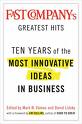
I started reading the publication “Fast Company” when my wife brought it home from a business trip 7 or 8 years ago.  She is an executive at Intuit (Quick Books, Turbo Tax, Quicken, etc.) and someone gave her a copy because Intuit was featured in an article that particular month.  “Fast Company” refers to organizations that are agile– that are quick to adjust to new and ever-shifting market realities.  These places change and thrive and grow and make their employees and customers and communities better.  They are FAST.  Like Intuit. And you have to hustle if you want to stay up with them.  

So I decided I wanted to stay up with them.

I decided it would be good for a modestly performing charter school in Chula Vista, California to aspire to be “fast”.    So now I read “Fast Company” and learn about organizational development through their consistent themes of innovation, change, community building, collaboration and leadership  (http://www.fastcompany.com/magazine/archives/2008).

There are more similarities than differences between a non-profit, public, charter school and a behemoth for-profit software developer.   At least when it comes to organizational excellence.  

Somewhere I gathered this list of “25 Insights on Leadership” and stored it for an occasion just such as this. Whether you are the principal of a charter school, or the CEO of a company that makes jet ski engines, or the Captain of a US Navy ship, or the director of a health clinic, or the president of your senior class, or a battalion chief out preventing Big Sur from burning to the ground, or the king of some obscenely wealthy oil kingdom… you can learn from the collective wisdom contained in these…

25 INSIGHTS ON LEADERSHIP FROM FAST COMPANY

1. Audit Your Company Cultures. “Companies don’t have one culture. They have as many as they have supervisors or managers. You want to build a strong culture? Hold every manager accountable for the culture that he or she builds.” Marcus Buckingham, coauthor of First, Break All the Rules and Now, Discover Your Strengths

2. Informed People Don’t Fear Change.  “People are not afraid of change. They fear the unknown.”Dick Brown, chairman and CEO of EDS

3. Beware “Aspirational Accounting”.  “Enron has changed things significantly. You used to be able to buy a company, account for it in bizarre ways, and make money on the sale. That world is over.” Nolan Bushnell, founder, chairman, and CEO of uWink Inc.

4. Empower Your People — Turn Them Loose.  “Freedom is the greatest when the ground rules are clear. Chalk out the playing field and say, Within those lines, make any decisions you need.” Dick Brown, chairman and CEO of EDS

5. Prevent Erosion of Human Assets.  “We are systematically depreciating our human capital. For most people, the first year with the company is the best. It’s downhill from there.” Marcus Buckingham, coauthor of First, Break All the Rules and Now, Discover Your Strengths

6. Be Generous With What You Know. “Knowledge sharing is the basis of everything. Share knowledge with reckless abandon.”Tim Sanders, chief solutions officer at Yahoo

7. Expand Your Roster.  “Think of your team as not just the people you pay, but as the people who pay you as well.” Feargal Quinn, executive chairman of Superquinn

8. Don’t Judge a Man by the Size of His Wallet.  “The only thing wrong with poor people is that they don’t have any money. That’s a curable condition.” Bill Strickland, president and CEO of the Manchester Craftsmen’s Guild and the Bidwell Training Center

 9. Harness Your Skills for Good.  “Technology has enormous potential to facilitate public-health problem solving. Marcus Welby needs you guys.” Dr. Irwin Redlener, president and cofounder of the Children’s Health Fund and president of the Children’s Hospital at Montefiore

10. Groom Your People for Success.  “Weakness fixing might prevent failure, but strength building leads to excellence. Focus on strength, and manage around weaknesses.”Marcus Buckingham, coauthor of First, Break All the Rules and Now, Discover Your Strengths

 11. Promote Brand Awareness Throughout Your Enterprise.  “Everybody throughout the enterprise should know what the brand can and cannot do. There’s an imperative for education.”–Jim Goodwin, vice president of marketing at the Absolut Spirits Co.

12. Embrace Imperfection — Fast!.  “Beware of perfect people. They will never propel your enterprise to greatness. They’re too cautious. You’ve got to be fast to be good.”Dick Brown, chairman and CEO of EDS

13. Don’t Let the Venture Capitalists Get You Down.  “Revolutionary change is where real value is created. Don’t assume the capital markets know what the hell they’re doing. The VC market is currently in more disarray than most companies.” Nolan Bushnell, founder, chairman, and CEO of uWink Inc.

14. Allow Yourself to Dream.  “Dreams are maps. The ability to think about the future is what drives us all to attain.”Dr. Irwin Redlener, president and cofounder of the Children’s Health Fund and president of the Children’s Hospital at Montefiore

15. Increase Your Net Worth.  “Networking is sharing your contacts with others to create value without the expectation of compensation. Your network is your net worth.”Tim Sanders, chief solutions officer at Yahoo

16. Use Every Teachable Moment.  “Every time you give somebody compensation, it’s a great time to give feedback.”Dick Brown, chairman and CEO of EDS

17. Shine Some Hope.  “If you want to work with people who have no hope, you have to look like the solution and not the problem.”Bill Strickland, president and CEO of the Manchester Craftsmen’s Guild and the Bidwell Training Center

18. Set a New Standard of Performance.  “We need to get beyond the single bottom line and measure a company’s performance by a triple bottom line. Financial profits alone aren’t enough. The results also need to be good for people and for the environment.” Scott Bedbury, CEO of Brandstream

19. Laugh at Yourself.  “Just when you think the sun shines out of your butt, all you have is an illuminated landing area.” Nolan Bushnell, founder, chairman, and CEO of uWink Inc.

20. Get Up, Stand Up.  “YCDBSOYA: You can’t do business sitting on your armchair.” Feargal Quinn, executive chairman of Superquinn

21. Stop Whining — Start Seeking.  “In these times, it’s important to find the opportunities in the disruptions rather than just to lament the change.” Rob Glaser, chairman and CEO of RealNetworks Inc.

22. Leaders: Move It or Lose It.  “Managers consistently delude themselves about how much good they’re doing. The oath for managers should be the same as physicians: First do no harm. ” Robert Sutton, professor of management science and engineering at Stanford University

23. Be Honest.  “The same thing you want from management is what customers want from you: honest communication. Be honest with your customers; tell them everything you know.”Bonnie Reitz, vice president of sales and distribution at Continental Airlines

24. Don’t Stretch This Rule.  “When you start thinking about growing your brand, be sure not to ignore the Spandex rule: Just because you can, doesn’t mean you should.”Scott Bedbury, CEO of Brandstream

25. What’s Your Bottom Line?.  “People over 65 were asked, ‘If you could live your life over, what would you do differently?’ They said three things: ‘I’d take time to stop and ask the big questions. I’d be more courageous and take more risks in work and love. I’d try to live with purpose — to make a difference.’ You don’t have to be an elder to ask, What’s my own bottom line?”Richard Leider, founding partner of the Inventure Group

So these are the rules. It’s how you get fast.  Growing “El Milagro” depends on learning lessons far away from school. 


2 Comments

Filed under Uncategorized

MAGIC

I wondered what the big deal was about the new computers with the Apples on them. And I wondered how I could use them in my classroom…and to my credit… I knew they had a place there.  Then Apple created a smaller computer called a 2C.  Then a Macintosh. Then color screens.  Then new peripherals and applications and programs.  And then it wasn’t the 1980’s anymore.  Though my instincts were always a little bit ahead of my technical expertise… I just kept building a technological infrastructure in my teaching repertoire.  I didn’t see the internet coming.  But as soon as I saw it I integrated that into my bag of magic tricks too.  I do magic tricks.  There is still room for more stuff.  Like IPods and cell phones and Garage Band and video.  And blogs.  

I’m not in the classroom anymore but that doesn’t stop me from teaching.  After 30 years I have learned two things:  1) I don’t know a freakin’ thing… and 2) You teach more by asking skillful questions than you do by telling people your version of truth.  Nevertheless, I am going back to teaching.  Right here.  Right now.  When I am not leading El Milagro… I want to teach. Blog.  Learn something before the most extraordinary teaching tool in the brief history of technology development is invented and I am left scratching my head and wondering how I’m going to squeeze it in the bag much less figure out how to turn the power on.

1 Comment

Filed under Uncategorized