TEACHING THE MOUNTAIN TO BREATHE

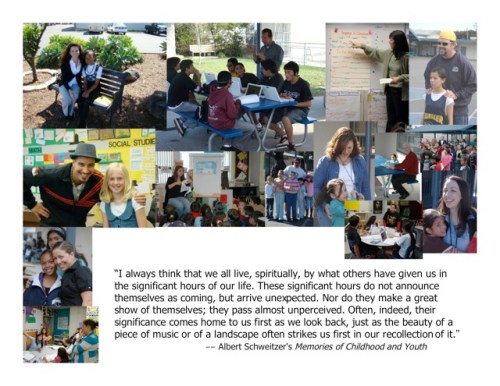
“I always think that we all live, spiritually, by what others have given us in the significant hours of our life. These significant hours do not announce themselves as coming, but arrive unexpected. Nor do they make a great show of themselves; they pass almost unperceived. Often, indeed, their significance comes home to us first as we look back, just as the beauty of a piece of music or of a landscape often strikes us first in our recollection of it.”  –Albert Schweitzer, Memories of Childhood and Youth
palomarI run into former students in oddball places.  I met one in a hospital elevator a few years ago.  She was holding two kids in both arms and struggling to push the button to go up.  “Dr. Riley!  Remember me?”  My wife looked at me kind of funny.  “Ugh… well…ugh…”  

“You were my journalism teacher!”  

“Oh yea…  what year was that?”  

And though I am usually good with names, I couldn’t place her, or her name, or her two babies.  So I pushed the button for her as she struggled to get a hold of her life that was no doubt far more complex now than it was when we were learning how to write story  hooks.  And we went up a few floors.

We re-connect in random places.  And at random times.  

I saw a former student at the beach where he now lives since he became a professional surfer.  I met one in a 7-11… now a competitive body builder (and it shows).  One was working at a jewelry store… another at a coffee shop.  One stopped by a few year ago and dropped off a job application…  after high school and college she decided that she wanted to be a teacher too.  One was in the WTC during 9-11.  Or was it his older brother? (I remember frantically tearing the books off the shelf, searching through the yearbooks for some confirmation either way. Then there was a feature article in the Union-Tribune. Turns out it was his brother… who I remembered too.)   I have met their children and their spouses and heard about their many careers and the twisting paths in so many life journeys that I influenced… maybe… even for a split second… even to the slightest degree. Even when I didn’t realize it.

So this week I heard from Tod.  

He had been one of six students of the 8th grade graduating class of Palomar Mountain School.  After 30-some years in education, thousands of children and many different assignments and schools and districts… these are the six who I will always remember.  They were my first class.  

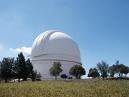
schoolPalomar Mountain School is a tiny, one-room school house a few hundred yards from the world’s largest telescope.  From this location, on the top of Palomar,  astronomers have been peering out into space for decades.  It is here, where it seems that God has been peering back.  The school sits back in the trees, nestled behind a ranger station on the last hairpin turn leading up to the telescope.  If you blink… you will surely miss it.

In the early years of my teaching career I was a football coach and a substitute teacher and I couldn’t land that first full-time teaching position.  So I responded to a desperate call from Palomar for a certificated teacher  who was willing to make the drive every day up the side of a mountain to teach in a tiny school where you would have the entire 6th, 7th and 8th grade class.  It didn’t pay much but there were benefits.  No traffic.  No noise.  No fast food restaurants.  No principal.  No textbooks.  No California Standards Test (and, in fact, no standards)  I was free to do whatever I thought a handful of 6th, 7th and 8th graders should do….  to teach them whatever I thought that they should learn. And I guess my instincts were right.  

Later I realized that many of the instructional strategies that I was using actually had a name and were rooted in real research. I realized that…  In this self-contained, un-graded, multi-age classroom, we were differentiating instruction through an integrated and thematic curriculum; we were, appealing to the multiple intelligences and learning styles of a culturally diverse group of children, providing a gradual release of responsibility, engaging all learners and monitoring their academic growth through the use of a multiplicity of authentic assessments.
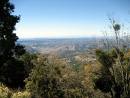
viewBut when it is just you and 16 kids and crisp mountain air and a neighborhood so quiet you can hear the deer sneeze;  when the shadows of the world’s largest telescope is cast across your playground;  when you have no textbooks even if you wanted them (and I didn’t);  when you are at the early stages of your teaching career and you want to bring the whole world to your students and be a force for good in their lives; when you are just naive and idealistic enough to believe that you can single-handedly change the world for every child… that is a muse worth capturing.

And so I did.

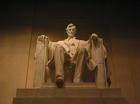
Not long after Tod and his sister Patti graduated, I left Palomar Mountain School to work in a real school with textbooks and a principal.  It was an adjustment but I guess I never forgot the six kids from Palomar… or what they had taught me about teaching.  Or about the force we can be for children if we allow our life journey to benefit others.

I had not heard from Tod nor Patti since the day they graduated.  Until this week when Tod found me on Facebook.  He sent me a message to tell me that he had grown up, graduated from college and is now a civil engineer in North Carolina.  Just like that.  An adult lifetime, a career,  captured in a sentence.  He reminisced about those days at  Palomar Mountain School– the pop quizzes and playing over-the-line and touch rugby in the snow.  He said that, in fact, he had played rugby all through college and even later for the Raligh Vipers.  

Tod e-mailed his sister Patti and she sent me a message too.  She told me about her education, her marriage, her career.  They both sounded so happy and so complete.  And they triggered the flood of memories from those very simple times when I taught children from some place deeper even than the heart. Where I discovered the power of imagination, and ingenuity, and innovation in teaching. Where I uncovered my own eventual career passions: like student advocacy, equity, resiliency…  long before I could even define those words.  Where I realized how magic teaching can be.  And how we influence our students mightily. And they influence us.

I shared Patti and Tod’s story with my teachers at our Friday lunch meeting yesterday.  I reminded them, that no matter how frustrated, or disappointed, or discouraged they may get…  they are having a profound effect on the lives of their children. And they may not know it.  They may never know it.  Until one day when they run into a former student in the elevator or they get a note on Facebook.  

“…we all live, spiritually, by what others have given us in the significant hours of our life…”

And I reminded them of how fast it all goes by.  God’s work… in what seems to be a matter of fleeting moments.  That if you blink…
palymar1

Patti turns 4o soon.  She is older than 2/3 of my teachers…who are now older than I was, when I stood there in a clearing in the forest on Palomar… listening to the awesome silence of the mountain… and catching a glimpse of the world’s largest telescope when the wind blew.  And the trees swayed.

spectacularjpeg

3 Comments

Filed under charter schools, teaching

STIMULUS: 20 Leadership Lessons From Barack Obama

stimulus | ‘stim yul us
noun (pl. -li | -,li)


• a thing that rouses energy in something or someone; an interesting and exciting quality

pres1On this, the thirty-day anniversary of the historic Inauguration of our 44th President, this much is clear: when it comes to leadership, Barack Obama has some game! In just four weeks (about the time it took most of us to figure out where the restroom was in our new school), President Obama has named and re-named cabinet members, passed a nearly $800 billion stimulus package, flown to Denver, Phoenix and Ottawa, launched Hillary into the Far East, visited a Washington DC charter school and took Michelle to dinner on Valentine’s Day. Whether you agree with his policies or not, there is much to learn from this president’s powerhouse approach to governing.
Metaphors for leadership abound– in Fortune 500 Company CEO’s, NBA basketball coaches, and admirals who have captained naval ships. You can find their books in Borders or read about them in Fast Company. Or you can follow CNN on Twitter and study how one man, our president, has approached his first month on the job and confronted the most complex and urgent crises of our generation.

So whatever your role in schools might be, here are “20 Leadership Lessons” from the dynamic presidency of Barack Obama:


1. Keep your eyes on the prize: There is nothing like a wordle to know you are consistently ‘on message’.

2. Invite them to the barbecue: Stepping outside of the hallowed halls helps to build social networks with allies and adversaries alike. Kegger at the White House!”

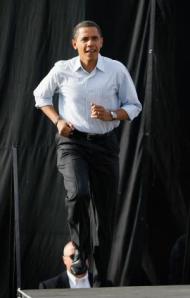
obama_running_blueflys_blog_flypaper_123. Don’t wait: Hit the ground at a sprint and knock over the furniture. Launch and learn!

4. Keep your family first. Period.

5. Feed your inner gym rat: Stay fit!

6. Bipartisan “process” is secondary to doing the right thing: So do the right thing.

7. Be resilient: After the inevitable setbacks, betrayals, and disappointments… you have to bounce back stronger.

8. Don’t be a sap: “I am an eternal optimist,” said the President. “Not a sap!

9. Read stuff!

barack-obama-holds-his-bl-001

10. Don’t give up your Blackberry: Especially if it is your link to the only people who will tell you the truth.

11. Speak to the conflict: When you speak from the heart to the needs of people that didn’t vote for you, that’s real Servant Leadership.

12. Have some courage. Enough said.

13. Sneak out to dinner: (But leave your Blackberry at home.)

14. Change the culture to change the outcomes: Replace the curtains hung by your predecessor and then make up your own rules.

lincolnjpeg15. Stand tall on the shoulders of giants: Don’t wobble, they became giants for a reason.

16. Appreciate the ghosts. (If I lived in the White House I would walk around at night and listen to the spirits whisper.) Our schools have a history too.

17. Surround yourself with the best people you can find: Build your own team of rivals.

18. You belong in the room: So when you feel like you are over your head, it is good to remember that you were hired for a reason.

19. Communicate… communicate… communicate: Make it your gift.

And finally, whether you are an urban school district superintendent, the assistant principal of a small elementary school, or the most powerful leader of the free world, one month on the job–

20. Remember that HOPE is what brought you here.

kids-faces

(Cross-posted at Leadertalk, a blogging community for school leaders hosted by Education Week.)

2 Comments

Filed under President Obama, resiliency, spiritual intelligence

TWITTER AN AUDIENCE WITH THE GREAT GRAY WHALES


blackberryTwitter the whales.  That’s what you do when they are left out of the curriculum. At least that is what connected parents are doing.

A recent Washington Post article described how tech-savvy parents across the country are forcing school boards and superintendents and principals to knuckle under to their avalanche of Twitters, texts, e-mails and blogs demanding their local flavor of change.  I read about it on Dangerously Irrelevant (one of my sources of professional reflection) and found the gleeful comments of fellow readers surprising.  As if school leaders don’t have enough of a mountain to climb now they have to brace for a Twitter campaign to deliver the community’s “no confidence” vote. The anonymous nature of these tools creates some real ethical challenges for school leaders pushing hard on organizational change. (How do most people respond to unsigned complaint letters?)  

The blog drew favorable comments from parents and university educators who seemed to regard this development as a final tipping point in finally straightening out those screwed up public schools.  I thought it was interesting for different reasons:  perhaps tech-savvy parents can now hold universities accountable too.

For better or worse our universities have long served as the R&D branch of public education. Published scholars in our post-secondary schools of education emerge as the industry experts. K-12 educators  worship at the altars of countless consultants and college professors and attribute the weight of the Gospel to their words.  And that would be ok if it wasn’t for the fact that when it actually comes to teaching and learning…  the very last place to go to find the expert practitioners of effective pedagogy would be a college classroom!

images1-2For example: this week I was asking Kira about her Marine Biology class. Although her college is 5 miles from the Pacific Ocean, they will not once visit the tidepools or watch the annual migration of the gray whales or stop by the Scripps Institute of Oceanography or even go to Sea World.  She has one class in a “lecture hall” where 150 students passively take notes from a “professor” inculcating his world view with the help of last year’s powerpoint.  Not very enlightened.  I wonder who I can Twitter about that.
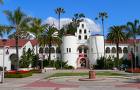
Then Keenan has a class at San Diego State that requires students to go on-line for many of the lessons. It is very economical in that it saves everybody from having to show up for class… but adds to students’ stress (and expense) as they attempt to navigate the idiosyncrasies of another professor’s poorly designed website.  And what do they get when they finally break past the bonds of clumsy technology:  a talking-head video of– you guessed it– last year’s powerpoint.  Or text they could have just Googled.

sdsujpegAren’t these university professors–these giants of the trade–  reading their colleague’s stuff.  Marzano? Bloom?  Gardner? Freire? Cooperative learning? Gradual Release? Are you kidding me? Why aren’t they teaching each other?

An unfair generalization?  No doubt.  Of course there are extraordinary teachers in the university system and some schools have a lot more of them than others.  But if we are going to paint public education with such a broad brush at the K-12 level, it applies all the more in our universities in whom we trust the preparation of future teachers and leaders.  

The tail is wagging the dog. Americans intent on promoting school reform would do well to shift their gaze from the university system to the real experts in teaching and learning:  those high performing elementary school educators who engender extraordinary academic results in spite of challenging environmental factors, in spite of an upside down school system, in spite of the perception that public schools need to be “reformed”, and in spite of the continued reverence for bad teaching that is too often modeled by university-based “experts” that they turn to for answers.  The real experts, it seems, reside in places like El Milagro.

ricky1

Maybe engaging all these parents and community-members who are technologically connected and bent on improving instruction in their children’s schools is not a bad idea. If it works at the local high school, surely it will work at the university too.

So let’s Twitter the school’s president and get Kira an audience with the great gray whales.

whale-tail

1 Comment

Filed under California charter schools, El Milagro, public education, Uncategorized

ALONE FROM EL MILAGRO AND INTO THE BORDER WAR

trolleyjpegWhen the bright red San Diego Trolley pulls into the San Ysidro station at 4:30 on a weekday afternoon, it opens its doors to thousands of people coming or going into the early dusk.  This is the Tijuana border crossing.  The busiest international port in the world.  Mexico’s day laborers silently shuffle across the footbridge to the caracol.  Their heads bowed.  Their eyes, darting nervously.  No matter how many times they have made this crossing in the past five or twenty or fifty years, this is no time for complacency. 

carsJust moments ago they were in America.  They were tending the landscape or working in fields or changing hotel linens or cooking in restaurants or cleaning homes.  Service, labor, business. They are cogs in the wheel of an ailing international economy.  As they cross into their homeland, they are no doubt welcomed by the unmistakable aroma of Mexican gas, street corner taco stands and open fires.  There are miles of choking cars and buses and taxis.  And there are too few police.  

It is no comfort to the border crossers that two more police officers turned up dead this morning. They had been bound, gagged, tortured, and executed. And even more chilling, they had been warned by the drug cartels in a brazen threat broadcast over their own police radios to the beat of narcocorridos.  Tijuana is a war zone.  Tijuana is out of control.  

And if it is no place for adult citizens who have made the silent journey to their jobs in America every day for decades, it is certainly no place for Jorge.

Just an hour ago he was leaving Mueller Charter School– El Milagro—  by way of our back gate. When the three-fifteen bell dismisses a thousand kids into the afternoon, there is an explosion  of energy.  There is running and boys chasing each other into the grass. Parents line their cars up all the way to Broadway to pick up their children.  And the parents will wait because God knows they don’t want them walking home alone.  Too dangerous.

running1

But Jorge carves his way through the playful chaos.  Quietly.  Silently.  As if to mirror the faceless adults who have been his anonymous companions on his daily commute.  He walks down the back driveway of the long apartment complex.  Passed the trailer park.  Across H Street and into the Trolley station.  Every fifteen minutes another trolley stops and he looks for the Blue Line running south to San Ysidro.

Jorge may be Mueller Charter School’s most resilient child.  And we are filled with resilient children.  We grow resiliency.  We study it and foster it and promote it and we have teachers and counselors who are authorities on it.  We are frequent conference presenters on resiliency.  Ryan is focussing on “resiliency in immigrant children” as a potential doctoral dissertation.  I am writing a book about it.

But nothing prepared us for seeing the very personification of resiliency in the dark eyes of Jorge. We had him on our radar screen.  We had discussed him a few weeks earlier at our quarterly Resiliency Monitoring session with his classroom teacher.  We categorized him as a “Quadrant 1”. In our system, that means Jorge is facing dire life crises.  He is in immediate need of urgent care. gunmanjpegHe is in our version of ICU.  There had recently endured unspeakable family tragedies including the decapitation of relatives in the border war.  

But now America’ imploding economy was closing in on him even more.  He and his mom had recently been evicted and they had to return to living quarters somewhere in the squalor of Tijuana. She couldn’t ask for help because she was afraid that Jorge would be disenrolled if we discovered they were living back in Tijuana.  California law is clear.  Not even charter schools can serve children living across the border in Mexico.

So every day, Jorge climbed the trolley and made the trip to Tijuana alone.  He struggles in math. He struggles in reading and writing.  He struggles with English.  But he never misses school.  He finds a way to get here, even if he has to step over bodies piling up on the border to do so.

And that is resiliency.  Jorge is 8 years old.  His story brought tears to our eyes when we talked about him in our staff meeting on Friday.  

We will be able to get his mom relocated and help them with housing and other basic needs. Our efforts will not be reflected in our API because Jorge will tank on that test.   But we owe him for what he has taught us about ourselves.   About how children, even as young as eight, are willing to rise above adversity for this opportunity to learn.  Jorge is a child worth fighting for.  Regardless of his standardized test score, he is one of our most gifted children.  It is called the spiritual intelligence.

silhouette

Leave a comment

Filed under charter schools, El Milagro, resiliency, spiritual intelligence

FROM ONE MOMENT OF DEFIANCE… REDEMPTION

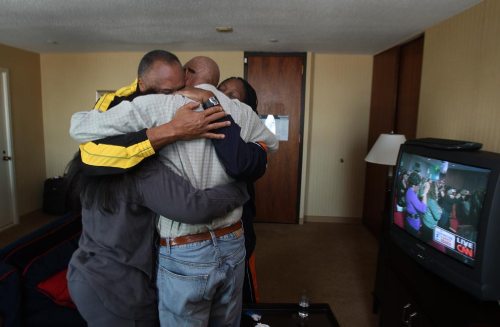
A picture is worth 1000 words… except when it requires a caption.  Like this picture of two middle-aged African American couples embracing in a hotel room in Boston right after Barack Obama was sworn in a the 44th President of the United States.

smith-carlos1

This is more than just another poignant scene captured on America’s most magic of days. For the two gentlemen in the photo…  it HAD to be such a powerful, emotional, exhilarating moment of sweet redemption.  

Forty years ago, they took a courageous stand on the world stage.  Not unlike Rosa Parks, theirs was an act that horrified  much of white America– while it simultaneously inspired a whole generation who were growing weary of the slow pace of change in the late 1960’s.   

They have paid dearly for that moment of defiance… but it too was captured in an iconic photograph that, I can assure you, is worth at least 1000 words.  

smith-carlos2-1

For Tommie Smith and John Carlos, winners of the 200 meter gold and bronze medal at the 1968 Olympics in Mexico City, January 2oth no doubt brought sweet redemption and  1000 words.

None of them necessary.

2 Comments

Filed under President Obama

WORDS MADE CHANGE

Like this tag cloud designed by Wordle, everyone heard something different in President Obama’s Inaugural Address:

image0011

I don’t know what images or themes resonated for you, but Nelson Smith, the Executive Director of the National Alliance of Charter Schools reviewed the historical Inaugural Week in his Charter School Blog, and he heard this:

I found a strong echo of our [charter school] model in this passage of the President’s inaugural address:

 “The question we ask today is not whether our government is too big or too small, but whether it works — whether it helps families find jobs at a decent wage, care they can afford, a retirement that is dignified. Where the answer is yes, we intend to move forward. Where the answer is no, programs will end.”

What this means for charter schools can be found on the new White House web site under Education Agenda. President Obama promises to “double funding for the Federal Charter School Program to support the creation of more successful charter schools,” but warns there will be “a clear process for closing down chronically underperforming charter schools.”

Fair enough.  As on most things, I agree with President Obama (and Nelson Smith, too). But how will the President define “successful charter schools?” and what are the criteria for an “underperforming school?”  

Presently “underperforming schools” become “underperforming schools” when their test scores in math and reading fall short of the prescribed benchmarks called Annual Yearly Progress or AYP. And since nobody wants to bear the mantle of an “underperforming school”, you can be sure we all teach the heck out of math and reading.  President Obama recognizes that schools have narrowed the curriculum in response to these pressures at the expense of science and technology and social studies and the arts.  And recess. He calls it teaching to the test.  I call it teaching to what is tested. Others may call it teach what you better teach if you don’t want lose your charter or be called an underperforming school.will-i-am

Nevertheless, as Will.i.am says “It’s a New Day” and thank God for that.  We have a mandate for change.  And since I don’t mind using test results to determine how effectively schools are serving children and their families, I don’t care whether president Obama changes the whole assessment game or not.  

What I do care to C H A N G E is how we recognize and define successful schools– charter or otherwise. Math and reading results are one indicator, but can we get some love for the other extraordinary things that happen for children at El Milagro?

Like when we …carlos

• introduce our children to the latest technologies…

• or teach them to think…

• or refer them to the eye doctor for properly fitting glasses…

• or teach them proper dental hygiene so their teeth aren’t rotting in their heads…

• or  teach them to sing and draw and recite their poems on a stage…

• or  teach them that their forefathers won congressional medals of honor in foreign wars too…

• or help them preserve and perfect their native language…

• or connect a family to health insurance…

• or help Rafael properly grieve for his relatives who were recent murder victims in Tijuana’s horrific drug wars…

• or help Laura stay grounded even as she  is about to lose her mom to stomach cancer (which is a big deal because her dad passed away two years ago)…

And so forth.  Supporting kids in crisis– isn’t that high performance too?

Just last summer, Nelson Smith and The National Alliance of Charter Schools published a tool they call “Quality Indicators“.  It’s one way to expand the definition of what a successful school is.  So at El Milagro we decided to integrate the general concept into our charter as we get ready to take it to the local governing board for re-authorization in March.   We will be able to describe the goals of our charter in broader terms than just academic achievement– but also longitudinal growth, progress of English Language learners and the sense of engagement for students, teachers and  parents.

                                                             *                *                  *

So when Wordle created their cool tag cloud from some of the major themes and words that were used by President Obama in his Inaugural Address, they were unintentionally shining a bright light on his priorities.  The bigger the word the more often he used it.

 I like that C H A R T E R and  C H I L D R E N are so predominantly positioned on the top of the box, and in the center– and that they are surrounded on all sides by C A R E  and  C O O P E R A T I O N and W O R K and  H O P E.

monument

1 Comment

Filed under California charter schools, charter schools, El Milagro, President Obama, public education

INAUGURATION DAY: A POEM, A PRAYER, AND A PROMISE

tzsupmomentMy Inauguration Day  post on LeaderTalk is a tribute to President Obama… it offers a Poem, a Prayer, and a Promise. It included the re-mix of:  “A Poem for Barack Obama Upon the Inauguration of America”.  I also integrated themes from the  letter to his daughters.  

And El Milagro celebrated the way we celebrate!

balloons_t350

Leave a comment

Filed under El Milagro, President Obama

We Will Arise and Walk Again

mural2I celebrated another birthday this week and I realize with each passing year how much I have learned in my life. Every day, every week, every year.  And the lessons keep coming.  But the ultimate lesson of where we all go from here– no matter how deeply I reflect– I can never quite resolve. I only know that we are here and we are gone.  And that somewhere our spirits and our souls are transformed and we slip quietly out of view of those we leave to the Earth.

In the meantime, we live and we learn.  And we enjoy occasional moments of profound transformation.

flagsThis weekend, we are all on the precipice of such a moment.  One that stirs our history and our hopes. There is an unmistakable spiritual presence emerging even while our nation reels from conditions that might otherwise seem awfully bleak.  In three days, we will arise and walk again.

I am reminded of the dangers of attributing superhuman qualities to one man.  But for nearly a decade Americans as a people have sputtered and flailed and failed mightily to grasp or hold the greatness that we once believed we were pre-ordained to achieve.  Our world is is in turmoil.  The fabric of America, is in tatters.  And we have turned to a person possessed with uncommon wisdom and natural gifts– not the least of which is his deeply inspiring spiritual intelligence.  

daughtersjpgThis week, as he braces for Inauguration Day and the ride of a million lifetimes,  Barack Obama published a letter that he has written to his daughters: “What I Want for You– And Every Child in America”.  In it he says:

“When I was a young man, I thought life was all about me-about how I’d make my way in the world, become successful, and get the things I want. But then the two of you came into my world with all your curiosity and mischief and those smiles that never fail to fill my heart and light up my day. And suddenly, all my big plans for myself didn’t seem so important anymore. I soon found that the greatest joy in my life was the joy I saw in yours. And I realized that my own life wouldn’t count for much unless I was able to ensure that you had every opportunity for happiness and fulfillment in yours. In the end, girls, that’s why I ran for President: because of what I want for you and for every child in this nation.” 

For those of us who have raised our own children and who know what it means to delay our own personal ambitions and dreams so that our babies might realize theirs– it is an extraordinary admission.  

How many parents have watched their infants sleeping and longed to provide the world for them?  We so desperately want to remove the heartaches and failures and disappointments that might discourage them.  We sacrifice to provide for them.  Each generation stretches to the very boundaries of its collective talent  to make the lives of the next generation that much easier, that much more fulfilled.  It is what parents are expected to do.  “Devotion” is listed in the job description.

dad-daughter1So for his part, Barack Obama has merely ascended to the most difficult job on the face of the earth– to become the most powerful living human being– to make the world a better place for the daughters he loves so dearly.  He has risen above paralyzing political divisions for the opportunity to change the course of America.  To become president, he merely had to transcend centuries of racism, intractable prejudice, and a tortured national history of self-hatred that manifests itself in bigotry and intolerance.father-daughter1

Uncommon devotion.

And he writes:

“That was the lesson your grandmother tried to teach me when I was your age, reading me the opening lines of the Declaration of Independence and telling me about the men and women who marched for equality because they believed those words put to paper two centuries ago should mean something.

She helped me understand that America is great not because it is perfect but because it can always be made better-and that the unfinished work of perfecting our union falls to each of us. It’s a charge we pass on to our children, coming closer with each new generation to what we know America should be. 

These are the things I want for you-to grow up in a world with no limits on your dreams and no achievements beyond your reach, and to grow into compassionate, committed women who will help build that world. And I want every child to have the same chances to learn and dream and grow and thrive that you girls have. That’s why I’ve taken our family on this great adventure. 

I hope both of you will take up that work, righting the wrongs that you see and working to give others the chances you’ve had. Not just because you have an obligation to give something back to this country that has given our family so much-although you do have that obligation. But because you have an obligation to yourself. Because it is only when you hitch your wagon to something larger than yourself that you will realize your true potential.”

For those of us who have devoted our life’s work to the service of children– whose schools reflect our own beliefs in the virtues of justice and equality– the Inauguration of Barack Obama is a moment of blessed redemption.  

I forwarded President Obama’s letter to Keenan and Kira and I am looking forward to discussing it with them.  

“I hope both of you will take up that work, righting the wrongs that you see and working to give others the chances you’ve had .”

I am not usually so reflective on my birthday.  But at this moment, the past and future seem to be aligning.  The lessons of the universe… the mysteries of life.  The devotion of our ancestors… our hopes for our children. Our historical struggle… our resurrection.  

So on we go.  January 20, 2009. We change the world.

prez-obamajpeg

Leave a comment

Filed under President Obama, public education

HAWK

tricksjpegI don’t get why skaters ride off curbs and park benches and the eaves of buildings.  I don’t get why they practice ‘ollies’ over and over and over again.  I don’t get why they are so insistent on landing some dumb-ass acrobatic stunt– or how they could be so willing to get maimed or killed for (maybe) :30 seconds of  satisfaction.  

For years when my wife and I saw young kids riding skateboards down hills with no helmets, or bouncing off the side of cars to land their imaginative new tricks and impress their friends, we would shake our heads and mockingly refer to them as “brain surgeons”.

Then Christy sent us a link to an interview done by Tony Hawk for NPR.  I never put Tony Hawk in the same category as the “brain surgeons” because he seemed like an entrepreneur and a businessman more than a skateboard guy.  I don’t picture Tony Hawk getting up in the morning and practicing skateboard tricks.  How could he?  He is flying all over the world making movies and video games and marketing Tony Hawk skating gear.  But then I was struck by this quote:  

“Although I have many job titles — CEO, Executive Producer, Senior Consultant, Foundation Chairman, Bad Actor — the one I am most proud of is ‘Professional Skateboarder.’”

It made me realize how important it is for kids to be encouraged to grow up and do the thing they love to do.  

hawkWhen interviewed on NPR, Tony Hawk said:
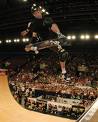

I have been a professional skateboarder for 24 years. For much of that time, the activity that paid my rent and gave me my greatest joy was tagged with many labels, most of which were ugly. It was a kids’ fad, a waste of time, a dangerous pursuit, a crime.

When I was about 17, three years after I turned pro, my high school “careers” teacher scolded me in front of the entire class about jumping ahead in my workbook. He told me that I would never make it in the workplace if I didn’t follow directions explicitly. He said I’d never make a living as a skateboarder, so it seemed to him that my future was bleak.

Even during those dark years, I never stopped riding my skateboard and never stopped progressing as a skater. There have been many, many times when I’ve been frustrated because I can’t land a maneuver. I’ve come to realize that the only way to master something is to keep it at — despite the bloody knees, despite the twisted ankles, despite the mocking crowds.

Skateboarding has gained mainstream recognition in recent years, but it still has negative stereotypes. The pro skaters I know are responsible members of society. Many of them are fathers, homeowners, world travelers and successful entrepreneurs. Their hairdos and tattoos are simply part of our culture, even when they raise eyebrows during PTA meetings.

So here I am, 38 years old, a husband and father of three, with a lengthy list of responsibilities and obligations. And although I have many job titles — CEO, Executive Producer, Senior Consultant, Foundation Chairman, Bad Actor — the one I am most proud of is “Professional Skateboarder.” It’s the one I write on surveys and customs forms, even though I often end up in a secondary security checkpoint.

My youngest son’s pre-school class was recently asked what their dads do for work. The responses were things like, “My dad sells money” and “My dad figures stuff out.” My son said, “I’ve never seen my dad do work.”

It’s true. Skateboarding doesn’t seem like real work, but I’m proud of what I do. My parents never once questioned the practicality behind my passion, even when I had to scrape together gas money and regarded dinner at Taco Bell as a big night out.

I hope to pass on the same lesson to my children someday. Find the thing you love. My oldest son is an avid skater and he’s really gifted for a 13-year-old, but there’s a lot of pressure on him. He used to skate for endorsements, but now he brushes all that stuff aside. He just skates for fun and that’s good enough for me.

You might not make it to the top, but if you are doing what you love, there is much more happiness there than being rich or famous.

                                                                                                                                                             –All Things Considered, July 24, 2006

What a great lesson from a guy that has spent a lot of his life practicing and mastering his craft while others mocked him and called him names like… well… brain surgeon.  Maybe next time we should appreciate kids who have the persistence required to practice those sometimes-senseless tricks for hours.    They fall.  They get back up.  They fall.  They get back up.  They fall.  They get back up.  Resiliency is not a character trait to be mocked.  

So now Tony Hawk has the time and resources and motivation to do what ever he wants. And one of the things he chooses to do is direct the Tony Hawk Foundation— an organization committed to helping inner cities and low income communities build skateboard parks for youth.  To date they have built nearly 400 skateboard parks for inner city kids, from Compton to Athens, Georgia.  

From diving off of park benches to changing the quality of life for thousands of children in communities all across America.  Not bad for a skater kid from San Diego.

The day my wife read the Tony Hawk interview she took his advice and fired off an e-mail to Keenan and Kira:

Dear Keenan and Kira: I am attaching a GREAT (and yes, short) article about Tony Hawk. I encourage you to read it. I will never call those skater kids “brain surgeons” again. Now, I’m not advocating that anyone go off and be a skateboarder for a living….there is a real message here about doing what you love.

Daddy and I were talking the other night about how much time we put into our work. We do it not because someone requires us to do it, but instead because we find our work truly rewarding. If someone were to ask me, what is your wish for your children, I would not say, super intelligence or physical ability or beauty….I would say, I hope my children find a partner who makes them happy every day, a job that is so rewarding they don’t dread Mondays and the character to always do the right thing. I think you guys are well on your way!

I love you…Mama

tricks-2jpeg

Find the thing you love. 

Leave a comment

Filed under Uncategorized

BABEL’S TOWER

globeOn January 2, 2009, I challenged readers to consider what happens to our students when you test them in a language that is not their native language, and then pass judgment on them and on their teachers based on the predictable results!  I invited readers to take a quiz and to not be discouraged by the fact that the quiz is in a foreign language.  

This issue is huge.  It has less to do with test scores and more to do with how we are preparing our children to compete globally.  Or not.  (Check out who is about to become the largest English speaking country on the planet.)  Of course our students need to speak English, but why aren’t they speaking other languages, too?  

Anyway, if you took the quiz you experienced what many of our students experience.  They may know the material and have the skills in math or reading or writing– but their academic proficiency (and intellect, motivation, potential, etc.) will be determined primarily by their ability to master a second language and the confidence they have in themselves as second language learners. 

Here were the 3 questions:

Question Number 1:

quiz


Если ваша профессиональная репутация, ваша школа рейтинга, и будущее ваших учеников были все зависит от детей, каким образом осуществляется на стандартизированных испытаний, которые приведены в иностранном языке, вы должны:

А. выступаем за то, чтобы дети предоставили оценки на их родном языке ,

B. энтузиазмом участвовать в вашей государства осуществлять в учебных злоупотреблений;

C. вид, что исход отметив делать с языком, или

D. привести ненасильственного протеста

Question Number 2:

كاليفورنيا يطالب بأن تتخذ جميع الأطفال أنصبتها المقررة باللغة الانكليزية للأسباب التالية :

أ. انها حقا جيدة للأطفال

ب. لأنها أكثر موثوقية وسيلة لتحديد ما تعلمه الأطفال

C. لأنها ستوفر معلومات قيمة والمعلمين حول ما يعرف الطلاب

د. وسوف نتأكد من الطلاب لا يملكون غير عادلة رئيس جامعة كاليفورنيا تبدأ اللغة الأجنبية

Question Number 3

Λαμβάνοντας αυτό το παιχνίδι δεν είναι ένα έγκυρο κριτήριο της τη νοημοσύνη μου, διότι:

Α. Δεν μιλούν καμία από αυτές τις γλώσσες

Β. Είναι απλά μια προσομοίωση

C. Είμαι πραγματικά πολύ έξυπνη και μόλις πήρε suckered σε αυτό το κουίζ

D. Αν όλοι μιλούσαν αγγλικά δεν θα είναι απαραίτητα αυτό το κουίζ


Did you pass?  You don’t know?  Well here is the translation:

Question 1, which was written in Russian, asks:

If your professional reputation, your school’s ranking, and the future of your students were all dependent on how children performed on a standardized test which is given in a foreign language, you should:

A. Advocate that children be provided the assessment in their native language

B. Enthusiastically participate even if you consider it educational malpractice

C. Pretend that the outcomes have nothing to do with language; or

D. Lead a non-violent protest to end the demoralizing practice

Question 2, written in Arabic (thanks to Google Translate), asks:

California demands that children take all of their assessments in English because:

A. It is really good for kids

B. Because it is a more reliable way to determine what children have learned

C. Because it is consistent with the “English Only” agenda

D. It will make sure no student has an unfair head start on the UC foreign language requirement

Question 3, which I am sure was all Greek to you, asks:

Taking this quiz is not a valid test of my intelligence because:

A.  I don’t speak any of these languages

B.  It is just a simulation

C.  I am really very smart and just got suckered into this quiz

D.  If everybody spoke English this quiz wouldn’t be necessary

Your score on this quiz doesn’t matter very much.  Your answers, however, are critical!!!

dsc016711

1 Comment

Filed under California charter schools, charter schools, El Milagro