ON THE ONE YEAR ANNIVERSARY OF PRESIDENT OBAMA’S OATH

One year ago this morning.  Hope.

Today, I am not so sure.  But I haven’t given up yet.  I am still astride the bandwagon.  I have seen signs of the change that history promised.  Then I realize, change is in the eye of the beholder:

I had hoped for an end to war.

I had hoped for an end to Wall Street’s hammer-hold on our nation’s leaders.

I had hoped for jobs and for the arrest of the economy’s free-fall.

I had hoped for clean air again.

I had hoped for harmony; an end to partisan bickering.

I had hoped for health care for our children.

I had hoped for a better plan than this blind obedience to endless testing in our schools.

I had hoped for miracles.  Hundreds of them.  Each laid out– day by day by day.

So much has happened in one year it is easy to forget the spirit of pure joy I felt on Inauguration Day.  There was the return to Afghanistan and Professor Gates and the Rick Warren thing and Gitmo and Coppenhagen and bail outs and declining polls and double-digit unemployment and stalled health care plans and tea party whackos, and Arne’s Race to the Top of God knows what. And Haiti. And CNN’s incessant commentary.  Most of it unfavorable.

I’m wondering… if it has taken me twenty years to learn how to be a decent principal, how long does it take to learn to be the president?

I’m wondering… What really does happen to a dream deferred?

I’m wondering… what can I DO?  As I wait for America’s resurrection.  Besides just hope.

1 Comment

Filed under Uncategorized

ZERO IN-TOLERANCE

The airport security line at San Diego’s Lindbergh Field was as long as I have ever seen it yesterday.  It stretched from the central hallway of Terminal One, past the baggage claim area, up the escalator, across the footbridge to the southeast parking and halfway down I-5 to National City.

Well maybe not that far.

But it was the expected overreaction to one Nigerian douchebag who tried to launch a rocket from his briefs to bring down the very airplane he was sitting on, and instead lit himself up like a silvery flare. Overreaction is a political calculation designed to confuse systemic bravado with actual security.  It’s what we do. And so we stand in line.

It is the same mindset that has fueled the sweeping logic of “zero tolerance” in public schools all across America.  After a series of tragic assaults from Santana to Columbine, administrators and legislators decided to actively pursue a policy of zero tolerance for weapons or violence– or even just persistently obnoxious behavior.  So kids that brought a loaded “glock” to school got themselves expelled.  As did kids who brought unloaded guns.  Or long knives.  Or swiss army knives. Or butter knives for their box lunch.  Or the nail file that their mom had given them.  And pretty soon zero tolerance reached to laser pointers and paint brushes and swizzle sticks.

There is no doubt that the first job of educators is to keep children safe, but zero tolerance polices have become so draconian, that the number of suspensions and expulsions have skyrocketed in virtually every urban center of America.  (An article in District Administration: The Magazine of School District Management states that while current Secretary of Education Arne Duncan headed the Chicago schools, expulsions ballooned from 32 to 3,000 in the ten years between 1995 and 2005!).  Many of the students who were “zero tolerated” out of the schoolhouse door… never made it back. And this is because such a disproportionate number of zero tolerance suspensions and expulsions  are children of color and kids who lack the resources to solicit proper legal representation.  And since public school students are often treated as if they are protected by a different constitution than the adults who are supposedly protecting them, violations of their due process rights are sometimes not even called into question.  After all, that is zero tolerance.

So what have we accomplished with metal detectors and security guards and armed teachers and district policies void of not only tolerance– but also judgment?  For sure, some juvenile offenders have been caught or found out or at least deterred.  But on the whole, we have made school campuses much less safe.  Instead of safe havens, we have created green zones.  Bunkers.

Just as the “war on terror” is partly a war on terror and partly a war against individual freedoms, enforcing zero tolerance has too often violated students’ individual rights in the name of campus security.  The consequence of which is mistrust and oppositional behavior.  And sometimes more violence.

Jim Freeman, the project director of the “Stop the Schoolhouse to Jailhouse Track Project in Washington, D.C., works with urban districts to change these kinds of codes and policies. The stated mission of Freeman’s organization is:

“To end the use of school policies that push young people out of school and into the juvenile and criminal justice systems. Through research and analysis of school discipline data and policies, communication strategies, and policy advocacy, we are eliminating the needless exclusion of young people from their schools through the use of suspensions, expulsions, and arrests.”

Freeman cites a landmark study in 2006 by the American Psychological Association that alerted districts that the zero tolerance logic was flawed.

“While the standard claim was that zero-tolerance policies would improve school safety, the schools were no safer than before zero tolerance.  What the report showed was that zero-tolerance policies turned schools into inhospitable environments that didn’t promote school safety.”

recent article by Ron Schachter suggests that a degree of both compassion and discretion have returned.  There are alternatives to suspension and expulsion.  There are better ways to pre-empt student behaviors that could lead to more serious consequences. Those alternatives are having huge positive effects in major urban districts including LA Unified and Denver Public Schools: decreasing office referrals, suspensions, expulsions, and arrests, while increasing academic achievement.

More and more districts are recognizing that their zero tolerance policies do not connect kids to their school.  If instead, children are provided opportunities to reflect on their mistakes, to “right their wrongs”, and to insure their classmates and teachers that they can be trusted…  tremendous growth is possible.  Offenders give back.  Restorative Justice.

Think about that as you wait in line for TSA to complete their full body scan on your next flight to Sacramento.

5 Comments

Filed under gun violence, public education, Uncategorized, zero tolerance policies

MORE THAN JUST THESE THINGS, OUR LIVES CHANGE WITHOUT HAIKU- LOST IS HUMAN TOUCH

The Huffington Post includes a list of 12 common items that have become obsolete this decade. Check ’em out.  If newspapers, and landline phones, and calling, and cameras with film, and fax machines, and wires and CD’s and dial-up internet and telephones and encyclopedias and the yellow pages and catalogs and hand-written letters may have all become obsolete… what in if anything, became obsolete in our public schools during the same time period?

Plenty.

Here are 12 things that have become obsolete in public schools during the past NCLB decade:

• Critical Thinking

• Hands-on Science

• Field trips

• Morning Recess

• Grades based on Teacher Judgment

• Creative Writing

• Physical Fitness

• Bilingual Education

• Haiku

• Fine Arts

• Tolerance

• Extracurricular Activities

You can keep up with what’s obsolete in your school by checking your local newspaper.  If you can find one.

2 Comments

Filed under public education, school reform, technology in schools

THE THIN LINE THAT SEPARATES A ROUTINE FROM A RUT…

In the daily rhythms of the classroom, there is a thin line between a routine and a rut.

The very best teachers have mastered the art of daily routines:  those practices and systems that frame all good instruction.  Like dancers, the routines provide a foundation– a consistent flow– so that improvisation, expertly timed, can flourish; so that creative energy can be saved for the more nuanced moves. There can be more artistry and risk taking.

When the daily routine is mastered– it becomes invisible. Like good magic.

The organizational structure, the daily tasks, the consistent action, the behaviors kids can count on—the culture of “this is how we do things here”–  these are the powerful routines that precede learning.

During the diligent and precise planning that goes into an instructional day you can be sure of this: something will have to flex.  Some “best-laid” plan will be modified to account for the unexpected nature of classroom life and the disruptions and surprises and hiccups that accompany the sometimes-messy business of teaching and learning.   The lesson plan, dashed in light pencil on an etch-a-sketch, is a moving and movable target.  But not the routines.  Those, you can take to the bank.

Every day that kids come into class they can count on some routines:

• We complete quick-writes immediately after watching CNN for Kids.

• We take the roll and report our absences.

• We review the learning goal before each lesson…

• We post that learning goal on the board– in the same place we always post it.

• We “Take out our dashboards and update our reading minutes.”

• We switch to the next learning center (only) when the music cues us… like gymnasts moving to the next event—and …

• We leave each center as organized and clean as we found it.

• We walk as a class to lunch.

• We pick up the trash around our desks before we are excused.

• We squirt some Purell on our hands before we touch the computer keyboards.

• We stretch before we run the track.

• We post the schedule for computer time… and everybody gets a turn.

And there are dozens more.  At least.

To be sure, there are days when the routines are interrupted: the rainy days daze and delays or the extended assembly that eliminates our guided reading groups altogether.   Or the fire drill for which there is no convenient time.  But for the most part, the daily routines run like well-kept clocks.  Like the tides and phases of the gibbous moon.  Predictable. Reliable. Essential.

But not even strong routines can survive complacency. Routines become a rut when enthusiasm wanes and attention wanders.  The optimism, the creative energy, the expectations, the will to excel, the unshakeable resolve, the passion that was so easily summoned in the days before the year began, too often dissipates and dies in the doldrums.  Even for the very best of teachers.

A rut is what happens when the work becomes humdrum; dull, monotonous, unproductive and hard to change.  Best practices devolved into bad habits.  Bad teaching.

There is a thin line between a routine and a rut and often the two extremes are only kept separate by a wall of fire.

I wonder if school leadership is the ability to keep that fire burning.  I wonder if I can create the same spark by lighting a match or rubbing two sticks together.  I wonder if I should stoke the coals, or roll back over and go to sleep.

Simultaneously Posted at Leadertalk.

3 Comments

Filed under El Milagro, public education, teaching

THE TURN-AROUND PLACE

Allen Odden is a professor of educational leadership and policy analysis at the  University of Wisconsin-Madison who claims to know how to turn around low achieving schools.  In fact he wrote a book about the topic called “Ten Strategies for Doubling Student Performance”.  He doesn’t work in schools, he studies those of us who do.  So his premise is that school turnarounds are not a new phenomenon and that “we”  know how to fix them, and “we know how to literally double student performance in low income schools, and in the process take huge chunks out of the achievement gaps that separate students along racial and socioeconomic lines.”

In a recent article in Education Week entitled We Know How to Turn Schools Around, Odden identifies 10 core elements he picked up from studying schools just like El Milagro.  Here is Odden’s checklist:

ONE: Create a sense of urgency.

TWO:  Set ambitious goals: (e.g.; to double student performance on state tests, to double the percentage of students scoring at advanced levels, to make sure that no student performs below the basic level at the end of 3rd grade, and that all students leave that grade reading on level.)

THREE:  Throw out the old curriculum and adopt new textbooks, create new curriculum programs, and start to build, over time, a common understanding of effective instruction.

FOUR. Move beyond a concentration on state tests and use a battery of assessments, including formative and diagnostic assessments, common end-of-curriculum-unit assessments, and benchmark assessments.  All of these enable teachers to make midcourse corrections and to get students into interventions earlier.

FIVE:  Create and implement an intensive and ongoing professional-development program. (The best schools form collaborative teacher teams— aka, professional learning communities—that meet often, make use of student data, and work with school-based coaches to improve curriculum and instruction.)

SIX:  Provide extended learning time and extra help for all students to attain proficiency. (e.g., Some combination of one-on-one or small-group tutoring for struggling students, together with extended-day and summer programs that emphasize providing academic help.)

SEVEN: Use time effectively. (Core instructional time for reading, math, and increasingly science is protected from intrusions; each minute is devoted to teaching the class. Literacy time often is extended to 90 to 120 minutes a day.)

EIGHT:  Teachers lead grade- and subject-based professional learning communities. Most of the instructional coaches are the school’s best teachers, and they orchestrate the overall professional-development system. And principals provide real instructional leadership.

NINE: Staff members read the most recent research, reach out to experts in the field, look for and use best practices, and take responsibility for assessing the impact on student learning of what they do, improving instructional practices when student results are not what’s desired.

TEN:  Recruit the talent needed to accomplish lofty goals and implement the collaborative and powerful educational strategies discussed here.

Ok.  So that is his list.  It just so happens that at El Milagro we have been down the path on all 10 core elements.  They are in place. Maybe that is why we have never missed an AYP goal, never missed a year of positive gains on the API, and recently been named a Title I Academic Award Winning School in the state of California.  Or maybe our success has come from going even deeper when initiating school reforms.

There are three problems with the good professor’s premise:

First, it assumes that a “turn around school”  is one that is getting better test scores.  But  perhaps the bigger challenge in school leadership is protecting kids from the craziness of schools obsessed with higher test scores– while still getting higher test scores! It is harder to get results when you refuse to become a test prep academy or when your school still values the meaningful extracurricular activities that don’t always directly tie in to testing (like athletics, theater, the arts, and music).

Secondly,  this article (and the publication of his book!) assumes a college professor has some authority on an issue he has “studied”… as opposed to a having actively engaged in the work of really turning a school around!  It is much like hiring a sports writer to coach an NFL team to the Superbowl or a film critic to create an academy award winning movie.

Finally, in concentrating on these broader, more obvious initiatives that we already stumbled across years ago… Odden’s list misses (at least )10 core elements that run even deeper into the DNA of a successful school.  For example, we have found that to turn a school around and sustain long term, continuous improvement, you must:

• Strike a BALANCE between raising students and raising test scores

• ENGAGE CHILDREN  in their own learning and growth; help them to be experts in analyzing their own test data and set goals accordingly

• Lead parents in a community transition from parent involvement to PARENT ENGAGEMENTwhere parents’ energy is first and foremost directed toward helping their child be a successful learner

• Integrate successful TECHNOLOGY solutions that bridge the digital divide and simultaneously accelerate learning

• Create systems that support STUDENT WELLNESS (academic, social, emotional, mental, medical, dental), especially for students who are otherwise at high risk

• Promote healthy NUTRITIONAL HABITS  and a climate that promotes daily exercise

• Maintain a BEHAVIOR POLICY  that is clear, democratic, humane, and prudently applied (as opposed to “zero tolerance”)

• Promote COMMUNITY SERVICE and each students’ capacity for contributing to others

• Create a sense of individual EFFICACY  among staff and students

• Foster RESILIENCY in individuals and in the school organization as a whole.

Those are my ten.  For now. There will be more innovations for professors to study in how we turn our schools around.

2 Comments

Filed under charter schools, El Milagro, innovation and change, public education, resiliency, school reform, standardized testing, teaching

LIVING STRONG

It seems like we are swimming in data.

The sun is shining and the lifeguard tower is buzzing with activity.  (I wonder sometimes if they are really keeping their eyes on the water.) I wonder who is up there at all. No matter, we have our fins… and we are swimming in a sea of data.

We swim with the tide and sometimes we push against it.  But one thing for certain when you are swimming in data:  there is no shortage of information.  And no shortage of assessments that produce the data.  It’s like an underwater upwell pouring volumes of new trends into the channel.  Creating more waves.  Faster currents.  A nuanced flow.  And of course, the occasional rip tide that threatens to pull you out beyond the comfortable landforms that tether us all to the beach; like this past week, when a rogue wave washed across and knocked us off our feet… just as we were looking comfortably in another direction.

New data.

California released the results of the 2009 Physical Fitness Tests that were administered  last Spring to all of our 5th  and 7th graders. In a nutshell… our kids tanked!  We were in the bottom 10 in a district of 44 schools.  Bottom 10 because only 14% of our 5th graders met the physical fitness benchmarks for all 6 (out of 6) exercises.  7th grade was not much stronger: 17% met all 6 benchmarks.

They were not asked to swim across the English Channel or benchpress their teacher’s Prius.  They were not required to compete in the Rock and Roll Marathon. They simply had to meet the benchmarks on a prescribed set of exercises:

Sit-ups

Push-ups

Sit and reach

Torso Extension

Interval Run (Aerobic)

Body Mass Index

14% were able to do it.  The very best school in the district managed to have 50% of their students meet the benchmarks.  Statewide… it was only 34%.

So during our staff meeting last Friday we looked at the data as if it were accurate and reflective of our students’ state of fitness.  We identified the tidal trends; made no excuses.  We asked what is up.

“What is up?  How is it that we are a charter school, with all the resources we need to serve our kids–  a track,  a fitness course, a PE program, competitive teams, and a director with a degree in Physical Education… and this is the result?  What is up?!”

And we brainstormed the root causes just like we dig deep into the data on reading and writing and algebra and math and science and social studies.  We looked at the trends.  We looked at our 5th graders’ relative strength (aerobic) and weakness (flexibility!) and how it seemed to shift by 7th grade where their strength was sit-ups and weakness was the torso extension (weakness in the lower back  is a bad harbinger for high school athletics!)

We concluded that these results stemmed from at least three conditions:

• First, we did not do a very good job of preparing our students (or teachers… or parents) for the 2009 Physical Fitness Test.  It twas an afterthought conducted hastily in the Spring while everyone had their eye on the California Standards Test.

• Second, our students are not getting enough EXERCISE.

Many are sedentary couch potatoes who would rather play video games or watch television than go outside and exercise.  Sometimes overprotective parents encourage them to stay indoors.  And in some neighborhoods you can hardly blame them. Our school is bordered by trolly tracks a freeway and surface streets that race and crowd like freeways.  There are shady motels, apartment complexes with high turnover and strange faces, sex offenders, street gangs, graffiti artists, and a lot of unsupervised kids of all ages.  And there are limited places to exercise.

• Third, our students, in general, do not have healthy DIETS. They eat bags of red hot cheetos and takis the size of pillows.  They drink Red Bull and sugary juice mixes and 64 ounce caffeinated sodas– they consume endless fast food and junk food offered in over-sized portions.

And in a community bearing now the full brunt of the nation’s sagging economy–  the unemployment, the lack of health care, the work-three-jobs, the all nighters and grave yard shifts, the eat-to-survive and find-whatever-comfort-food-you-can— our children pay.

According to the National Association of Children’s Hospitals and Related Institutions (NACHRI):

“This is the first generation of children that will be sicker, and die younger, than their parents.”

At El Milagro, this got our attention. So we found some more data:

• 16 percent of children (over 9 million) 6-19 years old are overweight or obese — a number that has tripled since 1980.

• In addition to the 16 percent of children and teens ages 6 to 19 who were overweight in 1999-2002, another 15 percent were considered at risk of becoming overweight.

• Overweight adolescents have a 70 percent chance of becoming overweight or obese adults.

• Obesity-associated annual hospital costs for children and youth more than tripled over two decades, rising from $35 million in 1979-1981 to $127 million in 1997-1999.

• Nearly one-third of U.S. Children aged 4 to 19 eat fast food every day, resulting in approximately six extra pounds per year, per child. Fast food consumption has increased fivefold among children since 1970.

• Approximately 60 percent of obese children aged 5 to 10 years had at least one cardiovascular disease risk factor, such as elevated total cholesterol, triglycerides, insulin or blood pressure, and 25 percent had two or more risk factors.

• For children born in the United States in 2000, the lifetime risk of being diagnosed with Type 2 diabetes at some point in their lives is estimated to be about 30 percent for boys and 40 percent for girls.

• According to the Centers for Disease Control and Prevention, Mexican-American children ages 6-11 were more likely to be overweight (22 percent) than non-Hispanic black children (20 percent) and non-Hispanic white children (14 percent).

• There are more than 8 million uninsured children in the United States.

Sometimes there are treasures that wash ashore from that sea of data.  There is an idea or a thought or a new direction or inspiration or a movement or even the seeds of a revolution.  Like this:

We realized our kids weren’t physically fit and that their lack of fitness was a result of poor NUTRITION and a lack of EXERCISE. And that, like many of the circumstances of their lives, much of it is environmental.  It is a socio-economic phenomenon.   It is for many parents a lack of knowledge, or time, or resources, or energy to encourage a healthier pattern.

And we haven’t helped. So starting in January we are no longer allowing bags of chips and sugary drinks and junk food snacks on our campus.  We are taking the 160-calorie sport drinks out of the vending machines and replacing them with bottled water.  We are prohibiting classroom parties that feature stacks of Von’s cupcakes and dixie cups filled with Mountain Dew.

Healthy snacks only. 100% frozen juice bars instead of popsicle rewards.

We will teach our students how to read nutrition labels.  We will give them the skills to defend themselves against the conspiracy of junk food marketers that intentionally manipulate ingredients– more fat, more sugar, more salt, bigger portions– to lure them in.

And we will inspire our students to exercise.  We will challenge them to be active at least :60 minutes a day.  Academic progress is in large part a function of wellness.  Kids who are fit and healthy and well nourished perform better than sedentary children whose eating habits are haphazard.

That’s what we learned this week from the sea of data.  It was a seminal moment.  A gift to our students that will no doubt take them some time to appreciate. To live healthy.

To Live Strong!
3 Comments

Filed under California charter schools, childhood obesity, children at risk, El Milagro, physical fitness, public education

ZYDECO HELLRAISERS

What happens to Attention Deficit Disorder when it grows up?

Sometimes it is channeled into extraordinary gifts. So

Michael Phelps

Picasso

JFK

James Carville

Robin Williams… …are all reputed ADHD guys.

This is hardly an exhaustive list but it’s enough to give you a flavor. I think if they named every person ever diagnosed with ADHD we would be surprised by some of the folks that were on the list– and yet not surprised at all. We would recognize the extraordinarily talented individuals who have managed to channel the annoying distractability, the daydreaming, the incessant fingers tapping on the desk, the wild-eye passions that seem fueled by IV bags filled with Red Bull.

Jack Nicholson? Paul McArtney? Ellen?

The names give me pause. And patience. So many extraordinary and talented people that it is less of a pejorative label. Or it should be. But I wonder how we channel the energy of our ADHD kids in the current climate of standardized testing which doesn’t care much about piano players or actors or artists or craftsmen or dancers or point guards or revolutionaries.

Ernest Hemmingway was supposedly an ADHD student who– like Mark Twain and Thomas Edison and Albert Einstein– probably would have tanked on the California Standards Test… right after the whole process tied him in knots and drove him to intentionally fall out of his desk and onto the floor. When the art of writing is reduced to multiple choice writing mechanics… real writers implode.

I notice that every year we seem to have a kid throw up on his California Standards Test. I feel for our students who have to carve what they know about math and language arts into tiny black bubbles at the end of a number 2 pencil– when all the while they are jumping out of their skin. I admire their accidental irreverence. I get it.

As we march toward the steadily unachievable AYP benchmarks established by NCLB, I fear that “school” will get more and more difficult for students whose learning styles and interests and modalities do not lend themselves to test prep; and for students who are not particularly strong in- nor interested in– math and language arts principles that can be freeze-dried into multiple choice questions. I fear that English language learners and children with learning disabilities and learning differences will continue to languish even though they are the very kids we supposedly are trying to not leave behind.

As a school leader, I want to know that we are striking the right balance between excelling on the standardized tests and accelerating authentic learning. I want to match the time we spend conducting formative assessments and spiral reviews and test prep strategies with opportunities for children to play and perform and draw and jump in the air and dive out of their desks.

Kids are good at different things, So at El Milagro we honor what they are good at and try to help them find their way to their innate talents that make them feel whole. Maybe that is why I have such an appreciation for individuals who channel their creative high-energy into gold. In spite of us. Like Alex MacDonald, the washboard player for Dwayne Dopsie and the Zydeco Hellraisers.

I first saw Alex perform last Spring on Bourbon Street in New Orleans. Since then they have traveled throughout Europe bringing their Creole rhythms and uniquely zydeco sounds to bars and blues festivals around the world. They are all wonderful magicians. But Alex is mesmerizing. Electrifying. His non-stop energy reminds us that at one point he must have been very interesting to have sitting in the back row of your third period American History class. Somehow, he seems like the kid that would throw up on his California Standards Test.

His school probably didn’t have a washboard department, so how he found his way to the Zydeco Hellraisers is anybody’s guess. Nor do I know where he gets his stamina or his lightening fast hands. He defies our labels as he should. He is simply a young man that absolutely revels in his very unique gift.

Perhaps it requires some zydeco hellraisers to remind us to find the balance between the core disciplines that matter for standardized test scores… and the multiplicity of intelligences that matter to our students.  Stop and admire their talents even if they struggle with dividing fractions… at least the way we teach it.

Our children learn in different ways. Different styles. They have talents that we can’t even fathom. They will abide our lessons and content standards and standardized test regimes until the moment they are free to dive out of their desk and explode across a zydeco stage.

(Cross-posted on Leadertalk)

3 Comments

Filed under children at risk, El Milagro, gifted children, standardized testing

WHAT IF HOPE WAS A NATIONAL PROMISE?

So we are down in Georgia attending a community charity event for Intuit. I didn’t bring my laptop so I am writing this post from my phone. No pics today… just this thought: what if the “free and public education” system extended into college? Like here in Georgia.

Clay told me that every graduating senior in the state is eligible for the Hope Scholarship; if they maintain a minimum GPA, and get accepted into a university in Georgia, all tuition is covered!

An awesome program. I wonder how many states offer their kids the same promise? How many kids take advantage of it? How far has it gone to bridge the sociology-economic divide? How do high schools tap into the grant and get their students on college campuses EARLY?

I wonder… what if the $30 billion a week spent on war…  or the $ trillion-plus investment into the pentagon… or the one million dollar a year per soldier… was invested here… for our kids… in our universities… to make college affordable; To make colleges and universities more accountable for the quality of their teaching? Like K-12 schools. No College Kid Left Behind.

2 Comments

Filed under college, El Milagro, innovation and change, post-secondary education, public education, teaching

CHILDREN GROOMED TO SOW OUR FATHER’S PEACE

greatestMy father was a  member  of the “greatest generation”.  Salt of the earth.  Bright.  Self-educated.  A patriot.  As an officer of the United States Navy he saw action in both World War II and Korea.  He was on the blockade in the Mediterranean when Krushchev’s missile-bearing fleet tested JFK’s courage.  All those brave Americans from Massachusettes and from Camden… and not one of them blinked.  And so Russia was turned back and it was the beginning of the end of the USSR.

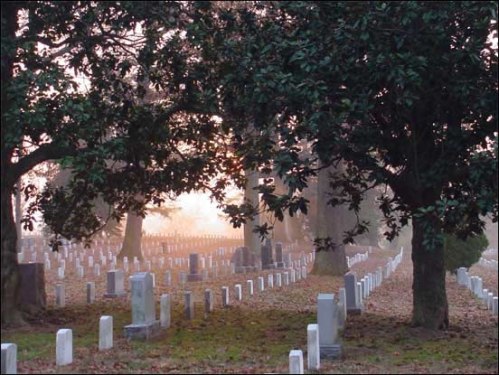
My father’s service to his nation was not provided for political purposes or jingoistic calculation.  He served with honor.  I would never want anything that I say or do denigrate his record, or his service.  Or his memory.

However, I was stunned by an article that appeared in several publications this week, including Education Week.

It seems as though the role of our schools is now to prepare our children for the military.

A new report from an organization called “Mission Readiness: Military Leaders for Kids states that the United States “should invest in early education to help bolster the number of young people eventually eligible to serve in the military and protect national-security interests.”

According to their website:

On Thursday, Nov. 5, the generals and admirals of Mission: Readiness, along with US Secretary of Education, Arne Duncan, released a new report that details the fact that 75% of young Americans are unable to serve their country because they have either failed to graduate high school, engaged in criminal activity, or are physically or mentally unfit.

How do you read that?

Is fitness for the military the new bar by which our children will be measured?

I thought we were preparing them for the best universities on the planet.  I thought we were preparing them to be literate, thinking, caring members of our communities.  I thought we were preparing them to excel with 21st Century skills.  I thought we were preparing them to change the world!

Clearly these goals are compatible with service in the military.  And the veteran officers have rightly pointed to juvenile crime, high school drop-outs, and childhood obesity as conditions that compromise America’s future on every level.  They are advocating that Congress pass a bill to provide more funding for early education- an urgent  need in so many communities.

“Human capital is the success this country is going to need for the 21st century,” said retired Army Maj. Gen. James W. Comstock.

Human capital?  Is that who we are teaching?

I’m sorry.  I work among children and teachers every day.  I watch them struggle and learn and compete and sometimes even cry together.  Those whom an Army general would refer to as “human capital” have names and faces.

at inaug

In good conscience, how do I prepare those children for military service;  for interminable war that even our President cannot comprehend; for the ultimate sacrifice that soldiers and sailors are asked to make in shadowy lands… against faceless enemies.

The truth is, the armed forces will continue to draw the best and  the brightest as they always have.  They will attract the likes of Patrick Tillman. And my father.  And all his brothers.  And all my mother’s brothers too.  And my own brothers.  And all those souls for whom we will pause and remember on this coming Veteran’s Day. They will attract them when the cause is right and when they are led by their own sense of duty and patriotism.

Perhaps modern military warfare– 21st century warfare– will one day reach a point where killing other people and depleting the “human capital” of our enemies, is no longer the objective.  When our military is dependent solely on brain power– on technologically sophisticated kids who can solve problems and think critically and creatively to insure our freedom through statesmanship and diplomacy– then turning to our public schools to prepare students  for military service will be an objective worthy of our father’s sacrifice.

image79_jpg

3 Comments

Filed under El Milagro, President Obama, public education

CHEATING OUR KIDS

testingThis past week the National Center for Education Statistics released a report that may have been a shocker for people outside of the education industry:  when it comes to student achievement, many of our states are cheating!  Or at the very least, they are cheating their kids.

According to an article in Education Week, their results suggest that between 2005 and 2007, various states made their standards less rigorous in one or more grade levels or subjects in at least 26 instances.

“I think as 2014 looms, … clearly what a lot of states are doing is changing the bar so that a lot more students will become proficient,” said Mark S. Schneider, who served as the NCES commissioner from 2005 to November 2008.

Surprised?

What do you expect from high stakes tests that threaten people’s jobs and their professional reputations? When you have put so much stock in leveraging improvement trends on standards-based tests… you invite otherwise well-meaning people to cheat.  So politicians who run on a promise to “improve public schools” and “raise the test scores’ and “close the achievement gap” will do what politicians do to stay in office.  And by lowering the bar in places like New York, you can create the illusion that more students are getting to grade level on your watch.  Even if they aren’t.

The states are free to establish their own standards and select their own tests to determine who has mastered those standards.  And they are free to define “Proficient” for their own students.  The lower the bar is set, the more students will test at “Proficient”.  And when you compare the students in states where the bar has been lowered to the students in California– if you don’t know those states are gaming the system– you will conclude that California’s public schools are inferior.

This is happening because there are no national standards or definitions or assessments required by NCLB.  It is a loophole for any states that choose to use it.  And how do we know that so many states are sand-bagging their kids?  All you have to do is look at the National Assessment of Educational Progress, an optional national test that assesses kids in 4th and 8th grade.

In 4th grade reading, for example, the federal study found that 31 states set proficiency scores that were lower than the cutoff for “basic” performance on NAEP. At the 8th grade level, 15 states set standards judged to be lower than the basic level on the national assessment for that grade.

The Northwest Evaluation Association has been reporting on this phenomenon for several years.  They too maintain that it is just easier to demonstrate proficiency in some states than it is in others– like California.

So the pressure gets turned up in California… from the top down.  And what happens?  Schools stretch to get their kids to those higher, more stringent levels of achievement– by any means necessary. And yes… they cheat.

One of California’ most celebrated charter schools is unapologetic in their methods.  They, in effect, have replaced their curriculum with the California Standards Test. They teach the test.  Every day.  And they hand-pick their students and eliminate those who don’t keep up with the daily rigors of “drill and kill”– the doctrine of test preparation.  The result? They are one of the highest performing schools in the entire state with an Academic Performance Index of 967!  The governor sings their praises because they demonstrate that getting all of your students to grade level can be done.

govBut the California Department of Education (over which the Governor presides)  forbids the practice of test preparation.  Regarding advance preparation for state tests, the California Code of Regulations, Title 5, Section 854 (a) states:

Except for materials specifically included within the designated achievement test, no program or materials shall be used by any school district or employee of a school district that are specifically formulated or intended to prepare pupils for the designated achievement test. No administration or use of an alternate or parallel form of the designated test for any stated purpose shall be permitted for any pupils in grades 2 through 11, inclusive.

So they are cheating!  At least in spirit. But even worse, they have stripped the curriculum and the school of the real things that matter: the 21st century skills, the arts, technology.

And not to pick on one school, this practice is rampant in the state.  Teachers, by necessity, must provide daily test prep in one form or another to meet the accelerating expectations on the federal law, and their Governor, and their school boards.  And they must focus on the narrow scope of standards that are tested– especially language arts and math.

So they are all cheating their kids.  And one day soon, they will realize that for their collective zeal to game (or survive) a very flawed testing scheme… our students will pay.

our kids

3 Comments

Filed under charter schools, public education, school reform, standardized testing