
This is the 3rd in a series about our partnership with the Chula Vista Nature Center at Gunpowder Point. These posts will document our progress as we move our middle school science program off campus– to a satellite classroom called the San Diego Bay!
 On Tuesday we launched seven of our 8th grade girls into the bay. The Nature Center is an extraordinary lab for studying the the marshes and reservoirs and natural bayfront ecosystems, but nothing compares to being in the water itself. Splashing through the mud-decked channels in the shadows of the powerplant. Battling the currents. Reading the tide. Checking the waterproof bird guide against strange-beaked egrets and massive herons.
So that’s where we went.
Harry owns Chula Vista Kayaks and he is our partner in our effort to get all of our middle school students out on the water at least once every quarter. Just about anybody can paddle a kayak. They are stable and low to the tide. You get wet. You feel the water. You smell the exposed shells baking even on cloud-covered mornings like this.
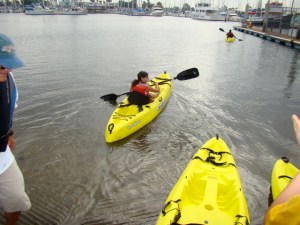 So we launched from the boat ramp: Harry, seven students, Conchita (our office manager) and me. Into the calm marina, out past the last moored pleasure boats, a hard left around the jetty, and into the open bay. The day before we had taken seven of the boys so we anticipated a :30 minute paddle across the water to reach the isolated channels on the other side.
Sometimes when you are teaching kids you can anticipate stuff like that. But then there are those lessons you could never have anticipated. There are those lessons that end up being far more instructive to the teacher than they could ever be for students. Like on this morning. On San Diego Bay. With seven middle school girls in kayaks.
The first four students got the hang of paddling instantly and powered across the water with Harry and Conchita. Vanessa had started off with the others, but rapidly ran out of gas and fell off the pace. The last two struggled to paddle at all, and the tide immediately pushed them sideways closer and closer to the rocks of the jetty. They had no technique. No basic skills.
As an intermediate level kayaker,  I could model the technique for them. And so I did. But they still pushed close to the rocks. So I tried to explain the technique– but now their kayaks were relentlessly pressing against the jetty edge. Then I tried to encourage them… but my voice was muffled by the momentary panic, the surging water, the steady roar, the helpless on-lookers.
But in the end, this is a bay– not some 10-foot crashing surfline along the ocean cliffs– so eventually the girls were able to turn their kayaks into the current and push away. They were finally free of the jetty and into the open water. So we were back on course, some 800 yards behind the others. I offered to turn back with the girls to the calm marina and just wait for the others to return. But they wanted to go on. For the next ten minutes I watched them splash and flail and try everything they could to get some traction.  Finally, the light bulb clicked on. Maybe they were tired of being so far behind. Maybe they felt a sudden urgency to catch up with the others. Maybe they didn’t want to get left out there on San Diego Bay all day. Maybe it was just a developmental thing– they just needed to practice and fail and adjust and fail some more. But they didn’t quit. And just when it looked like we might spend the rest of the academic year out there trying to move in one direction or another, two middle school girls somehow turned into kayakers and found the rhythm to power across the water and catch the others just as they entered the channel.
The return trip was very different. There were now six girls in the pack with Harry and Conchita, paddling like scupper pros and confidently dangling their feet in the water. They were enjoying the bay and the birds and the amazing realization that this was actually a school day and they were in their science class!
Six girls. The seventh was Vanessa, exhausted from using muscle groups she never knew she had. So I tied her kayak to mine and together we paddled in.
 And that is the story. And when I shared it with our teachers yesterday they could clearly see the metaphor:
“Students learn and develop in different ways…”
“We have to hang in their with our struggling students and look for different ways to teach them…”
“We can’t give up on students who might be way behind…”
“Once the light bulb goes off they may accelerate to the head of the pack…”
“We can’t leave a single child crashing against the rocks. Failure really is NOT a option…”
“Sometimes when kids are exhausted from the long, inspired fight against the tide, you just have to lash their boat to yours and tow them until they get their second wind.”
At El Milagro we are going to help 90% of our students become proficient this year. We learned from the jetty and the bay and the surging tide, that that is not possible unless we commit to every child, we monitor their growth, we make adjustments, we treat them according to their place in the journey. We will push and tow them. We will teach them to steer.
Sometimes you set out to teach a lesson about egrets and come back to the marina having learned to navigate on the open water.

 “Let me say at the risk of seeming ridiculous, that the true revolutionary is guided by great feelings of love…” — Che Guevara
 So we unwrapped the contents of the box and unfolded the scores like familiar laundry– grade level by grade level– and hung them on the clothesline: math next to the lemon tree… while language arts dried in a Bay-soft breeze that otherwise cools the bouganvilla. We figure if we treat our test results with such reverence, if we handle them gently enough, if we sprinkle them with holy water, if we read them by the light of a crescent moon, if we wait until the tides align, if we rub the rabbit’s foot, if we pay tributes to the voodoo altar… the news might be more favorable.


 This is the
  It is the first day of school and so our students return. It is mid-summer… most school districts will not call their students back until after Labor Day. Not El Milagro, though. We start early. So ready or not, they are are descending– in droves. Record high enrollment and a long waiting list means business is good.
 The Nature Center is our reminder that we are out of whatever “the box” is and our students could be the beneficiaries.
 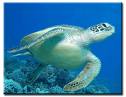 • SECOND: Beyond basic skills, we would work just as hard to provide a more authentic, thinking curriculum that allows children to discover their natural gifts and interests. A curriculum that features the interesting stuff that engages students every day. Like the Nature Center and all its wind-framed beauty and ocean air; its banks of slippery seaweed, its deep fish tanks that stink. Or the tidepools, tucked snugly up against shallow marshes that splash mud and seawater on kid’s school clothes when the tide is up. Or rare creatures on loan from their fragile ecosystems; sometimes strange life-forms that can make kids smile when they hold them in their hands.
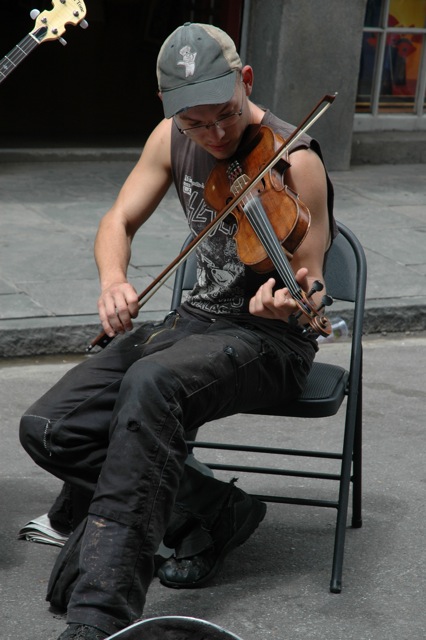 The musicians are coming back to New Orleans even if the business investors are not. They are everywhere. They are on the streets of the Quarter and in the clubs and bars on Frenchmans Street. Listen to them play. Feel them. Put whatever you have in their guitar cases and plastic tip buckets because, as near as I can tell, they are all we have left of New Orleans.
 He was no vagabond fiddler begging for a cup of coffee. He was Joshua Bell, one of the world’s most renowned classical musicians, playing some of the most elegant music ever created on a $3.5 million Stradivarius that was hand-crafted in 1713. On this particular morning, Joshua Bell managed $32 in tips from a handful of passer-bys who took the time to listen. It was “Chaconne”, written by Johann Sebastian Bach and just a few days before, Joshua Bell had played it in the Boston Symphony Hall to a capacity audience who each paid a minimum $100 a ticket to hear the performance.

 The history of El Patio Restaurant is written in its walls. It is as old as California. Father Serra may have stopped here for handmade beef tamales on his journey north to build California’s first missions. His ghost is still in the corner, plugging the jukebox with strange coins and listening to classic ’60s low rider anthems and tejano ballads.


 After the 10th stage of the Tour de France, Lance Armstrong sits in third place. Amazing. What an athlete. The Tour de France has to be one of the most grueling events in competitive athletics and he continues to put himself in a position to win in that legendary bicycle Race to the Top…
 So I wonder… as the facts and

 Meanwhile, I noticed that the state of California still doesn’t have a budget agreement and that there is now a $26.3 billion deficit! The system is broke and it doesn’t appear that we are even
 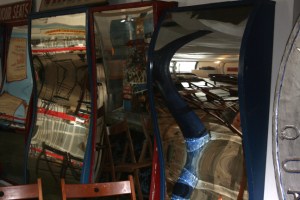 As a matter of fact, I notice that the further away you get from actual classrooms where children and teacher live every day, the more delusional leadership becomes– like dancing in front of funhouse mirrors.

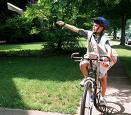 mission. On most days he has a partner who leans out the window and fires the morning paper across the lawn and into our driveway, slicing of a row of agapanthus at the bud. Newspaper Guy is not a 14 year-old kid with a paper route. He is a full grown adult who drives a Cooper and delivers his morning news with a cold disaffection for how it is to be consumed.

 For example, we can still use it to line the parakeet cage or paint bookshelves on the garage floor. We can use it to make paper mache Kachina dancers. We can recycle it. We can lay it down in the garden and fight off the weeds. We can make origami hats with it. We can use it to pack up our glasses and dishes and move away.


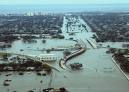 Then he fought against the rising waters and pulled bodies from the canal. Then he fought against the bureaucracy and incompetence of state and federal organizations to create food lines for people who had otherwise been abandoned.
  Then he fought against a police force in chaos– marauding officers that looted the Red Cross food supplies so they could stock their own hunting lodges. Then he fought against the mounting anarchy– that moment in a crisis when good people bet the strength of their own resiliency against whatever force is trying to assure their destruction.
 Habitat for Humanity provides some basic tools and building materials for their volunteers. And they provide a site foreman like Terry Cooney who has to take a very diverse group of people with different work ethics and skills and physical fitness and preparation and experience and lead them to some level of productivity. He has had all kinds of volunteers from celebrities to church groups to not-so-motivated teenagers to company CEO’s and corporate superstars that haven’t done a day of physical labor in 20 years– if ever.
  On Tuesday morning one of the high school groups was packing up to leave. They were exhausted. They gathered for their group meeting along side the circular saw and waited for Terry to release them. Then a sudden piercing hum rose well above the cicadas and construction sounds. And around the corner came their leader, with bagpipes wailing the Marine Corps Hymn. All other sound and activity momentarily ceased.
 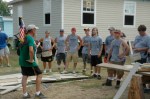 “You should be proud of your work here,” he told them. “I know your parents would be very proud of you too. On behalf of the Habitat for Humanity organization and the people of New Orleans, I want to thank you for your service. You made a difference here. I want to play another song that is dedicated to each and every one of you.”




 "El Milagro Weblog"