Tag Archives: El Milagro

WHAT’S MISSING IN THE PRESIDENT’S VISION OF SCHOOL REFORM

At this defining moment in our history, America faces few more urgent challenges than preparing our children to compete in a global economy. The decisions our leaders make about education in the coming years will shape our future for generations to come. Obama and Biden are committed to meeting this challenge with the leadership and judgment that has been sorely lacking for the last eight years. Their vision for a 21st century education begins with demanding more reform and accountability, coupled with the resources needed to carry out that reform; asking parents to take responsibility for their children’s success; and recruiting, retaining, and rewarding an army of new teachers to fill new successful schools that prepare our children for success in college and the workforce. The Obama-Biden plan will restore the promise of America’s public education, and ensure that American children again lead the world in achievement, creativity and success.

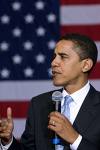
President Obama’s education initiatives are broad-sweeping and on the mark.  Yesterday he presented his plan to make college more affordable and student loans more available to students who really need them.
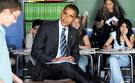
in-schoolsBack on March 10, he described his “5 Pillars of Education Reform”.  His speech on education highlighted his k-12 agenda, where he intends to

  • Reform No Child Left Behind
  • Support High-Quality Schools and Close Low-Performing Charter Schools
  • Make Math and Science Education a National Priority
  • Address the Dropout Crisis:
  • Expand High-Quality Afterschool Opportunitie
  • Support College Outreach Programs
  • Support College Credit Initiatives
  • Support English Language Learners
  • Recruit Teachers
  • Prepare Teachers
  • Retain Teachers
  • Reward Teachers

If we go there– if we improve educational access and opportunity at the pre-school level as well as the K-12 and post-secondary levels, he can leverage the reform he is looking for.  At least in some small degree.   The problem is, for all the detail and ambition, the Obama education vision still does not reach far enough.  His education plan is still missing one critical component– without which–  the success of all these other reforms will be compromised.  Partly because this list of initiatives has already been implemented. There are examples and best practices of these approaches all over the country, and yet, the academic achievement gap persists.

So what is that one, profoundly  revolutionary change that will finally transform public education in America?

roceli1Universal health care.   

Just as his plan to revive the economy hinges on health care, so too does any significant hopes of educational reform.  

It’s the health care.  And the reason is quite simple: 

American schoolchildren should not have to suffer through illness or medical trauma while our health care system shuts their family out from the treatment they require and deserve.

They should not have to come to school with teeth rotting in their heads for lack of dental care.

They should not fall behind in reading (never to catch up), simply because they have undiagnosed vision problems that are often easily corrected with glasses.

They should not suffer in silence, as a first grade child at El Milagro did two year ago, while we negotiated for hearing aids with Childrens Hospital.

They should not have to endure the physical discomfort nor the  social alienation associated with childhood obesity.

They should not have to manage the debilitating side effects of poor nutrition or childhood hunger.

They should not be denied access to mental health treatment, or counseling, or therapists or specialists available to other students whose parents have complete health coverage.

Learning is hard enough to do for students, especially in a climate of ever-tightening accountability.  But where there are inequities in academic outcomes, we almost inevitably find families in economic distress.  While parents struggle to maintain their homes, keep their jobs, make a living, make a life…  they should at least have the confidence that the health care needs of their children are provided for.

If President Obama can deliver on the promise of universal health care for our children, and if public schools fully harness the power of that reform, we will see a significant reduction in the academic achievement gap that has perpetuated the inequities across socio-economic levels for decades.  

The Obama doctrine on education states:

At this defining moment in our history, America faces few more urgent challenges than preparing our children to compete in a global economy.

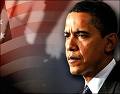
“Preparing our children academically to compete in a global economy”, hinges on their ability to come to a safe school, to focus, to work hard, to believe in their own capacity as citizen-learners.  It hinges on their physical, emotional and mental health.  In fact, if he can provide all of our students with HEALTH CARE, President Obama will prove to be the most influential leader in public education in our lifetimes.
prez-1

3 Comments

Filed under charter schools, El Milagro, health care, President Obama, public education, resiliency

AT GUNPOWDER POINT, NEW FIRE

marshGunpowder Point is bathed in ocean breeze and bird poop.  It is now a protected marshland in what seems to be the last square foot of undeveloped land in Chula Vista.  Bordered by freeway noise to the east, and insulated by acres of natural foliage, the Nature Center leans into that stealthy wind.

turtle_lagoon_frontAnd all of this matters.  The Nature Center is less than two miles from El Milagro and is perhaps a missing piece to the persistent dream we have had of utilizing the natural resources of San Diego Bay as a daily classroom.  It is one thing to go on a field trip … it is another thing to attend school in the slough, to walk among the endangered Clapper Rails, and observe the hypnotic swimming patterns of sand sharks. Every day. As a part of the curriculum. 

forclusre1The Chula Vista Nature Center is facing tough times in the struggling economy.  Chula Vista itself was once listed among the fastest growing cities in America.  Today, whole rows of streets and neighborhoods prop “For Sale” signs on foreclosed lawns, where the dreams of families were packed so hastily  and moved, months ago, to higher ground.  The city is in trouble.  And they fund the Nature Center.  So we want to help.  

After years of diligent budget management under  the watchful eye of  Mr. Wizard, Mueller Charter School is well positioned to weather the otherwise unforgiving fury of a distressed state budget.  So we want to lease a classroom space from the Nature Center.  We want to move our middle school science classroom there and weave them into the daily rotation.  Instead of going to science in room 902, their classroom would now be located on Gunpowder Point.  We can provide the City of Chula Vista a badly needed new funding stream to save the Nature Center; they can provide us a chance to model learning in the real world– the charter vision come to full fruition.  

This is an area rich in history.  It was once home to the Kumeyaay Indians and Spanish settlers.  It still bears the ruins of the old Hercules building where kelp was harvested for gunpowder and potash in World War I.  It was a lemon grove and movie set.  It was the scene of horrific fire that destroyed it all.  And beneath the protected marsh and slough, you just know, generations of human settlement have collected layer upon layer of artifacts.

baldeagleheadImagine children rotating through varied learning opportunities over the course of a school day: contributing to data collection and exhibit management, developing individual research projects that make a significant contribution to the body of knowledge accumulated here, serving as museum docents and guides at the sting ray petting area, performing community service to help maintain the sprawling acres, advocating for green energy.  Imagine children not just simulating the work of science, but being scientists. Contributing.  Developing not just an appreciation for the fragile interdependence of  living ecosystems, but a profound reverence for their own place in the world.  Here there are owls and sharks, reptile and eel aquariums, there are marshland aviaries, and shoreline birds.  There are rare sea turtles.  There is an adult bald eagle.  

Every day, every student would pursue answers to one urgent question that scientists all over the planet are researching.  Something like this:   “How do human developments along our natural waterfronts contribute to and compromise the fragile ecosystems that exist there?”  Our 7th and 8th graders would explore, investigate, experiment, and publish their findings through wikis and blogs in collaboration with children from around the world.  

This is real science.  Authentic learning.  John Knox says you have to teach and learn science with all five senses– and for all you’re worth.  You have to be outside.  In the middle of it.  You have to get your feet muddy and splash aquarium waste water on your shoes.  Appreciate the stench of the owl barn. The sting of the cactus needle.  The rotting kelp.

We are poised for an extraordinary partnership and, for our students, the learning experience of a lifetime.  Here on Gunpowder Point, where early Chula Vistans fought the world war from the banks of San Diego Bay, there is an opportunity to give meaning to the daily joy of learning.  Here in the marsh and the wetlands– new fire.

cape_cod_beach_fire

5 Comments

Filed under California charter schools, charter schools, El Milagro, environmental studies, teaching

STIMULUS: 20 Leadership Lessons From Barack Obama

stimulus | ‘stim yul us
noun (pl. -li | -,li)


• a thing that rouses energy in something or someone; an interesting and exciting quality

pres1On this, the thirty-day anniversary of the historic Inauguration of our 44th President, this much is clear: when it comes to leadership, Barack Obama has some game! In just four weeks (about the time it took most of us to figure out where the restroom was in our new school), President Obama has named and re-named cabinet members, passed a nearly $800 billion stimulus package, flown to Denver, Phoenix and Ottawa, launched Hillary into the Far East, visited a Washington DC charter school and took Michelle to dinner on Valentine’s Day. Whether you agree with his policies or not, there is much to learn from this president’s powerhouse approach to governing.
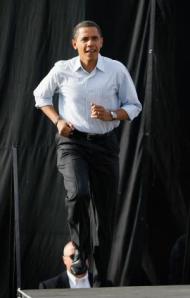
Metaphors for leadership abound– in Fortune 500 Company CEO’s, NBA basketball coaches, and admirals who have captained naval ships. You can find their books in Borders or read about them in Fast Company. Or you can follow CNN on Twitter and study how one man, our president, has approached his first month on the job and confronted the most complex and urgent crises of our generation.

So whatever your role in schools might be, here are “20 Leadership Lessons” from the dynamic presidency of Barack Obama:


1. Keep your eyes on the prize: There is nothing like a wordle to know you are consistently ‘on message’.

2. Invite them to the barbecue: Stepping outside of the hallowed halls helps to build social networks with allies and adversaries alike. Kegger at the White House!”

obama_running_blueflys_blog_flypaper_123. Don’t wait: Hit the ground at a sprint and knock over the furniture. Launch and learn!

4. Keep your family first. Period.

5. Feed your inner gym rat: Stay fit!

6. Bipartisan “process” is secondary to doing the right thing: So do the right thing.

7. Be resilient: After the inevitable setbacks, betrayals, and disappointments… you have to bounce back stronger.

8. Don’t be a sap: “I am an eternal optimist,” said the President. “Not a sap!

9. Read stuff!

barack-obama-holds-his-bl-001

10. Don’t give up your Blackberry: Especially if it is your link to the only people who will tell you the truth.

11. Speak to the conflict: When you speak from the heart to the needs of people that didn’t vote for you, that’s real Servant Leadership.

12. Have some courage. Enough said.

13. Sneak out to dinner: (But leave your Blackberry at home.)

14. Change the culture to change the outcomes: Replace the curtains hung by your predecessor and then make up your own rules.

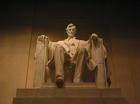
lincolnjpeg15. Stand tall on the shoulders of giants: Don’t wobble, they became giants for a reason.

16. Appreciate the ghosts. (If I lived in the White House I would walk around at night and listen to the spirits whisper.) Our schools have a history too.

17. Surround yourself with the best people you can find: Build your own team of rivals.

18. You belong in the room: So when you feel like you are over your head, it is good to remember that you were hired for a reason.

19. Communicate… communicate… communicate: Make it your gift.

And finally, whether you are an urban school district superintendent, the assistant principal of a small elementary school, or the most powerful leader of the free world, one month on the job–

20. Remember that HOPE is what brought you here.

kids-faces

(Cross-posted at Leadertalk, a blogging community for school leaders hosted by Education Week.)

2 Comments

Filed under President Obama, resiliency, spiritual intelligence

TWITTER AN AUDIENCE WITH THE GREAT GRAY WHALES


blackberryTwitter the whales.  That’s what you do when they are left out of the curriculum. At least that is what connected parents are doing.

A recent Washington Post article described how tech-savvy parents across the country are forcing school boards and superintendents and principals to knuckle under to their avalanche of Twitters, texts, e-mails and blogs demanding their local flavor of change.  I read about it on Dangerously Irrelevant (one of my sources of professional reflection) and found the gleeful comments of fellow readers surprising.  As if school leaders don’t have enough of a mountain to climb now they have to brace for a Twitter campaign to deliver the community’s “no confidence” vote. The anonymous nature of these tools creates some real ethical challenges for school leaders pushing hard on organizational change. (How do most people respond to unsigned complaint letters?)  

The blog drew favorable comments from parents and university educators who seemed to regard this development as a final tipping point in finally straightening out those screwed up public schools.  I thought it was interesting for different reasons:  perhaps tech-savvy parents can now hold universities accountable too.

For better or worse our universities have long served as the R&D branch of public education. Published scholars in our post-secondary schools of education emerge as the industry experts. K-12 educators  worship at the altars of countless consultants and college professors and attribute the weight of the Gospel to their words.  And that would be ok if it wasn’t for the fact that when it actually comes to teaching and learning…  the very last place to go to find the expert practitioners of effective pedagogy would be a college classroom!

images1-2For example: this week I was asking Kira about her Marine Biology class. Although her college is 5 miles from the Pacific Ocean, they will not once visit the tidepools or watch the annual migration of the gray whales or stop by the Scripps Institute of Oceanography or even go to Sea World.  She has one class in a “lecture hall” where 150 students passively take notes from a “professor” inculcating his world view with the help of last year’s powerpoint.  Not very enlightened.  I wonder who I can Twitter about that.
Then Keenan has a class at San Diego State that requires students to go on-line for many of the lessons. It is very economical in that it saves everybody from having to show up for class… but adds to students’ stress (and expense) as they attempt to navigate the idiosyncrasies of another professor’s poorly designed website.  And what do they get when they finally break past the bonds of clumsy technology:  a talking-head video of– you guessed it– last year’s powerpoint.  Or text they could have just Googled.

sdsujpegAren’t these university professors–these giants of the trade–  reading their colleague’s stuff.  Marzano? Bloom?  Gardner? Freire? Cooperative learning? Gradual Release? Are you kidding me? Why aren’t they teaching each other?

An unfair generalization?  No doubt.  Of course there are extraordinary teachers in the university system and some schools have a lot more of them than others.  But if we are going to paint public education with such a broad brush at the K-12 level, it applies all the more in our universities in whom we trust the preparation of future teachers and leaders.  

The tail is wagging the dog. Americans intent on promoting school reform would do well to shift their gaze from the university system to the real experts in teaching and learning:  those high performing elementary school educators who engender extraordinary academic results in spite of challenging environmental factors, in spite of an upside down school system, in spite of the perception that public schools need to be “reformed”, and in spite of the continued reverence for bad teaching that is too often modeled by university-based “experts” that they turn to for answers.  The real experts, it seems, reside in places like El Milagro.

ricky1

Maybe engaging all these parents and community-members who are technologically connected and bent on improving instruction in their children’s schools is not a bad idea. If it works at the local high school, surely it will work at the university too.

So let’s Twitter the school’s president and get Kira an audience with the great gray whales.

whale-tail

1 Comment

Filed under California charter schools, El Milagro, public education, Uncategorized

ALONE FROM EL MILAGRO AND INTO THE BORDER WAR

trolleyjpegWhen the bright red San Diego Trolley pulls into the San Ysidro station at 4:30 on a weekday afternoon, it opens its doors to thousands of people coming or going into the early dusk.  This is the Tijuana border crossing.  The busiest international port in the world.  Mexico’s day laborers silently shuffle across the footbridge to the caracol.  Their heads bowed.  Their eyes, darting nervously.  No matter how many times they have made this crossing in the past five or twenty or fifty years, this is no time for complacency. 

carsJust moments ago they were in America.  They were tending the landscape or working in fields or changing hotel linens or cooking in restaurants or cleaning homes.  Service, labor, business. They are cogs in the wheel of an ailing international economy.  As they cross into their homeland, they are no doubt welcomed by the unmistakable aroma of Mexican gas, street corner taco stands and open fires.  There are miles of choking cars and buses and taxis.  And there are too few police.  

It is no comfort to the border crossers that two more police officers turned up dead this morning. They had been bound, gagged, tortured, and executed. And even more chilling, they had been warned by the drug cartels in a brazen threat broadcast over their own police radios to the beat of narcocorridos.  Tijuana is a war zone.  Tijuana is out of control.  

And if it is no place for adult citizens who have made the silent journey to their jobs in America every day for decades, it is certainly no place for Jorge.

Just an hour ago he was leaving Mueller Charter School– El Milagro—  by way of our back gate. When the three-fifteen bell dismisses a thousand kids into the afternoon, there is an explosion  of energy.  There is running and boys chasing each other into the grass. Parents line their cars up all the way to Broadway to pick up their children.  And the parents will wait because God knows they don’t want them walking home alone.  Too dangerous.

running1

But Jorge carves his way through the playful chaos.  Quietly.  Silently.  As if to mirror the faceless adults who have been his anonymous companions on his daily commute.  He walks down the back driveway of the long apartment complex.  Passed the trailer park.  Across H Street and into the Trolley station.  Every fifteen minutes another trolley stops and he looks for the Blue Line running south to San Ysidro.

Jorge may be Mueller Charter School’s most resilient child.  And we are filled with resilient children.  We grow resiliency.  We study it and foster it and promote it and we have teachers and counselors who are authorities on it.  We are frequent conference presenters on resiliency.  Ryan is focussing on “resiliency in immigrant children” as a potential doctoral dissertation.  I am writing a book about it.

But nothing prepared us for seeing the very personification of resiliency in the dark eyes of Jorge. We had him on our radar screen.  We had discussed him a few weeks earlier at our quarterly Resiliency Monitoring session with his classroom teacher.  We categorized him as a “Quadrant 1”. In our system, that means Jorge is facing dire life crises.  He is in immediate need of urgent care. gunmanjpegHe is in our version of ICU.  There had recently endured unspeakable family tragedies including the decapitation of relatives in the border war.  

But now America’ imploding economy was closing in on him even more.  He and his mom had recently been evicted and they had to return to living quarters somewhere in the squalor of Tijuana. She couldn’t ask for help because she was afraid that Jorge would be disenrolled if we discovered they were living back in Tijuana.  California law is clear.  Not even charter schools can serve children living across the border in Mexico.

So every day, Jorge climbed the trolley and made the trip to Tijuana alone.  He struggles in math. He struggles in reading and writing.  He struggles with English.  But he never misses school.  He finds a way to get here, even if he has to step over bodies piling up on the border to do so.

And that is resiliency.  Jorge is 8 years old.  His story brought tears to our eyes when we talked about him in our staff meeting on Friday.  

We will be able to get his mom relocated and help them with housing and other basic needs. Our efforts will not be reflected in our API because Jorge will tank on that test.   But we owe him for what he has taught us about ourselves.   About how children, even as young as eight, are willing to rise above adversity for this opportunity to learn.  Jorge is a child worth fighting for.  Regardless of his standardized test score, he is one of our most gifted children.  It is called the spiritual intelligence.

silhouette

Leave a comment

Filed under charter schools, El Milagro, resiliency, spiritual intelligence

BABEL’S TOWER

globeOn January 2, 2009, I challenged readers to consider what happens to our students when you test them in a language that is not their native language, and then pass judgment on them and on their teachers based on the predictable results!  I invited readers to take a quiz and to not be discouraged by the fact that the quiz is in a foreign language.  

This issue is huge.  It has less to do with test scores and more to do with how we are preparing our children to compete globally.  Or not.  (Check out who is about to become the largest English speaking country on the planet.)  Of course our students need to speak English, but why aren’t they speaking other languages, too?  

Anyway, if you took the quiz you experienced what many of our students experience.  They may know the material and have the skills in math or reading or writing– but their academic proficiency (and intellect, motivation, potential, etc.) will be determined primarily by their ability to master a second language and the confidence they have in themselves as second language learners. 

Here were the 3 questions:

Question Number 1:

quiz


Если ваша профессиональная репутация, ваша школа рейтинга, и будущее ваших учеников были все зависит от детей, каким образом осуществляется на стандартизированных испытаний, которые приведены в иностранном языке, вы должны:

А. выступаем за то, чтобы дети предоставили оценки на их родном языке ,

B. энтузиазмом участвовать в вашей государства осуществлять в учебных злоупотреблений;

C. вид, что исход отметив делать с языком, или

D. привести ненасильственного протеста

Question Number 2:

كاليفورنيا يطالب بأن تتخذ جميع الأطفال أنصبتها المقررة باللغة الانكليزية للأسباب التالية :

أ. انها حقا جيدة للأطفال

ب. لأنها أكثر موثوقية وسيلة لتحديد ما تعلمه الأطفال

C. لأنها ستوفر معلومات قيمة والمعلمين حول ما يعرف الطلاب

د. وسوف نتأكد من الطلاب لا يملكون غير عادلة رئيس جامعة كاليفورنيا تبدأ اللغة الأجنبية

Question Number 3

Λαμβάνοντας αυτό το παιχνίδι δεν είναι ένα έγκυρο κριτήριο της τη νοημοσύνη μου, διότι:

Α. Δεν μιλούν καμία από αυτές τις γλώσσες

Β. Είναι απλά μια προσομοίωση

C. Είμαι πραγματικά πολύ έξυπνη και μόλις πήρε suckered σε αυτό το κουίζ

D. Αν όλοι μιλούσαν αγγλικά δεν θα είναι απαραίτητα αυτό το κουίζ


Did you pass?  You don’t know?  Well here is the translation:

Question 1, which was written in Russian, asks:

If your professional reputation, your school’s ranking, and the future of your students were all dependent on how children performed on a standardized test which is given in a foreign language, you should:

A. Advocate that children be provided the assessment in their native language

B. Enthusiastically participate even if you consider it educational malpractice

C. Pretend that the outcomes have nothing to do with language; or

D. Lead a non-violent protest to end the demoralizing practice

Question 2, written in Arabic (thanks to Google Translate), asks:

California demands that children take all of their assessments in English because:

A. It is really good for kids

B. Because it is a more reliable way to determine what children have learned

C. Because it is consistent with the “English Only” agenda

D. It will make sure no student has an unfair head start on the UC foreign language requirement

Question 3, which I am sure was all Greek to you, asks:

Taking this quiz is not a valid test of my intelligence because:

A.  I don’t speak any of these languages

B.  It is just a simulation

C.  I am really very smart and just got suckered into this quiz

D.  If everybody spoke English this quiz wouldn’t be necessary

Your score on this quiz doesn’t matter very much.  Your answers, however, are critical!!!

dsc016711

1 Comment

Filed under California charter schools, charter schools, El Milagro

THE LANGUAGE OF THEIR FATHERS

My students speak the language of their fathers and their fathers don’t all speak English.  California is a tough place to live and go to school if you don’t speak English. dsc_0125

We have a long and inglorious history in this state of lining up groups of people in our collective sights, and then stripping them of their fundamental rights through public elections (Remember Prop 8?).  So in 1998 Californians passed a state proposition that effectively banned bilingual education.

calImagine that.  While the rest of the world continues to require two and three languages for children, our state made bilingual education all but illegal.  I wondered:  is that really what Californian’s want for their children?  And if that is what Californians really want for their kids, why is a foreign language still a requirement for the vaunted University of California system?

And just in case any schools had ideas about ignoring the law (like, of course, we did at El Milagro), along comes NCLB  to squeeze every existing bilingual program that might still be operating in the state.

Because in California, the state board of education determined that children must take the state assessments in English. No exceptions.

parkingjpeg1So like all of their native US-born, monolingual, English-Only counterparts, our English learners have to demonstrate mastery of such things as reading comprehension, word analysis, mathematical operations, number sense, algebra and writing conventions.  They have to demonstrate that they know and can do what any child at their grade level should be able to do according to grade level standards.  And they have to do it in a foreign language called English. 

And of course the results matter.  Their school could fail to achieve the AYP goals for English language learners if they don’t get enough right answers on their test.  Their school could become a “Program Improvement School.”  There could be sanctions.  There could be consequences for their teachers and their principals. 

But that’s not all.

Schools with a high percentage of students struggling to learn English typically end up with a lower Academic Performance Index…

Results are published in the local media and the API of each school is compared and contrasted… 

calif-dist-schoolReal estate companies utilize sites like greatschools.net to market properties and neighborhoods with the highest scores…

Prospective new families then move to areas where they perceive there are the best schools…

…While communities with disproportionately large numbers of  English language learners  continue to experience declining enrollment, de facto racial and ethnic segregation, and high mobility.   

It’s a tough cycle to reverse. So schools, out of necessity, abandon their bilingual programs and opt for full English immersion and the bigoted doctrine of  “English-Only” wins. 

But isn’t there a better way? If you really want to assess what a child has learned , do so in the language with which they have the greatest degree of literacy– like the 14 other states (including Texas and New York) already do. 

If you are still unconvinced, please take the simple quiz below.  There are only three questions and if you are an educator or a parent or a concerned citizen—you have the answers!  Just imagine that your school’s reputation, your future, the entire social/cultural/economic fabric of your community depends on your score.  No pressure.  Relax and do your best—even if the quiz is in a foreign language:

Question Number 1:

quiz


Если ваша профессиональная репутация, ваша школа рейтинга, и будущее ваших учеников были все зависит от детей, каким образом осуществляется на стандартизированных испытаний, которые приведены в иностранном языке, вы должны:

А. выступаем за то, чтобы дети предоставили оценки на их родном языке ,

B. энтузиазмом участвовать в вашей государства осуществлять в учебных злоупотреблений;

C. вид, что исход отметив делать с языком, или

D. привести ненасильственного протеста

Question Number 2:

كاليفورنيا يطالب بأن تتخذ جميع الأطفال أنصبتها المقررة باللغة الانكليزية للأسباب التالية :

أ. انها حقا جيدة للأطفال

ب. لأنها أكثر موثوقية وسيلة لتحديد ما تعلمه الأطفال

C. لأنها ستوفر معلومات قيمة والمعلمين حول ما يعرف الطلاب

د. وسوف نتأكد من الطلاب لا يملكون غير عادلة رئيس جامعة كاليفورنيا تبدأ اللغة الأجنبية

Question Number 3

Λαμβάνοντας αυτό το παιχνίδι δεν είναι ένα έγκυρο κριτήριο της τη νοημοσύνη μου, διότι:

Α. Δεν μιλούν καμία από αυτές τις γλώσσες

Β. Είναι απλά μια προσομοίωση

C. Είμαι πραγματικά πολύ έξυπνη και μόλις πήρε suckered σε αυτό το κουίζ

D. Αν όλοι μιλούσαν αγγλικά δεν θα είναι απαραίτητα αυτό το κουίζ

checkjpeg1So how did you do?  Are you in Program Improvement?  You can check your answer and the translation here  on Sunday, January 4.
3 Comments

Filed under charter schools, El Milagro

7 HEISMANS AND THAT PICTURE FROM UCLA

dsc_ucla2


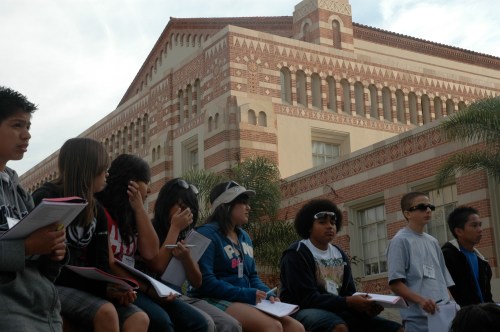
It’s not a great picture.  At least artistically speaking. There are eight of our students and only Brandon even looked at the camera.  The lighting, such as it is, is purely accidental. If you didn’t know the subject you would click past it and move on. 

But we can’t.  We know the subject.  And we know how they came to be sitting in the courtyard there in the shadows of those majestic buildings.  For us there is tremendous symbolism in that picture from UCLA.

So let me ask you, as an educator, when did you first know you were going to college? 

As the youngest of three wayward boys, I was the first in my family to even graduate from high school, let alone go to college—or get a degree.  When I was the age of the students in the picture, I could not have predicted a doctorate.  Or running a school.  Or reading the blogs of colleagues on Saturday morning. I went to college by accident and only to play football.  For many of you I know the story is the same.  Our students have their stories too.  And for most, the journey to a university campus is too often one of pure luck, or providence, or childhood fantasy, or accident. 

Unless we put them in the picture!

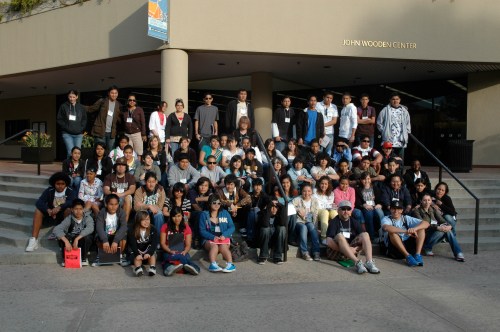
busjpgWe took all sixty of our 8th graders to Los Angeles last Spring and spent three days touring colleges and universities there.  We went to Cal State LA, UC Irvine, Long Beach State University, UCLA, and of course, the University of Southern California.  We stayed in a hotel in Santa Monica and I have ever been so proud of a group of students—or so inspired.

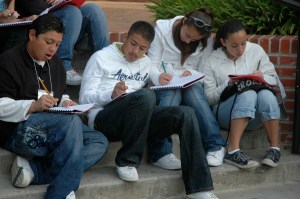
As close as we were to Hollywood and Universal Studios and Knotts Berry Farm and Disneyland–  we didn’t see any of those places.  Our only side trip was to the Museum of Tolerance.  The real attraction– the power– was in spending time on those campuses;  feeling the energy, shopping in the bookstores, walking through classrooms… and seeing so many college students who looked just like our kids.  57 of our 60 students are Latino.  2 are African American.  We are a low income, Title I school. Every one of those students knew how unlikely it was for them to be sitting on the wall at UCLA on a Spring afternoon when they would otherwise be back at school struggling through their algebra.

It is getting harder and harder for families to send their children to college.  It is getting harder to finish, too.  In fact, the US is 15th out of 29 nations in college completion rates– just ahead of Mexico and Turkey.  Moreover, Latinos like the students from our school that we call El Milagro, are least represented on our college campuses. Even though they are the fastest growing ethnic group in the US, they make up only 11% of college enrollment.   This of course explains why only 12 percent of Latinos age 25 and older have received a bachelor’s degree or higher compared to 30.5 percent of non-Latino White students. 

flags

Despite such odds, there is still is a well-lit path to college if we are willing to show our students where it is.  In fact, when we piled off the buses by the bookstore at USC, we were greeted by a Pre-med student who was hand picked to be our campus tour guide. He knew our students and the challenges they faced.  He was one of our alumni, a past graduate of El Milagro with a little brother now in our 7th grade. ( Just one more surprise—one more piece of diligent and intentional  planning by our counselors Ryan and Marisol!) He wasn’t a regular tour guide and to tell you the truth he didn’t know the campus all that well.  He pretty much knew where his classrooms were and the bookstore and the library.  But that too was telling.  He was not there to play.  He knew the sacrifices that others had to make so that he could attend this extraordinary institution; to live his dream and some day return to serve his community as a doctor. 

hesiman-trophy

He did know where the athletic department was though– where all 7 of the Heisman Trophies are displayed. There was the one from Mike Garrett and Charles White and Marcus Allen and Matt Leinart and Carson Palmer and Reggie Bush and yes, OJ’s is there too.  We passed by and looked at each one and kids like Fernando knew exactly what that trophy represented and what it means to have so many in one room.

The next day, just before lunch, Ryan and Marisol lead their daily groups in the main courtyard at UCLA.  The tours were structured so our students had some time to reflect.  In the groups they could ask questions and share pictures and write in their travel journals.  The group sessions challenged them to share their dreams and their personal epiphanies.

“So what have you learned in your visit today?”journals1

“As you sit here on these steps and look around this campus, what do you think you have to do right now—in preparation to go to school here?”

“What image has created the most powerful impression on you so far?’

They all shared and listened. 

“It’s not just the goals we set for ourselves,” Maria said.  “We have to stay close to each other and surround ourselves with people who have the same goals that we have.”

“High school seems different to me right,” Miguel said.  “I think if I want to go to UCLA, I need to start preparing today.  I need to approach school in a whole different way.  I need to get serious…because I can do this.” 

Fernando was still thinking about those Heisman Trophies he saw the day before on the other side of town. Everybody knows that Fernando is a great football player.  He has unlimited potential.  As an athlete.   He started to articulate what the past three days had meant to him and how no one in his family had even set foot on a college campus like this before.  Something clicked, sitting there in the hallowed air of UCLA.  “Those Heisman Trophies were sick,” Fernando said.  “But I know, I can’t count on football to get me to college.”  

Fernando and his classmates finally figured out why we wanted to load them on to buses and spend three days looking at universities when they were only in the 8th grade.

He looked at Ryan and Marisol and tried to say thank you but he just put his head in his hands and started to sob.  He wasn’t alone.  For Fernando and all of his classmates from El Milagro, the road to college will not be an easy one.  And for some it will be improbable.

But then… there they are sitting in the courtyard in that picture from UCLA.

group

PS

On June 20, 2011,  I will be posting an announcement on my blog declaring where each of these 60 students are going to college.  I can’t wait.  In the meantime, this Spring, we are taking 60 more students to UCLA.

(Soon to be Posted on Leadertalk.)

3 Comments

Filed under charter schools, El Milagro

WHO LETS THE BULLIES WIN?

shadowsOn Thursday we made the disturbing discovery that some of our 6th graders are engaging in the most heinous kinds of bullying, hazing, intimidation and battery.  Some of it is of a sexual nature.  And they have taken it to extreme lengths.

Counselors, teachers, administrators, and local police met with our students and parents this past week and we assured everyone in earshot that we were going to protect out children from bullying.

We were most disturbed that:

• we hadn’t seen it happening…

• that it was mostly among the girls…

• and that no one spoke up in defense of the victims.

And that the nature of the behavior was so offensive.  One of the police officers recounted a similar incident that took place at another middle school just the day before.  He told us that a girl had been assaulted by other girls in a PE class.  Her attackers had grabbed her from behind, held her, and put a condom inside her mouth. 

Upon hearing the story and connecting it to our own events one of our teachers wanted to know what in the heck was happening to our children. 

“What in the heck is happening to our kids?” she asked.violent-games3

The answers were predictable:  “It’s the media, the internet, the quest for YouTube stardom, the lack of values, violent video games, the economy, screwed up role models, missing parents…” 

WAIT!  Maybe it is some of those things.  But WE create the climate in this school.  We designed a rotating, departmentalized schedule that leads to a more fragmented day.  We provide the structure and the supervision (and lack of it when we get complacent.)  We established the flawed systems that reward and recognize students that abide by our rules and consequences (most of the time) for students who break them.  We create the relationships.  We influence the culture of our school more than any of these outside forces!!!

Bullying begins to take root in places where bullying is permitted. To find the source of why it happens, we only have to look in the mirror.  Even some of our students reported that they took our advice when others were picking on them.  They told an adult.  And the adult just blew it off because they were busy doing something else.  Maybe they were overwhelmed with the alarming increase in students coming to report that they were being bullied too.

As school leaders we can say what we want about our obligation to tests scores and politicians and our quest to create the planet’s most amazing school– creating El Milagro.  But job one is keeping children safe, and if we can’t do that, we will step aside and allow our communities to hire the quality of principals that our children deserve.

(Posted simultaneously at Leadertalk.)

dance

Leave a comment

Filed under Uncategorized

HOW PRESIDENT-ELECT OBAMA SOLICITED MY INPUT ON PRIORITIES FOR THE NEW SECRETARY OF EDUCATION

obama-on-the-phone2OK… so he didn’t really solicit my opinion.  I think maybe I just had a dream that I was sitting in my office talking to a couple of students when I got a phone call– totally unexpected– from President-Elect Obama.

“Dr. Riley”, he says. “It’s good to finally reach you. I know you have been busy running a pretty amazing charter school there in Chula Vista, but man, you are hard to reach.”

“Yes sir, I am usually out in classrooms so I don’t always get to take calls.”

“Well, listen, I just wanted to let you know I finished your book The Lights of El Milagro, and I really enjoyed it. You are doing some great stuff there.”

“Thank you Mr. President. I am honored. I read your books too. Mine hasn’t made the NY Times Bestseller List like yours have… but we are definitely telling our story.”

“And that’s why I wanted to talk to you. You know I have to name a Secretary of Education… right?”

“Yes sir. And no thank you I can’t leave El Milagro.”

I think he laughs.

“Well what I really want to know is what is on your wish list for the new Secretary of Education. You know, what has to happen for you to get your kids to grade level and not sacrifice the quality teaching and learning that our students and teachers deserve?”

So I think about it for a second and consider whether I am dreaming or maybe I’m getting punked by those French deejays who bamboozled Sarah Palin or maybe I have just been working too hard lately and I’m hearing voices-like President-Elect Obama’s. But sometimes you suspend judgment long enough to roll the dice. And so I did.

10-priorities“Well sir… I have Ten Items on My Wish List For The Newly Appointed Secretary of Education To Address While We Work To Overcome Circumstances Created Less By Pedagogy than by Public Policy. If you wouldn’t mind passing them along to the Secretary, I’d really appreciate it.”

“Of course. What are they?”

“Well, if we are going to provide the world class education that everyone has been talking about, here is what your Secretary of Education could do:

1. Provide health care for all of my students to address the scourge of childhood obesity, diabetes, and poor nutrition;health-care

2. Ensure that every child has access to comprehensive eye exams and appropriate interventions when they are struggling just to see– let alone to read;

3. Ensure that every child has regular dental checkups and access to highly qualified dentists so that my students’ baby teeth aren’t rotting in their heads;

4. Provide the funding support and infrastructure so that all of my students can attend preschool like the affluent kids do;

5. Create a way for every child in America to have a laptop and access to the Internet so that poor children aren’t pushed further behind by the technology divide that favors their more affluent counterparts;

6. Divert the 10 billion dollars we are currently spending every month in Iraq and re-invest in the modernization and construction of state-of-the-art school buildings in every community in America;

7. Guarantee a college education of the highest quality for all children so they are motivated to apply themselves academically;

8. Eliminate unemployment so that the parents of my students can properly provide the basic necessities for their children-food, clothing shelter;

9. Significantly raise the minimum wage so that our parents are not forever struggling against the tide…fighting the unwinnable battle to stay ahead of a runaway economy and its stunning indifference to the working poor…standardized_testing

And… let’s see… I guess this is a big one…

10. Eliminate politically motivated accountability systems that, for the most part, test our students’ ability to test while ignoring all of  their other assets: like their creativity and their critical thinking and problem solving and communication skills; and their proficiency with technology and their ability to speak in multiple languages or lead others or serve their community…”

“Sir… are you still there?”

I can hear only music in the background and I am in the foggy no-man’s-land that exists somewhere between blissful sleep and consciousness. Still, I wonder if he got my list. I wonder of his new Secretary of Education: Linda Darling-Hammond or Joel Klein or Kennedy or Powell or Weingarten or Cornell West or Rhee or you or whomever he picks– will get my list. I hope so. El Milagro is no dream and our children are depending on it.

peace-sign


5 Comments

Filed under Uncategorized