Category Archives: charter schools

100 THINGS I AM OPTIMISTIC ABOUT ON THE 101st DAY OF THE OBAMA PRESIDENCY

*Apr 28 - 00:05*

…Education, Iraq, swine flu, press conferences, basketball, being American, economic recovery, green energy, housing, kids, race relations, jurisprudence, Pakistan, college costs, the White House website, Republican demise, GM, Oval Office photos, American voters, health care, health care for kids, Guantanamo, choice, Hispanic caucus, charter schools, Twitter, Michelle, the cabinet, Ted Kennedy, NY Times, NY Yankees, Bo, Peace Corps;

JFK, Teach for America, Hugo Chavez, Washington DC, the Obama kids, on-line media, high speed rail, Isreal, stock market, Arlen Specter, waterboarding,  MSNBC, US troops coming home, Fair Pay Act, a new NCLB, affordable student loans, Air Force 1, families, world travel, stem cell research, change, civil rights, the US Constitution,  gun control, global warming, New Orleans, honest communication, US reputation abroad, GNP, the VP;

Jazz, Rachel Maddow, early childhood education, NASA, environmental protection, fuel economy, Earth Day, veterans, immigration, S-CHIP,  Americans with Disabilities,  G-20 Summit, jobs,  home ownership,  fairness, nutrition, 21st Century skills, work-family balance, performance, Social Security, foreign policy, Nuclear waste disposal, Islam; 

Darfur, fossil fuels, US tax code, executive orders, National Academy of Sciences, clean energy, urban America, fitness, organic gardens, homeland security, the arts, poverty, dynamic speeches;

Two terms.

gal_barack_02

Leave a comment

Filed under charter schools, El Milagro, environmental studies, health care, President Obama, public education

WHAT’S MISSING IN THE PRESIDENT’S VISION OF SCHOOL REFORM

At this defining moment in our history, America faces few more urgent challenges than preparing our children to compete in a global economy. The decisions our leaders make about education in the coming years will shape our future for generations to come. Obama and Biden are committed to meeting this challenge with the leadership and judgment that has been sorely lacking for the last eight years. Their vision for a 21st century education begins with demanding more reform and accountability, coupled with the resources needed to carry out that reform; asking parents to take responsibility for their children’s success; and recruiting, retaining, and rewarding an army of new teachers to fill new successful schools that prepare our children for success in college and the workforce. The Obama-Biden plan will restore the promise of America’s public education, and ensure that American children again lead the world in achievement, creativity and success.

President Obama’s education initiatives are broad-sweeping and on the mark.  Yesterday he presented his plan to make college more affordable and student loans more available to students who really need them.

in-schoolsBack on March 10, he described his “5 Pillars of Education Reform”.  His speech on education highlighted his k-12 agenda, where he intends to

  • Reform No Child Left Behind
  • Support High-Quality Schools and Close Low-Performing Charter Schools
  • Make Math and Science Education a National Priority
  • Address the Dropout Crisis:
  • Expand High-Quality Afterschool Opportunitie
  • Support College Outreach Programs
  • Support College Credit Initiatives
  • Support English Language Learners
  • Recruit Teachers
  • Prepare Teachers
  • Retain Teachers
  • Reward Teachers

If we go there– if we improve educational access and opportunity at the pre-school level as well as the K-12 and post-secondary levels, he can leverage the reform he is looking for.  At least in some small degree.   The problem is, for all the detail and ambition, the Obama education vision still does not reach far enough.  His education plan is still missing one critical component– without which–  the success of all these other reforms will be compromised.  Partly because this list of initiatives has already been implemented. There are examples and best practices of these approaches all over the country, and yet, the academic achievement gap persists.

So what is that one, profoundly  revolutionary change that will finally transform public education in America?

roceli1Universal health care.   

Just as his plan to revive the economy hinges on health care, so too does any significant hopes of educational reform.  

It’s the health care.  And the reason is quite simple: 

American schoolchildren should not have to suffer through illness or medical trauma while our health care system shuts their family out from the treatment they require and deserve.

They should not have to come to school with teeth rotting in their heads for lack of dental care.

They should not fall behind in reading (never to catch up), simply because they have undiagnosed vision problems that are often easily corrected with glasses.

They should not suffer in silence, as a first grade child at El Milagro did two year ago, while we negotiated for hearing aids with Childrens Hospital.

They should not have to endure the physical discomfort nor the  social alienation associated with childhood obesity.

They should not have to manage the debilitating side effects of poor nutrition or childhood hunger.

They should not be denied access to mental health treatment, or counseling, or therapists or specialists available to other students whose parents have complete health coverage.

Learning is hard enough to do for students, especially in a climate of ever-tightening accountability.  But where there are inequities in academic outcomes, we almost inevitably find families in economic distress.  While parents struggle to maintain their homes, keep their jobs, make a living, make a life…  they should at least have the confidence that the health care needs of their children are provided for.

If President Obama can deliver on the promise of universal health care for our children, and if public schools fully harness the power of that reform, we will see a significant reduction in the academic achievement gap that has perpetuated the inequities across socio-economic levels for decades.  

The Obama doctrine on education states:

At this defining moment in our history, America faces few more urgent challenges than preparing our children to compete in a global economy.

“Preparing our children academically to compete in a global economy”, hinges on their ability to come to a safe school, to focus, to work hard, to believe in their own capacity as citizen-learners.  It hinges on their physical, emotional and mental health.  In fact, if he can provide all of our students with HEALTH CARE, President Obama will prove to be the most influential leader in public education in our lifetimes.

prez-1

3 Comments

Filed under charter schools, El Milagro, health care, President Obama, public education, resiliency

HIGH STAKES… All IN

testsWe are two weeks from the 2009 iteration of the California Standards Test.  The clock is ticking. We are prepared.  We are in a zone.  And we better be…considering the high stakes.

High stakes?  Isn’t that just residual hyperbole left over from the NCLB-era politics?  Well let’s check it out.  

Here are a dozen ways that standardized testing has resulted  in high “stakes” outcomes and their unintended consequences:

• High stakes because the results are going to follow every student for the remainder of their school careers.

• High stakes because schools will use the results to determine students’ eligibility for after-school programs and tutoring opportunities and Advanced Placement classes and extracurricular activities. Even for eligibility (and thus in-eligibility) for participation in athletics and the performing arts.

• High stakes because school officials will use the scores as a criteria for classifying children as gifted– public education’s most coveted label.  Similarly, they will cite these scores when diagnosing children as learning disabled.

• High stakes because schools will (illegally) weigh the portents of  these scores before admitting new students.  Or they will consult them– the final straw– before expelling or disenrolling kids; before recommending ‘delinquents’  to a continuation program or independent study or homeschooling or some other version of learning in Siberia.

In high stakes testing, the results matter to everybody. 

board-mtg1

• They are “high stakes” because presidents and governors and mayors run for elected office on the promise of improving local trends in standardized test scores.  School board members too.  And the superintendents that school boards hire will survive on their ability to deliver higher scores on metrics like the Academic Performance Index (API).  Likewise the principals that the superintendents hire will come and go like bad wind and pretty much everybody will feel the pressure when the next wave of leaders are clearing out their desks and insuring their colleagues that they have always wanted to return to the classroom.  

• High stakes because that pressure to raise test scores will drive teachers with the most seniority (and experience) toward the schools with the higher API (800+) and lower stress levels. 

u-haul-1• High stakes because schools with low API’s (<700) will continue to replace those migrating veteran teachers with brand new inexperienced teachers who will take five years to learn their craft… and then they will migrate too.  And while they are learning, those younger teachers will be just starting to raise families of their own.  So you can expect those teachers to be out two to three months on maternity leave and to be temporarily replaced by long-term substitute teachers who have less training and less experience than the inexperienced young teacher they are replacing.

And the community will witness the invisible forces of the high stakes tests in ways they could never imagine.

• High stakes because when educated, upwardly mobile young couples start looking for a suitable neighborhood in which to raise their families they inevitably consider the quality of the schools.   They consult websites like greatschools.net and identify the school districts with the highest test scores.  And that is where they buy their home.  

poway11


• High stakes because when large groups of young, upwardly mobile couples get together to raise their children, they insist on state of the art pre-schools and they start volunteering in the elementary school before their kids are old enough to walk. So a whole community evolves around a culture of high achievement. It becomes pre-ordained and the Academic Performance Index of the schools go even higher.

• High stakes because the schools with low API’s struggle for any organizational momentum at all. They tend to serve families who are less educated and thus less upwardly mobile.  They tend to serve families that are in survival mode. They do not tend to attract the new young families who just moved to town and who are looking for the very best schools.  

• High stakes because the communities with large clusters of well educated and upwardly mobile families experience far fewer home foreclosures than those where families took greater risks with loans.  (In San Diego County, for example, the top five zip codes with the highest number of home foreclosures featured schools with an average API of only 754.) Home foreclosures lead to higher student mobility rates as families migrate toward more affordable housing options.  

High stakes.  

high-stakes2• High stakes because we are all compelled to strike hard against the mountainous challenge of quantifying children’s learning on the basis of  a single standardized test.  We will balance the winners and the losers and the inevitable damage caused when the best of intentions collide with unintentional consequences.  And that is, by definition, high stakes– where our systems align poorly or not at all. And  for that incongruence…our children pay.

In California, there are only two weeks remaining until we administer  the next version of the CST. When it is complete, we will dutifully send our thousand student answer sheets off to Sacramento with a blind faith that they will be accurately scored.  And the cycle of waiting for the results and the early analyses will begin anew.  

Our students are ready to play the game. It is high stakes. We are “all in”.

2 Comments

Filed under California charter schools, charter schools, El Milagro, gifted children, public education, standardized testing

MUSICIAN’S VILLAGE

dsc_0070

Spring Break just ended and I have now gone the longest I have ever gone between posts.  It is bad practice, no doubt,  to miss my weekly publishing day (which is normally Saturday!).  But I have a good excuse.

dsc_04111Anne and I have just returned from New Orleans where we volunteered for service with Habitat for Humanity and helped build homes in Musician’s Village. That is, we helped in the way that volunteers help when they have limited experience with actually building, using power tools, climbing ladders or hanging from roofs. But we helped. 

And as always, the ambiance of New Orleans was amazing.  

But so is the heartache. And so are the wonderings.

And so I wondered, 4 years after Katrina, why there are still hundreds (thousands?) of homes with holes in the roofs and boarded up windows and debris piled in the yard.

dsc_0376_2I wondered why so many  of those uninhabited houses still bore the crimson “X’s” spray-painted by search and rescue teams and framing the cryptic code for the number of  victims still inside.  And I wondered how those search tattoos worked on the psyche of children and adults alike.

I wondered why in some neighborhoods, all of the properties are restored, while in the poorer, more segregated neighborhoods, entire block are still abandoned. (Actually, I didn’t really “wonder “why this is happening at all.  These are the same people that were abandoned from the day the hurricane hit. They were left on bridges and rooftops and dumped into sports arenas.  And they still aren’t getting much help.)

So I wondered if the guy they keep trotting out as “the next Republican contender for president, the governor of Louisiana, has been in the Lower Ninth Ward lately.  I wondered how you can approach the problems and challenges of the presidency if you can’t tend to the needs of your own community.

I wonder how many people moved back into homes that they shouldn’t have moved back into.  Homes where the walls are filled with mold and the cockroaches prop up rotting foundations on their backs.

I wondered why so many schools still aren’t operational yet and how much longer it is going to take.

But then again, I wonder what we can all learn from a resilient city that has bet the majority of its waterlogged educational system  on the promise of charter schools .

I wondered, with the return of so many musicians to New Orleans, could the city’s full revival be far behind?

dsc_0249

dsc_02661dsc_0305


And I wondered how the children are since Jazz Became Hope.

dsc_0256

2 Comments

Filed under charter schools, El Milagro, resiliency, spiritual intelligence, Uncategorized

AT GUNPOWDER POINT, NEW FIRE

marshGunpowder Point is bathed in ocean breeze and bird poop.  It is now a protected marshland in what seems to be the last square foot of undeveloped land in Chula Vista.  Bordered by freeway noise to the east, and insulated by acres of natural foliage, the Nature Center leans into that stealthy wind.

turtle_lagoon_frontAnd all of this matters.  The Nature Center is less than two miles from El Milagro and is perhaps a missing piece to the persistent dream we have had of utilizing the natural resources of San Diego Bay as a daily classroom.  It is one thing to go on a field trip … it is another thing to attend school in the slough, to walk among the endangered Clapper Rails, and observe the hypnotic swimming patterns of sand sharks. Every day. As a part of the curriculum. 

forclusre1The Chula Vista Nature Center is facing tough times in the struggling economy.  Chula Vista itself was once listed among the fastest growing cities in America.  Today, whole rows of streets and neighborhoods prop “For Sale” signs on foreclosed lawns, where the dreams of families were packed so hastily  and moved, months ago, to higher ground.  The city is in trouble.  And they fund the Nature Center.  So we want to help.  

After years of diligent budget management under  the watchful eye of  Mr. Wizard, Mueller Charter School is well positioned to weather the otherwise unforgiving fury of a distressed state budget.  So we want to lease a classroom space from the Nature Center.  We want to move our middle school science classroom there and weave them into the daily rotation.  Instead of going to science in room 902, their classroom would now be located on Gunpowder Point.  We can provide the City of Chula Vista a badly needed new funding stream to save the Nature Center; they can provide us a chance to model learning in the real world– the charter vision come to full fruition.  

This is an area rich in history.  It was once home to the Kumeyaay Indians and Spanish settlers.  It still bears the ruins of the old Hercules building where kelp was harvested for gunpowder and potash in World War I.  It was a lemon grove and movie set.  It was the scene of horrific fire that destroyed it all.  And beneath the protected marsh and slough, you just know, generations of human settlement have collected layer upon layer of artifacts.

baldeagleheadImagine children rotating through varied learning opportunities over the course of a school day: contributing to data collection and exhibit management, developing individual research projects that make a significant contribution to the body of knowledge accumulated here, serving as museum docents and guides at the sting ray petting area, performing community service to help maintain the sprawling acres, advocating for green energy.  Imagine children not just simulating the work of science, but being scientists. Contributing.  Developing not just an appreciation for the fragile interdependence of  living ecosystems, but a profound reverence for their own place in the world.  Here there are owls and sharks, reptile and eel aquariums, there are marshland aviaries, and shoreline birds.  There are rare sea turtles.  There is an adult bald eagle.  

Every day, every student would pursue answers to one urgent question that scientists all over the planet are researching.  Something like this:   “How do human developments along our natural waterfronts contribute to and compromise the fragile ecosystems that exist there?”  Our 7th and 8th graders would explore, investigate, experiment, and publish their findings through wikis and blogs in collaboration with children from around the world.  

This is real science.  Authentic learning.  John Knox says you have to teach and learn science with all five senses– and for all you’re worth.  You have to be outside.  In the middle of it.  You have to get your feet muddy and splash aquarium waste water on your shoes.  Appreciate the stench of the owl barn. The sting of the cactus needle.  The rotting kelp.

We are poised for an extraordinary partnership and, for our students, the learning experience of a lifetime.  Here on Gunpowder Point, where early Chula Vistans fought the world war from the banks of San Diego Bay, there is an opportunity to give meaning to the daily joy of learning.  Here in the marsh and the wetlands– new fire.

cape_cod_beach_fire

5 Comments

Filed under California charter schools, charter schools, El Milagro, environmental studies, teaching

5 PILLARS TO SAVE A NATION

education_hero

“Every so often, throughout our history, a generation of Americans bears the responsibility of seeing this country through difficult times and protecting the dream of its founding for posterity. This is a responsibility that has fallen to our generation. Meeting it will require steering our nation’s economy through a crisis unlike any we have seen in our time.”

This past Tuesday  morning, President Obama presented his proposed education reforms to the Hispanic Chamber of Commerce in Washington DC.  If the Hispanic Chamber of Commerce is going to advocate at all for Latinos and their children in the United States, they should take great confidence away from that bright, bright morning at the Marriot Ballroom.  In the background of the President’s message  is an economy that has been ground down to the core by too many individuals who were entrusted to leave the machinery of commerce better than how they found it.  But once they got their hands on the wheel, the temptation to achieve personal gain, the lack of compassion, the lack of regulation, the lack of restraint, the lack of moral guidance, the lack of patriotism–  led the country and the rest of the world– right over the cliff toward economic collapse.

stock-mrktjpegThis happened on the last President’s watch, the one that talked about patriotism and Christian values and keeping America safe.  The one that imposed No Child Left Behind on America’ s schools and accelerated an era in which the illusion of accountability and achievement has merely driven schools to gun the motor, spin the tires in the mud, and lurch forward in the wrong direction in a cloud of spent energy and system-wide exhaustion. Just like the economy.  President Obama said:

“Despite resources that are unmatched anywhere in the world, we’ve let our grades slip, our schools crumble, our teacher quality fall short, and other nations outpace us. Let me give you a few statistics. In 8th grade math, we’ve fallen to 9th place. Singapore’s middle-schoolers outperform ours three to one. Just a third of our 13- and 14-year-olds can read as well as they should. And year after year, a stubborn gap persists between how well white students are doing compared to their African American and Latino classmates. The relative decline of American education is untenable for our economy, it’s unsustainable for our democracy, it’s unacceptable for our children — and we can’t afford to let it continue.” 

So President Obama  connected the dots on the moribund economy and our bankrupt schools and the illusion of academic progress for a nation leaving virtually all of our children behind.  The two systems are inextricably bound.  

While there may have been too few voices signaling our economic demise with any authority or passion, we have been signaling the alarm from within our schools for 8 years:  educating children, particularly those who are severely impacted by our nation’s recession, requires a lot more than threats and bullying over standardized test results. But just as opposition to the war in Iraq was regarded as unpatriotic, warning of the dangers of such a myopic view of teaching children was disregarded as “excuses by educators who are afraid of being held accountable.”

We merely linked the academic future of our children to the economy and to the federal government’s responsibility to help ameliorate  those punishing risk factors that inhibit children’s learning.  And we were right.  In fact, two important studies were released this week that neatly framed President Obama’s vision for public education.  The first was a joint study from the Education and Public Interest Center at the University of Colorado at Boulder and ASU’s Education Policy Research Unit.  That report described seven “out-of-school factors” that profoundly influence students’ academic success and lead to inequalities among children: prenatal care; health care; food insecurity; environmental pollutants; family stress; neighborhood characteristics; and lack of extended learning opportunities, such as preschool or summer programs.  The report’s conclusion is that schools cannot address these variables alone.

And we’ve been saying that too.

20090323_107The second study came from the National Center on Family Homelessness who now estimate that one in every 50 American children is homeless. In summarizing the report  Time Magazine’s stated, “The consequences of homelessness are profound. Homeless children are twice as likely as other children to be retained, or held back, one academic year, or to be suspended or, ultimately, to drop out of school altogether. School districts across the country report a growing share of students who are highly mobile — who move multiple times within a school year. With each move, experts say, such students are at risk of falling some six months behind, or more, in their studies.” And as a result of our economic downturn, the trend of homeless children is growing.

Under the leadership of Secretary of Education Arne Duncan and President Barack Obama, we have an opportunity to reverse the downward spiraling course of public education as we simultaneously address childhood risk factors associated with our volatile economy.  And in fact, Mueller Charter School has been on that path for years– not because of any inspiration from NCLB, but rather, in spite of it!  From the energy and innovation and subversive entrepreneurialism that comes from being an independent charter we have created a school environment that models– at least in part– the President’s Five Pillars of Education Reform as he presented them on Tuesday: 

First Pillar:  Investing in early childhood initiatives like Head Start;  
 
Second Pillar: Encouraging better standards and assessments by focusing on testing itineraries that better fit our kids and the world they live in;         
“We will end what has become a race to the bottom in our schools and instead spur a race to the top by encouraging better standards and assessments.  That’s why I’m calling on states that are setting their standards far below where they ought to be to stop low-balling expectations for our kids. The solution to low test scores is not lowering standards — it’s tougher, clearer standards.  And I’m calling on our nation’s governors and state education chiefs to develop standards and assessments that don’t simply measure whether students can fill in a bubble on a test, but whether they possess 21st century skills like problem-solving and critical thinking and entrepreneurship and creativity.” 
Third Pillar:  Recruiting, preparing, and rewarding outstanding teachers; treating them like professionals and holding them accountable;
 
Fourth Pillar: Promoting innovation and excellence in America’s schools… supporting charter schools… reforming the school calendar and the structure of the school day;

“Now, even as we foster innovation in where our children are learning, let’s also foster innovation in when our children are learning. We can no longer afford an academic calendar designed for when America was a nation of farmers who needed their children at home plowing the land at the end of each day.  That’s why I’m calling for us not only to expand effective after-school programs, but to rethink the school day to incorporate more time -– whether during the summer or through expanded-day programs for children who need it. “

Fifth Pillar Providing every American with a quality higher education–whether it’s college or technical training.


The ground shifted beneath our feet this week, as the President’s message signaled a change in course that favored children.  At nearly the exact same moment, 62 seventh graders from El Milagro were climbing the steps to a university that they had never laid their eyes on before. Our students visited San Diego State University, University of San Diego, University of California at San Diego, Cal State San Marcos and the Arts Institute.  In two weeks, our 8th graders will spend three days in Los Angeles visiting USC, UCLA, Cal State Long Beach and UC Irvine. They will see themselves in the faces of students on those campuses and their life course will be fundamentally altered: from their choice of friends to the goals they set and the courses they take in high school. They will likely be the first in their families to attend college. Their pathway will be made more clear as President Obama’s vision of education comes to fruition, and the unforgiving decline of America’s economy is halted.  

“We have a legacy of excellence, and an unwavering belief that our children should climb higher than we did,” the President said. 

In the meantime, we rise to the greatest challenge of our generation, to right the course of our economy and our public schools, and literally save our nation.

steps

1 Comment

Filed under California charter schools, charter schools, El Milagro, President Obama, public education

TEACHING THE MOUNTAIN TO BREATHE

“I always think that we all live, spiritually, by what others have given us in the significant hours of our life. These significant hours do not announce themselves as coming, but arrive unexpected. Nor do they make a great show of themselves; they pass almost unperceived. Often, indeed, their significance comes home to us first as we look back, just as the beauty of a piece of music or of a landscape often strikes us first in our recollection of it.”  –Albert Schweitzer, Memories of Childhood and Youth
palomarI run into former students in oddball places.  I met one in a hospital elevator a few years ago.  She was holding two kids in both arms and struggling to push the button to go up.  “Dr. Riley!  Remember me?”  My wife looked at me kind of funny.  “Ugh… well…ugh…”  

“You were my journalism teacher!”  

“Oh yea…  what year was that?”  

And though I am usually good with names, I couldn’t place her, or her name, or her two babies.  So I pushed the button for her as she struggled to get a hold of her life that was no doubt far more complex now than it was when we were learning how to write story  hooks.  And we went up a few floors.

We re-connect in random places.  And at random times.  

I saw a former student at the beach where he now lives since he became a professional surfer.  I met one in a 7-11… now a competitive body builder (and it shows).  One was working at a jewelry store… another at a coffee shop.  One stopped by a few year ago and dropped off a job application…  after high school and college she decided that she wanted to be a teacher too.  One was in the WTC during 9-11.  Or was it his older brother? (I remember frantically tearing the books off the shelf, searching through the yearbooks for some confirmation either way. Then there was a feature article in the Union-Tribune. Turns out it was his brother… who I remembered too.)   I have met their children and their spouses and heard about their many careers and the twisting paths in so many life journeys that I influenced… maybe… even for a split second… even to the slightest degree. Even when I didn’t realize it.

So this week I heard from Tod.  

He had been one of six students of the 8th grade graduating class of Palomar Mountain School.  After 30-some years in education, thousands of children and many different assignments and schools and districts… these are the six who I will always remember.  They were my first class.  

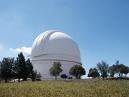
schoolPalomar Mountain School is a tiny, one-room school house a few hundred yards from the world’s largest telescope.  From this location, on the top of Palomar,  astronomers have been peering out into space for decades.  It is here, where it seems that God has been peering back.  The school sits back in the trees, nestled behind a ranger station on the last hairpin turn leading up to the telescope.  If you blink… you will surely miss it.

In the early years of my teaching career I was a football coach and a substitute teacher and I couldn’t land that first full-time teaching position.  So I responded to a desperate call from Palomar for a certificated teacher  who was willing to make the drive every day up the side of a mountain to teach in a tiny school where you would have the entire 6th, 7th and 8th grade class.  It didn’t pay much but there were benefits.  No traffic.  No noise.  No fast food restaurants.  No principal.  No textbooks.  No California Standards Test (and, in fact, no standards)  I was free to do whatever I thought a handful of 6th, 7th and 8th graders should do….  to teach them whatever I thought that they should learn. And I guess my instincts were right.  

Later I realized that many of the instructional strategies that I was using actually had a name and were rooted in real research. I realized that…  In this self-contained, un-graded, multi-age classroom, we were differentiating instruction through an integrated and thematic curriculum; we were, appealing to the multiple intelligences and learning styles of a culturally diverse group of children, providing a gradual release of responsibility, engaging all learners and monitoring their academic growth through the use of a multiplicity of authentic assessments.
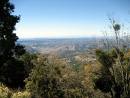
viewBut when it is just you and 16 kids and crisp mountain air and a neighborhood so quiet you can hear the deer sneeze;  when the shadows of the world’s largest telescope is cast across your playground;  when you have no textbooks even if you wanted them (and I didn’t);  when you are at the early stages of your teaching career and you want to bring the whole world to your students and be a force for good in their lives; when you are just naive and idealistic enough to believe that you can single-handedly change the world for every child… that is a muse worth capturing.

And so I did.

Not long after Tod and his sister Patti graduated, I left Palomar Mountain School to work in a real school with textbooks and a principal.  It was an adjustment but I guess I never forgot the six kids from Palomar… or what they had taught me about teaching.  Or about the force we can be for children if we allow our life journey to benefit others.

I had not heard from Tod nor Patti since the day they graduated.  Until this week when Tod found me on Facebook.  He sent me a message to tell me that he had grown up, graduated from college and is now a civil engineer in North Carolina.  Just like that.  An adult lifetime, a career,  captured in a sentence.  He reminisced about those days at  Palomar Mountain School– the pop quizzes and playing over-the-line and touch rugby in the snow.  He said that, in fact, he had played rugby all through college and even later for the Raligh Vipers.  

Tod e-mailed his sister Patti and she sent me a message too.  She told me about her education, her marriage, her career.  They both sounded so happy and so complete.  And they triggered the flood of memories from those very simple times when I taught children from some place deeper even than the heart. Where I discovered the power of imagination, and ingenuity, and innovation in teaching. Where I uncovered my own eventual career passions: like student advocacy, equity, resiliency…  long before I could even define those words.  Where I realized how magic teaching can be.  And how we influence our students mightily. And they influence us.

I shared Patti and Tod’s story with my teachers at our Friday lunch meeting yesterday.  I reminded them, that no matter how frustrated, or disappointed, or discouraged they may get…  they are having a profound effect on the lives of their children. And they may not know it.  They may never know it.  Until one day when they run into a former student in the elevator or they get a note on Facebook.  

“…we all live, spiritually, by what others have given us in the significant hours of our life…”

And I reminded them of how fast it all goes by.  God’s work… in what seems to be a matter of fleeting moments.  That if you blink…
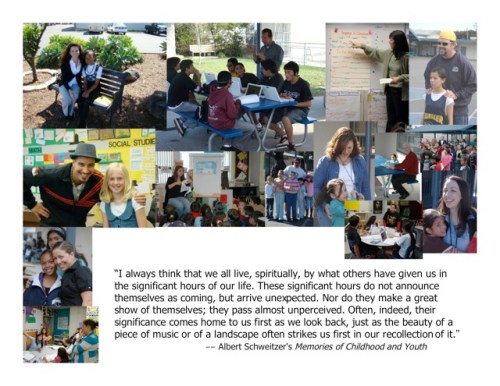
palymar1

Patti turns 4o soon.  She is older than 2/3 of my teachers…who are now older than I was, when I stood there in a clearing in the forest on Palomar… listening to the awesome silence of the mountain… and catching a glimpse of the world’s largest telescope when the wind blew.  And the trees swayed.

spectacularjpeg

3 Comments

Filed under charter schools, teaching

ALONE FROM EL MILAGRO AND INTO THE BORDER WAR

trolleyjpegWhen the bright red San Diego Trolley pulls into the San Ysidro station at 4:30 on a weekday afternoon, it opens its doors to thousands of people coming or going into the early dusk.  This is the Tijuana border crossing.  The busiest international port in the world.  Mexico’s day laborers silently shuffle across the footbridge to the caracol.  Their heads bowed.  Their eyes, darting nervously.  No matter how many times they have made this crossing in the past five or twenty or fifty years, this is no time for complacency. 

carsJust moments ago they were in America.  They were tending the landscape or working in fields or changing hotel linens or cooking in restaurants or cleaning homes.  Service, labor, business. They are cogs in the wheel of an ailing international economy.  As they cross into their homeland, they are no doubt welcomed by the unmistakable aroma of Mexican gas, street corner taco stands and open fires.  There are miles of choking cars and buses and taxis.  And there are too few police.  

It is no comfort to the border crossers that two more police officers turned up dead this morning. They had been bound, gagged, tortured, and executed. And even more chilling, they had been warned by the drug cartels in a brazen threat broadcast over their own police radios to the beat of narcocorridos.  Tijuana is a war zone.  Tijuana is out of control.  

And if it is no place for adult citizens who have made the silent journey to their jobs in America every day for decades, it is certainly no place for Jorge.

Just an hour ago he was leaving Mueller Charter School– El Milagro—  by way of our back gate. When the three-fifteen bell dismisses a thousand kids into the afternoon, there is an explosion  of energy.  There is running and boys chasing each other into the grass. Parents line their cars up all the way to Broadway to pick up their children.  And the parents will wait because God knows they don’t want them walking home alone.  Too dangerous.

running1

But Jorge carves his way through the playful chaos.  Quietly.  Silently.  As if to mirror the faceless adults who have been his anonymous companions on his daily commute.  He walks down the back driveway of the long apartment complex.  Passed the trailer park.  Across H Street and into the Trolley station.  Every fifteen minutes another trolley stops and he looks for the Blue Line running south to San Ysidro.

Jorge may be Mueller Charter School’s most resilient child.  And we are filled with resilient children.  We grow resiliency.  We study it and foster it and promote it and we have teachers and counselors who are authorities on it.  We are frequent conference presenters on resiliency.  Ryan is focussing on “resiliency in immigrant children” as a potential doctoral dissertation.  I am writing a book about it.

But nothing prepared us for seeing the very personification of resiliency in the dark eyes of Jorge. We had him on our radar screen.  We had discussed him a few weeks earlier at our quarterly Resiliency Monitoring session with his classroom teacher.  We categorized him as a “Quadrant 1”. In our system, that means Jorge is facing dire life crises.  He is in immediate need of urgent care. gunmanjpegHe is in our version of ICU.  There had recently endured unspeakable family tragedies including the decapitation of relatives in the border war.  

But now America’ imploding economy was closing in on him even more.  He and his mom had recently been evicted and they had to return to living quarters somewhere in the squalor of Tijuana. She couldn’t ask for help because she was afraid that Jorge would be disenrolled if we discovered they were living back in Tijuana.  California law is clear.  Not even charter schools can serve children living across the border in Mexico.

So every day, Jorge climbed the trolley and made the trip to Tijuana alone.  He struggles in math. He struggles in reading and writing.  He struggles with English.  But he never misses school.  He finds a way to get here, even if he has to step over bodies piling up on the border to do so.

And that is resiliency.  Jorge is 8 years old.  His story brought tears to our eyes when we talked about him in our staff meeting on Friday.  

We will be able to get his mom relocated and help them with housing and other basic needs. Our efforts will not be reflected in our API because Jorge will tank on that test.   But we owe him for what he has taught us about ourselves.   About how children, even as young as eight, are willing to rise above adversity for this opportunity to learn.  Jorge is a child worth fighting for.  Regardless of his standardized test score, he is one of our most gifted children.  It is called the spiritual intelligence.

silhouette

Leave a comment

Filed under charter schools, El Milagro, resiliency, spiritual intelligence

WORDS MADE CHANGE

Like this tag cloud designed by Wordle, everyone heard something different in President Obama’s Inaugural Address:

image0011

I don’t know what images or themes resonated for you, but Nelson Smith, the Executive Director of the National Alliance of Charter Schools reviewed the historical Inaugural Week in his Charter School Blog, and he heard this:

I found a strong echo of our [charter school] model in this passage of the President’s inaugural address:

 “The question we ask today is not whether our government is too big or too small, but whether it works — whether it helps families find jobs at a decent wage, care they can afford, a retirement that is dignified. Where the answer is yes, we intend to move forward. Where the answer is no, programs will end.”

What this means for charter schools can be found on the new White House web site under Education Agenda. President Obama promises to “double funding for the Federal Charter School Program to support the creation of more successful charter schools,” but warns there will be “a clear process for closing down chronically underperforming charter schools.”

Fair enough.  As on most things, I agree with President Obama (and Nelson Smith, too). But how will the President define “successful charter schools?” and what are the criteria for an “underperforming school?”  

Presently “underperforming schools” become “underperforming schools” when their test scores in math and reading fall short of the prescribed benchmarks called Annual Yearly Progress or AYP. And since nobody wants to bear the mantle of an “underperforming school”, you can be sure we all teach the heck out of math and reading.  President Obama recognizes that schools have narrowed the curriculum in response to these pressures at the expense of science and technology and social studies and the arts.  And recess. He calls it teaching to the test.  I call it teaching to what is tested. Others may call it teach what you better teach if you don’t want lose your charter or be called an underperforming school.will-i-am

Nevertheless, as Will.i.am says “It’s a New Day” and thank God for that.  We have a mandate for change.  And since I don’t mind using test results to determine how effectively schools are serving children and their families, I don’t care whether president Obama changes the whole assessment game or not.  

What I do care to C H A N G E is how we recognize and define successful schools– charter or otherwise. Math and reading results are one indicator, but can we get some love for the other extraordinary things that happen for children at El Milagro?

Like when we …carlos

• introduce our children to the latest technologies…

• or teach them to think…

• or refer them to the eye doctor for properly fitting glasses…

• or teach them proper dental hygiene so their teeth aren’t rotting in their heads…

• or  teach them to sing and draw and recite their poems on a stage…

• or  teach them that their forefathers won congressional medals of honor in foreign wars too…

• or help them preserve and perfect their native language…

• or connect a family to health insurance…

• or help Rafael properly grieve for his relatives who were recent murder victims in Tijuana’s horrific drug wars…

• or help Laura stay grounded even as she  is about to lose her mom to stomach cancer (which is a big deal because her dad passed away two years ago)…

And so forth.  Supporting kids in crisis– isn’t that high performance too?

Just last summer, Nelson Smith and The National Alliance of Charter Schools published a tool they call “Quality Indicators“.  It’s one way to expand the definition of what a successful school is.  So at El Milagro we decided to integrate the general concept into our charter as we get ready to take it to the local governing board for re-authorization in March.   We will be able to describe the goals of our charter in broader terms than just academic achievement– but also longitudinal growth, progress of English Language learners and the sense of engagement for students, teachers and  parents.

                                                             *                *                  *

So when Wordle created their cool tag cloud from some of the major themes and words that were used by President Obama in his Inaugural Address, they were unintentionally shining a bright light on his priorities.  The bigger the word the more often he used it.

 I like that C H A R T E R and  C H I L D R E N are so predominantly positioned on the top of the box, and in the center– and that they are surrounded on all sides by C A R E  and  C O O P E R A T I O N and W O R K and  H O P E.

monument

1 Comment

Filed under California charter schools, charter schools, El Milagro, President Obama, public education

BABEL’S TOWER

globeOn January 2, 2009, I challenged readers to consider what happens to our students when you test them in a language that is not their native language, and then pass judgment on them and on their teachers based on the predictable results!  I invited readers to take a quiz and to not be discouraged by the fact that the quiz is in a foreign language.  

This issue is huge.  It has less to do with test scores and more to do with how we are preparing our children to compete globally.  Or not.  (Check out who is about to become the largest English speaking country on the planet.)  Of course our students need to speak English, but why aren’t they speaking other languages, too?  

Anyway, if you took the quiz you experienced what many of our students experience.  They may know the material and have the skills in math or reading or writing– but their academic proficiency (and intellect, motivation, potential, etc.) will be determined primarily by their ability to master a second language and the confidence they have in themselves as second language learners. 

Here were the 3 questions:

Question Number 1:

quiz


Если ваша профессиональная репутация, ваша школа рейтинга, и будущее ваших учеников были все зависит от детей, каким образом осуществляется на стандартизированных испытаний, которые приведены в иностранном языке, вы должны:

А. выступаем за то, чтобы дети предоставили оценки на их родном языке ,

B. энтузиазмом участвовать в вашей государства осуществлять в учебных злоупотреблений;

C. вид, что исход отметив делать с языком, или

D. привести ненасильственного протеста

Question Number 2:

كاليفورنيا يطالب بأن تتخذ جميع الأطفال أنصبتها المقررة باللغة الانكليزية للأسباب التالية :

أ. انها حقا جيدة للأطفال

ب. لأنها أكثر موثوقية وسيلة لتحديد ما تعلمه الأطفال

C. لأنها ستوفر معلومات قيمة والمعلمين حول ما يعرف الطلاب

د. وسوف نتأكد من الطلاب لا يملكون غير عادلة رئيس جامعة كاليفورنيا تبدأ اللغة الأجنبية

Question Number 3

Λαμβάνοντας αυτό το παιχνίδι δεν είναι ένα έγκυρο κριτήριο της τη νοημοσύνη μου, διότι:

Α. Δεν μιλούν καμία από αυτές τις γλώσσες

Β. Είναι απλά μια προσομοίωση

C. Είμαι πραγματικά πολύ έξυπνη και μόλις πήρε suckered σε αυτό το κουίζ

D. Αν όλοι μιλούσαν αγγλικά δεν θα είναι απαραίτητα αυτό το κουίζ


Did you pass?  You don’t know?  Well here is the translation:

Question 1, which was written in Russian, asks:

If your professional reputation, your school’s ranking, and the future of your students were all dependent on how children performed on a standardized test which is given in a foreign language, you should:

A. Advocate that children be provided the assessment in their native language

B. Enthusiastically participate even if you consider it educational malpractice

C. Pretend that the outcomes have nothing to do with language; or

D. Lead a non-violent protest to end the demoralizing practice

Question 2, written in Arabic (thanks to Google Translate), asks:

California demands that children take all of their assessments in English because:

A. It is really good for kids

B. Because it is a more reliable way to determine what children have learned

C. Because it is consistent with the “English Only” agenda

D. It will make sure no student has an unfair head start on the UC foreign language requirement

Question 3, which I am sure was all Greek to you, asks:

Taking this quiz is not a valid test of my intelligence because:

A.  I don’t speak any of these languages

B.  It is just a simulation

C.  I am really very smart and just got suckered into this quiz

D.  If everybody spoke English this quiz wouldn’t be necessary

Your score on this quiz doesn’t matter very much.  Your answers, however, are critical!!!

dsc016711

1 Comment

Filed under California charter schools, charter schools, El Milagro