Category Archives: El Milagro

A LONG KICK AGAINST THE WIND

filmstrip06ew

Yesterday was my day to post on Leadertalk, which is one of several blogs managed by Education Week. Educational leaders are invited to participate– and my day is the 20th of every month.  So I am always thinking about what I want to post on Leadertalk.  It is harder to add photos and I feel a little more confined, like I have to be much more careful since it is someone else’s deal.  Nevertheless, as a neophyte blogger, it is a cool opportunity.

So I decided to post a hybrid piece, combining the elements of what I published here at El Milagro Weblog last week and my idea for today. 

Because as of today we are 5 instructional weeks from the California Standards Test (the CST’s!)  and our teachers are studying their formative data and making some very strategic adjustments in how they work with their students on the final push.  5 weeks is the blink of an eye and they know it.   We are still a long ways away from where we need to be.  In fact, our MAPS data tells us that 22% of our English language learners are now operating at a proficient level in language arts and 23% in math.  We need at least 50% proficiency to reach the state’s Annual Yearly Progress (AYP) goal.  

This is crunch time.  Our teachers are as serious and as focussed as I have ever seen them.  There is no panic.  There is no quit.  There are no false illusions about where we are.  So it will be interesting to see how our students perform on California’s standardized tests in May.  

field-goal1This is also the time period in which we cease to philosophize about the wisdom of standardized tests and what the pre-occupation with language arts and math might be doing to our students’ broader abilities to think and innovate and solve problems and reason.  This is not the time to engage in the political debate.   An NFL coach may not like the rules for sudden death overtime, but when you are out of downs on your opponents’ 20-yard line, you better just trot out your kicker for the game winning field goal and argue about the rules of the game later.

ny-timesjpeg2So we are playing to win.  And when we win, we expect that there will be some interesting headlines in the morning newspaper.  Something like:


“California Charter School Shocks Education World”

or

“Mueller Charter School Achieves Unprecedented One-Year Gains”

or

“State Department Questions Legitimacy of Dramatic Test Results


It is a healthy exercise  to visualize your organization’s success and there are many ways to do it.  But try visualizing the newspaper headline that captures the essence of your  mission and celebrates the moment at which all your collective dreams and ambitions come to full fruition.  What will the headlines say? 

“Charter School Caps Decade of Innovation by Tipping 901 on API”

hands-up

As a visualization exercise, this headline is dramatic.  But it is more than an exercise… it is our mission.  And it is attainable.  We have implemented a longer day, a daily English language development program in every classroom, our assessment tools have improved and so has our capacity to use technology.  And those are just the highlights. So now all that is left is five weeks of instruction, a 45-yard field goal (against the wind)  and the long vigil at the news stand.  Just what will your headlines say? Perhaps ours will read:

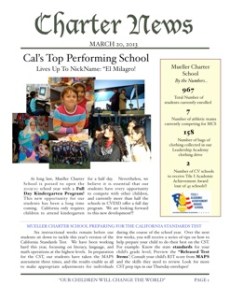
“California’s Top-Performing

School Lives up to Its Nickname:

El Milagro!”
headlinez

Leave a comment

Filed under California charter schools, El Milagro, public education, teaching, technology in schools

5 PILLARS TO SAVE A NATION

education_hero

“Every so often, throughout our history, a generation of Americans bears the responsibility of seeing this country through difficult times and protecting the dream of its founding for posterity. This is a responsibility that has fallen to our generation. Meeting it will require steering our nation’s economy through a crisis unlike any we have seen in our time.”

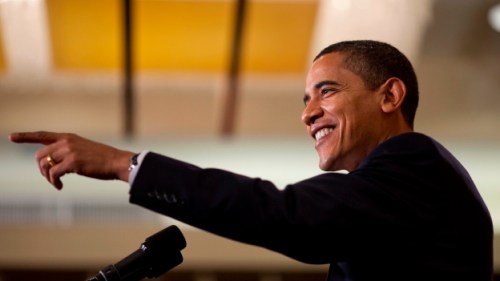
This past Tuesday  morning, President Obama presented his proposed education reforms to the Hispanic Chamber of Commerce in Washington DC.  If the Hispanic Chamber of Commerce is going to advocate at all for Latinos and their children in the United States, they should take great confidence away from that bright, bright morning at the Marriot Ballroom.  In the background of the President’s message  is an economy that has been ground down to the core by too many individuals who were entrusted to leave the machinery of commerce better than how they found it.  But once they got their hands on the wheel, the temptation to achieve personal gain, the lack of compassion, the lack of regulation, the lack of restraint, the lack of moral guidance, the lack of patriotism–  led the country and the rest of the world– right over the cliff toward economic collapse.

stock-mrktjpegThis happened on the last President’s watch, the one that talked about patriotism and Christian values and keeping America safe.  The one that imposed No Child Left Behind on America’ s schools and accelerated an era in which the illusion of accountability and achievement has merely driven schools to gun the motor, spin the tires in the mud, and lurch forward in the wrong direction in a cloud of spent energy and system-wide exhaustion. Just like the economy.  President Obama said:
“Despite resources that are unmatched anywhere in the world, we’ve let our grades slip, our schools crumble, our teacher quality fall short, and other nations outpace us. Let me give you a few statistics. In 8th grade math, we’ve fallen to 9th place. Singapore’s middle-schoolers outperform ours three to one. Just a third of our 13- and 14-year-olds can read as well as they should. And year after year, a stubborn gap persists between how well white students are doing compared to their African American and Latino classmates. The relative decline of American education is untenable for our economy, it’s unsustainable for our democracy, it’s unacceptable for our children — and we can’t afford to let it continue.” 

So President Obama  connected the dots on the moribund economy and our bankrupt schools and the illusion of academic progress for a nation leaving virtually all of our children behind.  The two systems are inextricably bound.  

While there may have been too few voices signaling our economic demise with any authority or passion, we have been signaling the alarm from within our schools for 8 years:  educating children, particularly those who are severely impacted by our nation’s recession, requires a lot more than threats and bullying over standardized test results. But just as opposition to the war in Iraq was regarded as unpatriotic, warning of the dangers of such a myopic view of teaching children was disregarded as “excuses by educators who are afraid of being held accountable.”

We merely linked the academic future of our children to the economy and to the federal government’s responsibility to help ameliorate  those punishing risk factors that inhibit children’s learning.  And we were right.  In fact, two important studies were released this week that neatly framed President Obama’s vision for public education.  The first was a joint study from the Education and Public Interest Center at the University of Colorado at Boulder and ASU’s Education Policy Research Unit.  That report described seven “out-of-school factors” that profoundly influence students’ academic success and lead to inequalities among children: prenatal care; health care; food insecurity; environmental pollutants; family stress; neighborhood characteristics; and lack of extended learning opportunities, such as preschool or summer programs.  The report’s conclusion is that schools cannot address these variables alone.

And we’ve been saying that too.

20090323_107The second study came from the National Center on Family Homelessness who now estimate that one in every 50 American children is homeless. In summarizing the report  Time Magazine’s stated, “The consequences of homelessness are profound. Homeless children are twice as likely as other children to be retained, or held back, one academic year, or to be suspended or, ultimately, to drop out of school altogether. School districts across the country report a growing share of students who are highly mobile — who move multiple times within a school year. With each move, experts say, such students are at risk of falling some six months behind, or more, in their studies.” And as a result of our economic downturn, the trend of homeless children is growing.
Under the leadership of Secretary of Education Arne Duncan and President Barack Obama, we have an opportunity to reverse the downward spiraling course of public education as we simultaneously address childhood risk factors associated with our volatile economy.  And in fact, Mueller Charter School has been on that path for years– not because of any inspiration from NCLB, but rather, in spite of it!  From the energy and innovation and subversive entrepreneurialism that comes from being an independent charter we have created a school environment that models– at least in part– the President’s Five Pillars of Education Reform as he presented them on Tuesday: 

First Pillar:  Investing in early childhood initiatives like Head Start;  
 
Second Pillar: Encouraging better standards and assessments by focusing on testing itineraries that better fit our kids and the world they live in;         
“We will end what has become a race to the bottom in our schools and instead spur a race to the top by encouraging better standards and assessments.  That’s why I’m calling on states that are setting their standards far below where they ought to be to stop low-balling expectations for our kids. The solution to low test scores is not lowering standards — it’s tougher, clearer standards.  And I’m calling on our nation’s governors and state education chiefs to develop standards and assessments that don’t simply measure whether students can fill in a bubble on a test, but whether they possess 21st century skills like problem-solving and critical thinking and entrepreneurship and creativity.” 
Third Pillar:  Recruiting, preparing, and rewarding outstanding teachers; treating them like professionals and holding them accountable;
 
Fourth Pillar: Promoting innovation and excellence in America’s schools… supporting charter schools… reforming the school calendar and the structure of the school day;

“Now, even as we foster innovation in where our children are learning, let’s also foster innovation in when our children are learning. We can no longer afford an academic calendar designed for when America was a nation of farmers who needed their children at home plowing the land at the end of each day.  That’s why I’m calling for us not only to expand effective after-school programs, but to rethink the school day to incorporate more time -– whether during the summer or through expanded-day programs for children who need it. “

Fifth Pillar Providing every American with a quality higher education–whether it’s college or technical training.


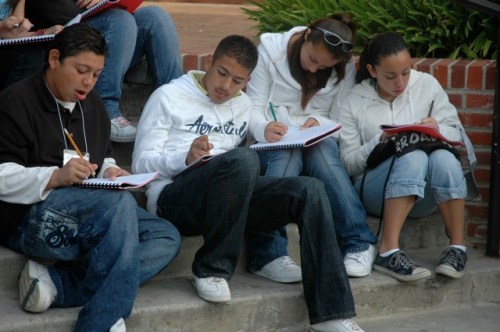
The ground shifted beneath our feet this week, as the President’s message signaled a change in course that favored children.  At nearly the exact same moment, 62 seventh graders from El Milagro were climbing the steps to a university that they had never laid their eyes on before. Our students visited San Diego State University, University of San Diego, University of California at San Diego, Cal State San Marcos and the Arts Institute.  In two weeks, our 8th graders will spend three days in Los Angeles visiting USC, UCLA, Cal State Long Beach and UC Irvine. They will see themselves in the faces of students on those campuses and their life course will be fundamentally altered: from their choice of friends to the goals they set and the courses they take in high school. They will likely be the first in their families to attend college. Their pathway will be made more clear as President Obama’s vision of education comes to fruition, and the unforgiving decline of America’s economy is halted.  

“We have a legacy of excellence, and an unwavering belief that our children should climb higher than we did,” the President said. 

In the meantime, we rise to the greatest challenge of our generation, to right the course of our economy and our public schools, and literally save our nation.

steps

1 Comment

Filed under California charter schools, charter schools, El Milagro, President Obama, public education

TWITTER AN AUDIENCE WITH THE GREAT GRAY WHALES


blackberryTwitter the whales.  That’s what you do when they are left out of the curriculum. At least that is what connected parents are doing.

A recent Washington Post article described how tech-savvy parents across the country are forcing school boards and superintendents and principals to knuckle under to their avalanche of Twitters, texts, e-mails and blogs demanding their local flavor of change.  I read about it on Dangerously Irrelevant (one of my sources of professional reflection) and found the gleeful comments of fellow readers surprising.  As if school leaders don’t have enough of a mountain to climb now they have to brace for a Twitter campaign to deliver the community’s “no confidence” vote. The anonymous nature of these tools creates some real ethical challenges for school leaders pushing hard on organizational change. (How do most people respond to unsigned complaint letters?)  

The blog drew favorable comments from parents and university educators who seemed to regard this development as a final tipping point in finally straightening out those screwed up public schools.  I thought it was interesting for different reasons:  perhaps tech-savvy parents can now hold universities accountable too.

For better or worse our universities have long served as the R&D branch of public education. Published scholars in our post-secondary schools of education emerge as the industry experts. K-12 educators  worship at the altars of countless consultants and college professors and attribute the weight of the Gospel to their words.  And that would be ok if it wasn’t for the fact that when it actually comes to teaching and learning…  the very last place to go to find the expert practitioners of effective pedagogy would be a college classroom!

images1-2For example: this week I was asking Kira about her Marine Biology class. Although her college is 5 miles from the Pacific Ocean, they will not once visit the tidepools or watch the annual migration of the gray whales or stop by the Scripps Institute of Oceanography or even go to Sea World.  She has one class in a “lecture hall” where 150 students passively take notes from a “professor” inculcating his world view with the help of last year’s powerpoint.  Not very enlightened.  I wonder who I can Twitter about that.
Then Keenan has a class at San Diego State that requires students to go on-line for many of the lessons. It is very economical in that it saves everybody from having to show up for class… but adds to students’ stress (and expense) as they attempt to navigate the idiosyncrasies of another professor’s poorly designed website.  And what do they get when they finally break past the bonds of clumsy technology:  a talking-head video of– you guessed it– last year’s powerpoint.  Or text they could have just Googled.

sdsujpegAren’t these university professors–these giants of the trade–  reading their colleague’s stuff.  Marzano? Bloom?  Gardner? Freire? Cooperative learning? Gradual Release? Are you kidding me? Why aren’t they teaching each other?

An unfair generalization?  No doubt.  Of course there are extraordinary teachers in the university system and some schools have a lot more of them than others.  But if we are going to paint public education with such a broad brush at the K-12 level, it applies all the more in our universities in whom we trust the preparation of future teachers and leaders.  

The tail is wagging the dog. Americans intent on promoting school reform would do well to shift their gaze from the university system to the real experts in teaching and learning:  those high performing elementary school educators who engender extraordinary academic results in spite of challenging environmental factors, in spite of an upside down school system, in spite of the perception that public schools need to be “reformed”, and in spite of the continued reverence for bad teaching that is too often modeled by university-based “experts” that they turn to for answers.  The real experts, it seems, reside in places like El Milagro.

ricky1

Maybe engaging all these parents and community-members who are technologically connected and bent on improving instruction in their children’s schools is not a bad idea. If it works at the local high school, surely it will work at the university too.

So let’s Twitter the school’s president and get Kira an audience with the great gray whales.

whale-tail

1 Comment

Filed under California charter schools, El Milagro, public education, Uncategorized

ALONE FROM EL MILAGRO AND INTO THE BORDER WAR

trolleyjpegWhen the bright red San Diego Trolley pulls into the San Ysidro station at 4:30 on a weekday afternoon, it opens its doors to thousands of people coming or going into the early dusk.  This is the Tijuana border crossing.  The busiest international port in the world.  Mexico’s day laborers silently shuffle across the footbridge to the caracol.  Their heads bowed.  Their eyes, darting nervously.  No matter how many times they have made this crossing in the past five or twenty or fifty years, this is no time for complacency. 

carsJust moments ago they were in America.  They were tending the landscape or working in fields or changing hotel linens or cooking in restaurants or cleaning homes.  Service, labor, business. They are cogs in the wheel of an ailing international economy.  As they cross into their homeland, they are no doubt welcomed by the unmistakable aroma of Mexican gas, street corner taco stands and open fires.  There are miles of choking cars and buses and taxis.  And there are too few police.  

It is no comfort to the border crossers that two more police officers turned up dead this morning. They had been bound, gagged, tortured, and executed. And even more chilling, they had been warned by the drug cartels in a brazen threat broadcast over their own police radios to the beat of narcocorridos.  Tijuana is a war zone.  Tijuana is out of control.  

And if it is no place for adult citizens who have made the silent journey to their jobs in America every day for decades, it is certainly no place for Jorge.

Just an hour ago he was leaving Mueller Charter School– El Milagro—  by way of our back gate. When the three-fifteen bell dismisses a thousand kids into the afternoon, there is an explosion  of energy.  There is running and boys chasing each other into the grass. Parents line their cars up all the way to Broadway to pick up their children.  And the parents will wait because God knows they don’t want them walking home alone.  Too dangerous.

running1

But Jorge carves his way through the playful chaos.  Quietly.  Silently.  As if to mirror the faceless adults who have been his anonymous companions on his daily commute.  He walks down the back driveway of the long apartment complex.  Passed the trailer park.  Across H Street and into the Trolley station.  Every fifteen minutes another trolley stops and he looks for the Blue Line running south to San Ysidro.

Jorge may be Mueller Charter School’s most resilient child.  And we are filled with resilient children.  We grow resiliency.  We study it and foster it and promote it and we have teachers and counselors who are authorities on it.  We are frequent conference presenters on resiliency.  Ryan is focussing on “resiliency in immigrant children” as a potential doctoral dissertation.  I am writing a book about it.

But nothing prepared us for seeing the very personification of resiliency in the dark eyes of Jorge. We had him on our radar screen.  We had discussed him a few weeks earlier at our quarterly Resiliency Monitoring session with his classroom teacher.  We categorized him as a “Quadrant 1”. In our system, that means Jorge is facing dire life crises.  He is in immediate need of urgent care. gunmanjpegHe is in our version of ICU.  There had recently endured unspeakable family tragedies including the decapitation of relatives in the border war.  

But now America’ imploding economy was closing in on him even more.  He and his mom had recently been evicted and they had to return to living quarters somewhere in the squalor of Tijuana. She couldn’t ask for help because she was afraid that Jorge would be disenrolled if we discovered they were living back in Tijuana.  California law is clear.  Not even charter schools can serve children living across the border in Mexico.

So every day, Jorge climbed the trolley and made the trip to Tijuana alone.  He struggles in math. He struggles in reading and writing.  He struggles with English.  But he never misses school.  He finds a way to get here, even if he has to step over bodies piling up on the border to do so.

And that is resiliency.  Jorge is 8 years old.  His story brought tears to our eyes when we talked about him in our staff meeting on Friday.  

We will be able to get his mom relocated and help them with housing and other basic needs. Our efforts will not be reflected in our API because Jorge will tank on that test.   But we owe him for what he has taught us about ourselves.   About how children, even as young as eight, are willing to rise above adversity for this opportunity to learn.  Jorge is a child worth fighting for.  Regardless of his standardized test score, he is one of our most gifted children.  It is called the spiritual intelligence.

silhouette

Leave a comment

Filed under charter schools, El Milagro, resiliency, spiritual intelligence

WORDS MADE CHANGE

Like this tag cloud designed by Wordle, everyone heard something different in President Obama’s Inaugural Address:

image0011

I don’t know what images or themes resonated for you, but Nelson Smith, the Executive Director of the National Alliance of Charter Schools reviewed the historical Inaugural Week in his Charter School Blog, and he heard this:

I found a strong echo of our [charter school] model in this passage of the President’s inaugural address:

 “The question we ask today is not whether our government is too big or too small, but whether it works — whether it helps families find jobs at a decent wage, care they can afford, a retirement that is dignified. Where the answer is yes, we intend to move forward. Where the answer is no, programs will end.”

What this means for charter schools can be found on the new White House web site under Education Agenda. President Obama promises to “double funding for the Federal Charter School Program to support the creation of more successful charter schools,” but warns there will be “a clear process for closing down chronically underperforming charter schools.”

Fair enough.  As on most things, I agree with President Obama (and Nelson Smith, too). But how will the President define “successful charter schools?” and what are the criteria for an “underperforming school?”  

Presently “underperforming schools” become “underperforming schools” when their test scores in math and reading fall short of the prescribed benchmarks called Annual Yearly Progress or AYP. And since nobody wants to bear the mantle of an “underperforming school”, you can be sure we all teach the heck out of math and reading.  President Obama recognizes that schools have narrowed the curriculum in response to these pressures at the expense of science and technology and social studies and the arts.  And recess. He calls it teaching to the test.  I call it teaching to what is tested. Others may call it teach what you better teach if you don’t want lose your charter or be called an underperforming school.will-i-am

Nevertheless, as Will.i.am says “It’s a New Day” and thank God for that.  We have a mandate for change.  And since I don’t mind using test results to determine how effectively schools are serving children and their families, I don’t care whether president Obama changes the whole assessment game or not.  

What I do care to C H A N G E is how we recognize and define successful schools– charter or otherwise. Math and reading results are one indicator, but can we get some love for the other extraordinary things that happen for children at El Milagro?

Like when we …carlos

• introduce our children to the latest technologies…

• or teach them to think…

• or refer them to the eye doctor for properly fitting glasses…

• or teach them proper dental hygiene so their teeth aren’t rotting in their heads…

• or  teach them to sing and draw and recite their poems on a stage…

• or  teach them that their forefathers won congressional medals of honor in foreign wars too…

• or help them preserve and perfect their native language…

• or connect a family to health insurance…

• or help Rafael properly grieve for his relatives who were recent murder victims in Tijuana’s horrific drug wars…

• or help Laura stay grounded even as she  is about to lose her mom to stomach cancer (which is a big deal because her dad passed away two years ago)…

And so forth.  Supporting kids in crisis– isn’t that high performance too?

Just last summer, Nelson Smith and The National Alliance of Charter Schools published a tool they call “Quality Indicators“.  It’s one way to expand the definition of what a successful school is.  So at El Milagro we decided to integrate the general concept into our charter as we get ready to take it to the local governing board for re-authorization in March.   We will be able to describe the goals of our charter in broader terms than just academic achievement– but also longitudinal growth, progress of English Language learners and the sense of engagement for students, teachers and  parents.

                                                             *                *                  *

So when Wordle created their cool tag cloud from some of the major themes and words that were used by President Obama in his Inaugural Address, they were unintentionally shining a bright light on his priorities.  The bigger the word the more often he used it.

 I like that C H A R T E R and  C H I L D R E N are so predominantly positioned on the top of the box, and in the center– and that they are surrounded on all sides by C A R E  and  C O O P E R A T I O N and W O R K and  H O P E.

monument

1 Comment

Filed under California charter schools, charter schools, El Milagro, President Obama, public education

INAUGURATION DAY: A POEM, A PRAYER, AND A PROMISE

tzsupmomentMy Inauguration Day  post on LeaderTalk is a tribute to President Obama… it offers a Poem, a Prayer, and a Promise. It included the re-mix of:  “A Poem for Barack Obama Upon the Inauguration of America”.  I also integrated themes from the  letter to his daughters.  

And El Milagro celebrated the way we celebrate!

balloons_t350

Leave a comment

Filed under El Milagro, President Obama

BABEL’S TOWER

globeOn January 2, 2009, I challenged readers to consider what happens to our students when you test them in a language that is not their native language, and then pass judgment on them and on their teachers based on the predictable results!  I invited readers to take a quiz and to not be discouraged by the fact that the quiz is in a foreign language.  

This issue is huge.  It has less to do with test scores and more to do with how we are preparing our children to compete globally.  Or not.  (Check out who is about to become the largest English speaking country on the planet.)  Of course our students need to speak English, but why aren’t they speaking other languages, too?  

Anyway, if you took the quiz you experienced what many of our students experience.  They may know the material and have the skills in math or reading or writing– but their academic proficiency (and intellect, motivation, potential, etc.) will be determined primarily by their ability to master a second language and the confidence they have in themselves as second language learners. 

Here were the 3 questions:

Question Number 1:

quiz


Если ваша профессиональная репутация, ваша школа рейтинга, и будущее ваших учеников были все зависит от детей, каким образом осуществляется на стандартизированных испытаний, которые приведены в иностранном языке, вы должны:

А. выступаем за то, чтобы дети предоставили оценки на их родном языке ,

B. энтузиазмом участвовать в вашей государства осуществлять в учебных злоупотреблений;

C. вид, что исход отметив делать с языком, или

D. привести ненасильственного протеста

Question Number 2:

كاليفورنيا يطالب بأن تتخذ جميع الأطفال أنصبتها المقررة باللغة الانكليزية للأسباب التالية :

أ. انها حقا جيدة للأطفال

ب. لأنها أكثر موثوقية وسيلة لتحديد ما تعلمه الأطفال

C. لأنها ستوفر معلومات قيمة والمعلمين حول ما يعرف الطلاب

د. وسوف نتأكد من الطلاب لا يملكون غير عادلة رئيس جامعة كاليفورنيا تبدأ اللغة الأجنبية

Question Number 3

Λαμβάνοντας αυτό το παιχνίδι δεν είναι ένα έγκυρο κριτήριο της τη νοημοσύνη μου, διότι:

Α. Δεν μιλούν καμία από αυτές τις γλώσσες

Β. Είναι απλά μια προσομοίωση

C. Είμαι πραγματικά πολύ έξυπνη και μόλις πήρε suckered σε αυτό το κουίζ

D. Αν όλοι μιλούσαν αγγλικά δεν θα είναι απαραίτητα αυτό το κουίζ


Did you pass?  You don’t know?  Well here is the translation:

Question 1, which was written in Russian, asks:

If your professional reputation, your school’s ranking, and the future of your students were all dependent on how children performed on a standardized test which is given in a foreign language, you should:

A. Advocate that children be provided the assessment in their native language

B. Enthusiastically participate even if you consider it educational malpractice

C. Pretend that the outcomes have nothing to do with language; or

D. Lead a non-violent protest to end the demoralizing practice

Question 2, written in Arabic (thanks to Google Translate), asks:

California demands that children take all of their assessments in English because:

A. It is really good for kids

B. Because it is a more reliable way to determine what children have learned

C. Because it is consistent with the “English Only” agenda

D. It will make sure no student has an unfair head start on the UC foreign language requirement

Question 3, which I am sure was all Greek to you, asks:

Taking this quiz is not a valid test of my intelligence because:

A.  I don’t speak any of these languages

B.  It is just a simulation

C.  I am really very smart and just got suckered into this quiz

D.  If everybody spoke English this quiz wouldn’t be necessary

Your score on this quiz doesn’t matter very much.  Your answers, however, are critical!!!

dsc016711

1 Comment

Filed under California charter schools, charter schools, El Milagro

THE LANGUAGE OF THEIR FATHERS

My students speak the language of their fathers and their fathers don’t all speak English.  California is a tough place to live and go to school if you don’t speak English. dsc_0125

We have a long and inglorious history in this state of lining up groups of people in our collective sights, and then stripping them of their fundamental rights through public elections (Remember Prop 8?).  So in 1998 Californians passed a state proposition that effectively banned bilingual education.

calImagine that.  While the rest of the world continues to require two and three languages for children, our state made bilingual education all but illegal.  I wondered:  is that really what Californian’s want for their children?  And if that is what Californians really want for their kids, why is a foreign language still a requirement for the vaunted University of California system?

And just in case any schools had ideas about ignoring the law (like, of course, we did at El Milagro), along comes NCLB  to squeeze every existing bilingual program that might still be operating in the state.

Because in California, the state board of education determined that children must take the state assessments in English. No exceptions.

parkingjpeg1So like all of their native US-born, monolingual, English-Only counterparts, our English learners have to demonstrate mastery of such things as reading comprehension, word analysis, mathematical operations, number sense, algebra and writing conventions.  They have to demonstrate that they know and can do what any child at their grade level should be able to do according to grade level standards.  And they have to do it in a foreign language called English. 

And of course the results matter.  Their school could fail to achieve the AYP goals for English language learners if they don’t get enough right answers on their test.  Their school could become a “Program Improvement School.”  There could be sanctions.  There could be consequences for their teachers and their principals. 

But that’s not all.

Schools with a high percentage of students struggling to learn English typically end up with a lower Academic Performance Index…

Results are published in the local media and the API of each school is compared and contrasted… 

calif-dist-schoolReal estate companies utilize sites like greatschools.net to market properties and neighborhoods with the highest scores…

Prospective new families then move to areas where they perceive there are the best schools…

…While communities with disproportionately large numbers of  English language learners  continue to experience declining enrollment, de facto racial and ethnic segregation, and high mobility.   

It’s a tough cycle to reverse. So schools, out of necessity, abandon their bilingual programs and opt for full English immersion and the bigoted doctrine of  “English-Only” wins. 

But isn’t there a better way? If you really want to assess what a child has learned , do so in the language with which they have the greatest degree of literacy– like the 14 other states (including Texas and New York) already do. 

If you are still unconvinced, please take the simple quiz below.  There are only three questions and if you are an educator or a parent or a concerned citizen—you have the answers!  Just imagine that your school’s reputation, your future, the entire social/cultural/economic fabric of your community depends on your score.  No pressure.  Relax and do your best—even if the quiz is in a foreign language:

Question Number 1:

quiz


Если ваша профессиональная репутация, ваша школа рейтинга, и будущее ваших учеников были все зависит от детей, каким образом осуществляется на стандартизированных испытаний, которые приведены в иностранном языке, вы должны:

А. выступаем за то, чтобы дети предоставили оценки на их родном языке ,

B. энтузиазмом участвовать в вашей государства осуществлять в учебных злоупотреблений;

C. вид, что исход отметив делать с языком, или

D. привести ненасильственного протеста

Question Number 2:

كاليفورنيا يطالب بأن تتخذ جميع الأطفال أنصبتها المقررة باللغة الانكليزية للأسباب التالية :

أ. انها حقا جيدة للأطفال

ب. لأنها أكثر موثوقية وسيلة لتحديد ما تعلمه الأطفال

C. لأنها ستوفر معلومات قيمة والمعلمين حول ما يعرف الطلاب

د. وسوف نتأكد من الطلاب لا يملكون غير عادلة رئيس جامعة كاليفورنيا تبدأ اللغة الأجنبية

Question Number 3

Λαμβάνοντας αυτό το παιχνίδι δεν είναι ένα έγκυρο κριτήριο της τη νοημοσύνη μου, διότι:

Α. Δεν μιλούν καμία από αυτές τις γλώσσες

Β. Είναι απλά μια προσομοίωση

C. Είμαι πραγματικά πολύ έξυπνη και μόλις πήρε suckered σε αυτό το κουίζ

D. Αν όλοι μιλούσαν αγγλικά δεν θα είναι απαραίτητα αυτό το κουίζ

checkjpeg1So how did you do?  Are you in Program Improvement?  You can check your answer and the translation here  on Sunday, January 4.
3 Comments

Filed under charter schools, El Milagro

7 HEISMANS AND THAT PICTURE FROM UCLA

dsc_ucla2


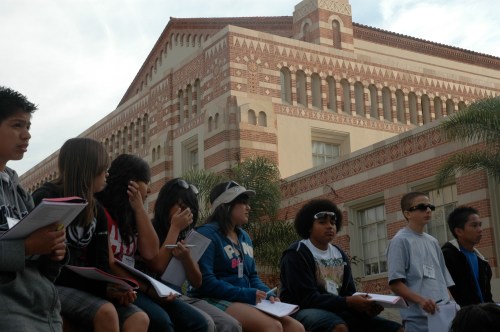
It’s not a great picture.  At least artistically speaking. There are eight of our students and only Brandon even looked at the camera.  The lighting, such as it is, is purely accidental. If you didn’t know the subject you would click past it and move on. 

But we can’t.  We know the subject.  And we know how they came to be sitting in the courtyard there in the shadows of those majestic buildings.  For us there is tremendous symbolism in that picture from UCLA.

So let me ask you, as an educator, when did you first know you were going to college? 

As the youngest of three wayward boys, I was the first in my family to even graduate from high school, let alone go to college—or get a degree.  When I was the age of the students in the picture, I could not have predicted a doctorate.  Or running a school.  Or reading the blogs of colleagues on Saturday morning. I went to college by accident and only to play football.  For many of you I know the story is the same.  Our students have their stories too.  And for most, the journey to a university campus is too often one of pure luck, or providence, or childhood fantasy, or accident. 

Unless we put them in the picture!

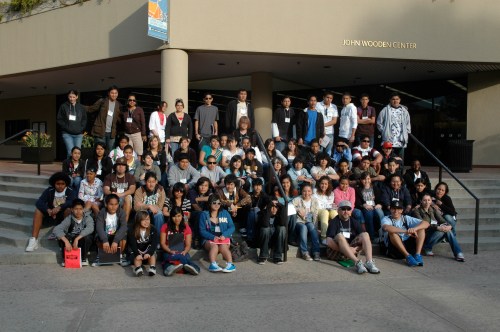
busjpgWe took all sixty of our 8th graders to Los Angeles last Spring and spent three days touring colleges and universities there.  We went to Cal State LA, UC Irvine, Long Beach State University, UCLA, and of course, the University of Southern California.  We stayed in a hotel in Santa Monica and I have ever been so proud of a group of students—or so inspired.

As close as we were to Hollywood and Universal Studios and Knotts Berry Farm and Disneyland–  we didn’t see any of those places.  Our only side trip was to the Museum of Tolerance.  The real attraction– the power– was in spending time on those campuses;  feeling the energy, shopping in the bookstores, walking through classrooms… and seeing so many college students who looked just like our kids.  57 of our 60 students are Latino.  2 are African American.  We are a low income, Title I school. Every one of those students knew how unlikely it was for them to be sitting on the wall at UCLA on a Spring afternoon when they would otherwise be back at school struggling through their algebra.

It is getting harder and harder for families to send their children to college.  It is getting harder to finish, too.  In fact, the US is 15th out of 29 nations in college completion rates– just ahead of Mexico and Turkey.  Moreover, Latinos like the students from our school that we call El Milagro, are least represented on our college campuses. Even though they are the fastest growing ethnic group in the US, they make up only 11% of college enrollment.   This of course explains why only 12 percent of Latinos age 25 and older have received a bachelor’s degree or higher compared to 30.5 percent of non-Latino White students. 

flags

Despite such odds, there is still is a well-lit path to college if we are willing to show our students where it is.  In fact, when we piled off the buses by the bookstore at USC, we were greeted by a Pre-med student who was hand picked to be our campus tour guide. He knew our students and the challenges they faced.  He was one of our alumni, a past graduate of El Milagro with a little brother now in our 7th grade. ( Just one more surprise—one more piece of diligent and intentional  planning by our counselors Ryan and Marisol!) He wasn’t a regular tour guide and to tell you the truth he didn’t know the campus all that well.  He pretty much knew where his classrooms were and the bookstore and the library.  But that too was telling.  He was not there to play.  He knew the sacrifices that others had to make so that he could attend this extraordinary institution; to live his dream and some day return to serve his community as a doctor. 

hesiman-trophy

He did know where the athletic department was though– where all 7 of the Heisman Trophies are displayed. There was the one from Mike Garrett and Charles White and Marcus Allen and Matt Leinart and Carson Palmer and Reggie Bush and yes, OJ’s is there too.  We passed by and looked at each one and kids like Fernando knew exactly what that trophy represented and what it means to have so many in one room.

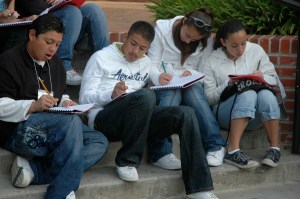
The next day, just before lunch, Ryan and Marisol lead their daily groups in the main courtyard at UCLA.  The tours were structured so our students had some time to reflect.  In the groups they could ask questions and share pictures and write in their travel journals.  The group sessions challenged them to share their dreams and their personal epiphanies.

“So what have you learned in your visit today?”journals1

“As you sit here on these steps and look around this campus, what do you think you have to do right now—in preparation to go to school here?”

“What image has created the most powerful impression on you so far?’

They all shared and listened. 

“It’s not just the goals we set for ourselves,” Maria said.  “We have to stay close to each other and surround ourselves with people who have the same goals that we have.”

“High school seems different to me right,” Miguel said.  “I think if I want to go to UCLA, I need to start preparing today.  I need to approach school in a whole different way.  I need to get serious…because I can do this.” 

Fernando was still thinking about those Heisman Trophies he saw the day before on the other side of town. Everybody knows that Fernando is a great football player.  He has unlimited potential.  As an athlete.   He started to articulate what the past three days had meant to him and how no one in his family had even set foot on a college campus like this before.  Something clicked, sitting there in the hallowed air of UCLA.  “Those Heisman Trophies were sick,” Fernando said.  “But I know, I can’t count on football to get me to college.”  

Fernando and his classmates finally figured out why we wanted to load them on to buses and spend three days looking at universities when they were only in the 8th grade.

He looked at Ryan and Marisol and tried to say thank you but he just put his head in his hands and started to sob.  He wasn’t alone.  For Fernando and all of his classmates from El Milagro, the road to college will not be an easy one.  And for some it will be improbable.

But then… there they are sitting in the courtyard in that picture from UCLA.

group

PS

On June 20, 2011,  I will be posting an announcement on my blog declaring where each of these 60 students are going to college.  I can’t wait.  In the meantime, this Spring, we are taking 60 more students to UCLA.

(Soon to be Posted on Leadertalk.)

3 Comments

Filed under charter schools, El Milagro

A POEM FOR BARACK OBAMA UPON THE INAUGURATION OF AMERICA

A flurry of blogs—including Scott McLeod’s Dangerously Irrelevant” have invited their readers to write an open letter to President-Elect Obama.  It is a cool idea so I decided to write one.  If you scroll down to the next post you will find it.  But then I saw Larry King interview Maya Angelou about her poem “On The Pulse of Morning” which was written for Bill Clinton on the occasion of his first inauguration.  Dr. Angelou said she has not yet been asked to write an Inaugural Poem for President Obama but said she would write one for him anyway– which is also a cool idea.  So I wrote one of those too. 

This is my Poem on the Inauguration of America. It was written moments after CNN announced Barack Obama as the 44th President of the United States. It gives voice— at least for me— to the deep emotions, the catharsis, and the extraordinary pride I feel in him. And in America.  And the very long road we have walked.


“Here on the pulse of this new day, you may have the grace to look up and out and into your sister’s eyes, into your brother’s face, your country and say simply, very simply, with hope, good morning.”

–Maya Angelou “On The Pulse of Morning” 

flags1

“I AM HOPE”

A POEM UPON THE INAUGURATION OF AMERICA
January 20, 2009
Written for Barack Obama,  the 44th President of the United States
By Kevin W. Riley


Hope.

I  am.

Hope has, even for America’s moment,
Brought more than this moment of redemption.

Hope.
Though I am shackled and thrown upon the swollen deck,
Seaborne and riding the stench of slavery to some new world- lost to life.

Hope. Though I am asleep in Lincoln’s apocalypse.
I am Gettysburg and Manassas and Shiloh.
The dead stacked and shoveled into history’s silent pocket.
In the atrocities a war wrought, even the birds were lost for song;
their throats clutched
In witness of humans who could be so calloused and so cruel.
All in the name of Freedom.

Hope.
I am innocence: Emmit Till and Little Linda Brown
and Addie Mae Collins and her three young friends.

Hope.
I am the blessed martyrs. I am Medgar Evers.
I trust Malcom X with my fury.
I marched from Selma to a Birmingham Jail.
I ripped away the judge’s hood that silenced Bobby Seale
and enjoined the Freedom Riders to endure the flames at Anniston.
I heard the chilling voice of Bull Connor and the sting of riot dogs.
The fire hose.
I saw school buses ignite Roxbury and trigger decades of white flight.
And still I stand.

Hope…
I am the preacher-prophet who foretold that we would reside one day
in a promised land.
He must be with us now.
Though the years have kept his visage young…
His eternal voice is crisp as fire
As he sings from the mountain top.
This morning I heard the sky rejoice-
like the deafening wail of 10,000 hurricanes.

I am Lazarus.
I have redeemed the blood of a beloved brother, gone 40 years.
(Bobby’s picture is still among a shrine of holy cards
in a little house in San Antonio
Where Abuelita says her morning rosary
To Cesar Chavez and a wall of popes whose names she cannot pronounce).

I am JFK for whom Ireland still weeps.

I am redemption for centuries of sorrow;
For a word so foul it sticks in civil throats like drying cactus–
Thistle and rust, decapacitating…
A poison elixir that not all our years combined can exorcise.

I am first Hope. Jackie Robinson and Thurgood Mashall.
I am the first black pilot, the first black principal,
the first black business owner, the first pioneer.
I am first to serve, first to play, first in science,
and first to sail deep into space. 
And yet I am last.

I am Hope.
I ride a mighty wave.
I stand on shouldered giants, most for whom history has not reserved a name.
I am beneficiary of the wishes and the words and the blood of legions.

I rise by the toil of Chisholm and Jordon;
on the scaffold stairs built by Jackson and Charles Houston
and Andrew Young.

I am
Hope– tempered, with no guarantee.
But if ever He loved a people
Surely now He has heard our prayers…
Whispered through days and years and generations–
Through all America’s time
To let us be who we must be;
To even once know what it means to be ONE nation.

Alas…
I am only Hope.
My arms are thin.
I speak as if all of God’s angels have somehow filled my lungs
with righteous air.
I am your mouth. His voice.
Our hands–
That the promise of humankind might at last be realized.

But I cannot be who YOU will not be…

So now my name is nailed above Katrina’s door,
Above the Wall Street debacle and the house of cards.
My name is nailed to Iraq and Jerusalem, to all ancient Persia–
And to the suffering of Darfur.

And as I go, so go a hundred nations.

Freedom shines,
A loud bell tolls the moment.
We are astride a wondrous day.
History will remember us as giants…
Or it will not.

Redemption has a name.
I am Obama. And mine is a holy song.

wave2

16 Comments

Filed under charter schools, El Milagro